

Choosing the best Counterbalanced Lift suppliers in China is less about finding one famous factory and more about checking whether its equipment fits your work. A warehouse with narrow aisles needs different dimensions from a busy loading yard. Look closely at rated capacity, lift height, turning radius, mast visibility, battery or fuel options, and available service support. Ask for clear specifications, inspection records, parts information, and a demonstration under realistic conditions. Small details matter. A load that sways during a slow turn is not a minor detail.
Manufacturing expert Taiichi Ohno is often associated with the principle, “Where there is no standard, there can be no kaizen.” It offers a useful lens for comparing suppliers: consistent production and documented quality checks matter more than polished promises. Still, no slogan can replace an independent review of the actual machine. Supplier claims may sound precise, while important operating details remain unclear. That deserves a second look. This guide compares Chinese suppliers through practical criteria, including product range, customization, quality assurance, delivery communication, and after-sales service. The ranking is not a guarantee that one company suits every buyer. It is a starting point for informed questions, careful comparisons, and a more confident shortlist.
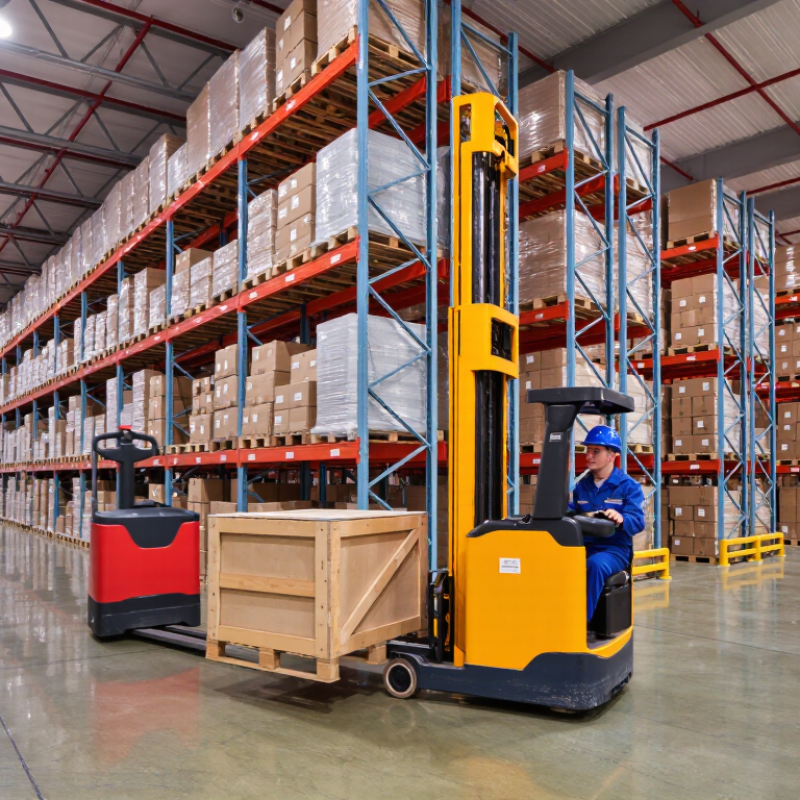
A counterbalanced lift, often called a counterbalanced forklift, carries loads on front forks while a rear mass offsets their weight. Unlike reach trucks, it does not need support legs extending beneath the load. That makes it practical. Its design is straightforward, but stability depends on load weight, height, and distance from the fork face.
Warehouses use these lifts to move pallets between docks, storage aisles, and production areas. They also serve building-material yards, loading bays, and workshops where loads may be bulky or uneven. Solid tires suit smooth floors; pneumatic tires can handle rougher outdoor ground, depending on the model. Operators need clear sightlines and enough turning room. Even a familiar pallet can shift.
The counterweight does not prevent tipping; placing a load too far forward increases the risk. Check capacity labels, attachments, floor conditions, and overhead clearance before work begins. When evaluating suppliers, ask about rated capacity at the intended lift height, service support, and operator training materials. A test in the actual work area can reveal awkward corners that a brochure misses. That matters.
China’s counterbalanced lift market is not a simple ranking of factories. It is a layered supply chain: large original equipment manufacturers build complete trucks, specialist producers focus on electric or internal-combustion models, and regional dealers provide configuration, parts, and service.
The China Industrial Truck Association’s 2023 industry statistics recorded 1,174,833 industrial vehicles sold nationwide.
That figure covers multiple truck types, not counterbalanced lifts alone, so it signals market scale rather than a precise supplier count. A useful distinction.
World Industrial Truck Statistics also classifies equipment by truck type and power source, helping buyers compare like with like. In practice, suppliers differ in battery options, load capacities, mast heights, and support coverage.
A warehouse handling palletized goods may need a compact electric truck; an outdoor yard may prioritize tire choice and ground clearance.
Dealers can tailor packages, but capabilities vary by region. Buyers should ask for documented load charts, parts lead times, and local technician coverage.
Paper specifications are not the whole story. The market’s broad production base creates choice, yet quality control and after-sales consistency still deserve close scrutiny.
When comparing counterbalanced lift suppliers in China, buyers should examine engineering depth, not just rated capacity. A truck marked for two tonnes may handle less at a raised height or extended load center. Ask for a load chart that matches your pallets, attachments, and working conditions. Ask for evidence.
Strong suppliers can explain mast options, turning radius, tire choices, and battery performance in practical terms. Request drawings and test records for the configuration you plan to order. Check weld finish, hose routing, and access to routine service points; these details affect daily maintenance. Details matter. A polished specification sheet is useful, but it cannot replace a machine trial.
Production control deserves equal attention. Buyers can ask how components are inspected, how serial numbers are tracked, and what final checks each unit receives. Confirm spare-parts availability, warranty handling, and the response time for technical questions. Communication is a capability. Clear answers before purchase often reveal how problems may be handled later. Some suppliers may need extra time to confirm a custom detail, and that is worth noting rather than assuming every promise is ready. Share your aisle width, shift length, floor surface, and expected load profile, then compare written proposals on the same basis.
When comparing leading counterbalanced lift suppliers in China, look beyond quoted price. Match each proposal to the same rated capacity, load center, lift height, and duty cycle. These details affect stability and daily output. Ask for a clear specification sheet, not just a sales summary. Check mast visibility, turning radius, tire type, and battery or engine options against your actual aisles and floor surfaces. A polished brochure is not proof.
Request test data or a live demonstration with a representative load. Watch how smoothly the lift starts, brakes, and raises a pallet. Ask which components are locally stocked, how service requests are handled, and what the written warranty excludes. Compare lead times and spare-parts lists in writing. A low price can look attractive, but delayed parts may cost more in idle hours. I would still verify every key detail; supplier documents can leave gaps.
Tips: Send every supplier the same checklist and request itemized quotes. Ask for a sample maintenance schedule and operator materials. Note unclear answers. They matter.
Suggested buyer evaluation weights (%)
Use these suggested weights as a starting point: assess whether the lift’s capacity and configuration fit your work, verify applicable safety and compliance documentation, and compare service support, total cost, delivery commitments, and relevant references. The percentages are a buyer-defined framework—not market survey results or ratings of specific suppliers. Adjust them to match your operating needs and verify claims with documentation.
Before placing an order for a counterbalanced lift, verify the supplier’s production capability, not just its website. Request the exact model specification and compare rated capacity, load center, lift height, mast type, and power source. Capacity can change with the load center, so ask for a clear load chart. Details matter. Ask for recent factory photos or a live video walkthrough showing assembly, inspection equipment, and finished units. A polished showroom video alone proves little.
Request test records for the proposed model and confirm how the supplier checks braking, steering, lifting, and stability. Ask whether you can arrange an independent pre-shipment inspection. Check the supplier’s registered business details, export experience, and customer references; contact a reference with specific questions about delivery and after-sales support. Ask for written terms covering production time, packaging, spare parts, warranty scope, and remedies for specification mismatches. Get key promises in the contract, not only in chat messages. A small mismatch can become an expensive delay. One detail is easy to overlook: verify that the name and address on the quotation, payment instructions, and shipping documents are consistent. No single check guarantees a smooth order, but several matching records make the decision more dependable.
| Evaluation Dimension | Suggested Weight | Documents or Evidence to Request | How to Verify | Good Sign |
|---|---|---|---|---|
| Supplier identity and business scope | 10% | Business registration details, registered address, business scope, and a written statement identifying whether the supplier is the manufacturer or a trading company. | Check the company’s registered information through China’s National Enterprise Credit Information Publicity System. Confirm that the contracting entity, invoice issuer, and payment beneficiary are consistent or clearly explained. | Legal details match across documents, and the supplier explains its role and production arrangements in writing. |
| Manufacturing capability and traceability | 12% | Factory address, production-process overview, quality-control plan, sample inspection records, and serial-number or batch-traceability examples. | Arrange a live video walkthrough or independent factory audit. Ask to see relevant assembly, inspection, and finished-goods areas rather than relying only on promotional photos. | The site and processes can be independently checked, and finished trucks can be traced to production and inspection records. |
| Truck specification and rated capacity | 15% | Datasheet and nameplate details for the exact model, including rated capacity, load center, lift height, mast type, tire type, and attachment configuration. | Compare the quotation, datasheet, nameplate sample, and order specification. Confirm that any attachment or non-standard mast is included in the stated capacity information. | Specifications are model-specific and consistent; capacity is not presented as a single figure for every mast or attachment configuration. |
| Load, stability, and functional testing | 12% | Factory acceptance test (FAT) procedure, test records for the ordered configuration, and the applicable operating and maintenance instructions. | Agree on an FAT before production or shipment. Confirm that checks cover the truck’s functions and configuration, and that any load or stability claims refer to the relevant model and operating conditions. | The supplier accepts documented inspection criteria and provides traceable results for the actual order. |
| Safety and applicable standards | 12% | Risk and safety documentation, operator manual, conformity documents for the destination market, and any claimed management-system certificates. | Check that documents name the correct manufacturer, model, and product scope. Verify certificates with the issuing certification body; identify destination-country requirements before ordering. | Documents are current, applicable to the ordered product, and verifiable with the relevant issuer or authority. |
| Powertrain and destination requirements | 8% | For electric trucks: battery chemistry, voltage, capacity, charger input, and connector details. For internal-combustion trucks: engine and fuel specifications and any required emissions documentation. | Match the powertrain and charging or fuel specifications to the intended site and destination market. Request written confirmation of included components and compatible replacements. | Technical details are complete and compatible with the buyer’s operating environment and local requirements. |
| Warranty and after-sales support | 10% | Written warranty terms, exclusions, claim process, service contact details, parts list, and response-time commitments. | Clarify when the warranty starts, which parts and labor are covered, who pays freight, and how claims are handled. Request examples of service documentation without relying on verbal promises. | Coverage, exclusions, responsibilities, and support channels are clearly stated in the contract or warranty document. |
| Spare-parts availability | 7% | Parts catalogue, part numbers for common service items, stock policy, lead-time estimates, and recommended maintenance schedule. | Ask the supplier to quote selected parts by part number and confirm availability and shipping terms. Check that the parts catalogue corresponds to the quoted model. | Parts are identifiable, orderable, and supported by realistic written lead times. |
| Export packing and shipping readiness | 7% | Packing specification, shipping dimensions and weight, loading plan, commercial invoice details, and agreed shipping documents. | Confirm packing and document requirements with the freight forwarder and destination broker before shipment. Check that the shipping plan protects the truck and includes any agreed accessories. | Packing, shipment scope, and document responsibilities are agreed in writing before dispatch. |
| Quotation and payment protections | 7% | Itemized quotation, lead time, delivery terms, payment schedule, inspection terms, and contract naming the exact model and configuration. | Compare the quotation against the technical specification and pro forma invoice. Use payment terms and inspection milestones that are documented and consistent with the purchase contract. | Price, configuration, delivery responsibilities, inspection rights, and payment conditions are unambiguous. |
Note: The weights are a suggested buyer-side screening model, not an official industry ranking or certification. Score each supplier against the same evidence requirements, and confirm applicable safety, import, and emissions requirements for the destination market before placing an order.