
What Is the Best Power Inverter for Home in China?

Choosing a Power Inverter For Home in China starts with the appliances you need to keep running. A refrigerator, router, and several lights have different power demands. Some appliances also draw extra current when their motors start. That brief surge matters. An inverter sized only for normal running wattage may struggle at startup.

Homes differ, too. An apartment with limited space has different needs from a detached house with room for batteries. Check the inverter’s continuous output, surge rating, input voltage, battery compatibility, and protection features. For a typical Chinese household, confirm that its output matches the appliances’ voltage and frequency requirements. If you plan to connect solar panels, check that the inverter supports the intended system and battery configuration. Do not assume every model works with every battery. They do not.

There is no single best model for every home. The right choice balances essential loads, backup time, budget, noise, efficiency, and installation constraints. A larger rating can cost more without helping if your battery cannot supply enough energy. Compare clear technical specifications, warranty terms, and available service support. Installation should account for ventilation, cable sizing, grounding, and electrical protection; consult a qualified professional when needed. Product details can be confusing, and even a careful shortlist may miss a practical constraint. This guide explains how to compare inverter types and specifications, so you can make a decision based on your home’s actual requirements—not just a prominent wattage figure.
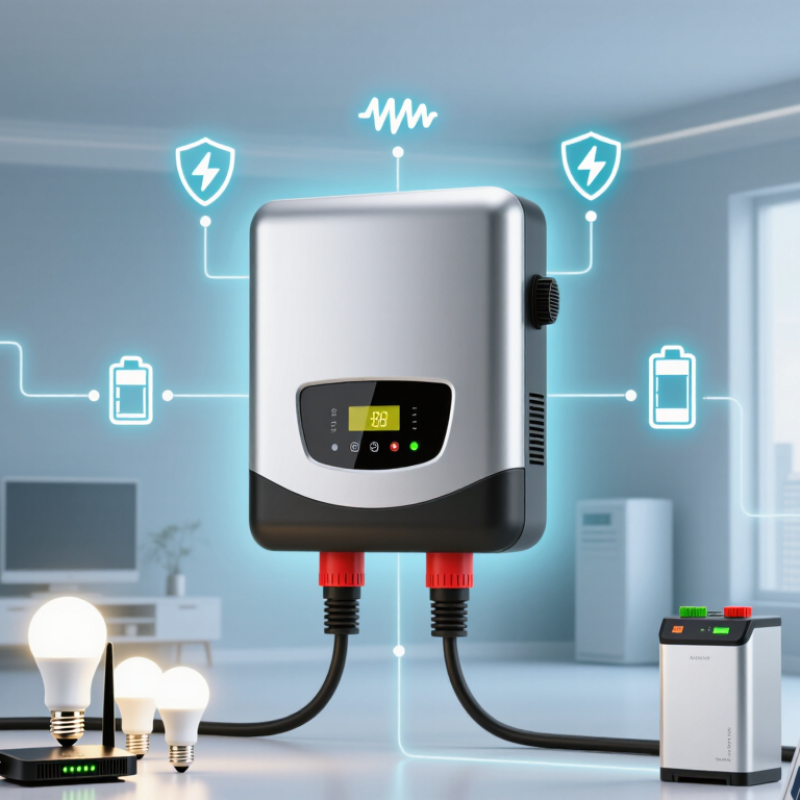
What Is the Best Power Inverter for Home in China?

How Home Power Inverters Work in Chinese Electrical Systems

In a Chinese home, wall outlets typically supply nominal 220 volts at 50 hertz. A home inverter converts battery-side direct current into alternating current for household appliances. Its output should match the equipment’s voltage and frequency. Pure sine-wave output is often preferable for refrigerators, pumps, and electronics, though appliance labels and manuals matter more than general rules. Check running wattage and startup surge. A refrigerator may briefly draw much more when its compressor starts. Small mismatch, big headache.

Tips: List essential loads, then add their wattage and likely startup surges. Leave capacity headroom. Keep the inverter dry and ventilated, and follow guidance for battery cables. Have a qualified electrician connect it to home circuits; a proper transfer arrangement helps prevent dangerous backfeed.

During an outage, the inverter draws energy from a battery, so runtime depends on usable capacity, conversion losses, and connected loads. A 1,000-watt load can drain a small battery quickly; the inverter’s rating alone says little about backup time. Socket and appliance plugs can vary, so check connectors before buying. I would not assume every appliance behaves neatly on paper. Startup current and battery age can change the result.

Which Inverter Types Suit Different Household Backup Needs?

Household backup choice depends less on headline wattage than on which circuits must stay powered. A grid-tied solar inverter alone usually shuts down during an outage. It needs storage and islanding capability to provide backup. For lights, a router, and a refrigerator, a hybrid inverter with a battery is often practical. Check continuous output and surge rating against compressor startup. Keep it simple.

IEA PVPS’s Snapshot of Global PV Markets 2024 estimated 447 GW of new solar installations worldwide in 2023. That growth does not make every home a good candidate for a hybrid system. An off-grid inverter suits a home seeking independent backup, but needs correctly sized batteries and, where relevant, solar charging. A standalone battery inverter may be simpler when existing solar equipment is working. NREL’s 2024 Annual Technology Baseline uses about 85% round-trip efficiency for utility-scale lithium-ion storage; household results vary with temperature, load, and sizing. Check 220 V, 50 Hz output, battery compatibility, and support for critical-load circuits. Ask a qualified electrician to verify transfer time and installation details. One limitation: advertised backup hours depend on the actual load. A kettle can drain a modest battery quickly.

How to Size an Inverter for Common Home Appliances

For a home inverter, sizing starts with what you expect to run at the same time. Check each appliance’s nameplate for its rated power in watts. A refrigerator may use modest power while running, yet its compressor can briefly draw much more when starting. That startup surge matters. In homes using 220-volt appliances, also confirm that the inverter output matches the appliance voltage and frequency.

Add the running watts of the appliances you want to use together, then allow roughly 25% extra capacity. For example, a 100-watt router, four 10-watt lights, and a 150-watt refrigerator total about 290 running watts. An inverter rated near 400 watts may cover that load, but the refrigerator’s surge rating could require more. Check both continuous output and peak output; peak figures are not meant for long-term use. A kettle or rice cooker can draw around 1,000 watts or more, so adding one may change the calculation quickly.

Be realistic about your routine. You might not need to power every room during an outage. List the devices you truly use together, and check their manuals where possible. Appliance figures vary. I’ve found estimates can be off, especially for older refrigerators. Also size the battery separately: a larger inverter does not provide more stored energy. It only converts available battery power for your appliances.

What Is the Best Power Inverter for Home in China? - How to Size an Inverter for Common Home Appliances
Appliance or Load Typical Running Power Possible Starting or Peak Power Sizing Consideration
LED light bulb 5–15 W each Usually close to running power Add the wattage of all lights intended to run at the same time.
Wi-Fi router 8–20 W Usually close to running power Low, steady load; check the adapter label for the actual input rating.
Laptop computer 45–100 W May briefly rise while charging Use the power adapter’s input rating as a practical estimate.
LED television 60–200 W May briefly exceed running power Power varies with screen size, brightness, and model.
Refrigerator 100–300 W while compressor runs Often 2–5 times running power during compressor start Allow extra surge capacity; actual demand depends on refrigerator size and compressor type.
Washing machine 300–1,000 W, depending on cycle and model Motor start can be higher; heating cycles may add substantial load Check the nameplate, especially for models with water heating or drying functions.
Rice cooker 500–1,000 W while cooking Usually close to running power Use its rated input power; keep its load in mind when other kitchen appliances are running.
Microwave oven About 1,000–1,800 W input Usually close to rated input, with brief variation Do not size from the cooking-output wattage alone; check the electrical input rating.
Electric kettle 1,500–2,200 W Usually close to running power One of the larger household loads; avoid running it alongside other high-power appliances unless the inverter is sized accordingly.
Room air conditioner Roughly 700–1,800 W while operating Non-inverter models may have a large compressor-start surge; inverter models generally start more gradually Ratings vary widely by capacity and efficiency. Check the unit’s input power and starting requirements.
Illustrative Inverter Sizing Scenarios
Use Case Example Loads Running Together Suggested Minimum Continuous Output Surge and Selection Notes
Essential electronics and lighting Several LED lights, router, laptop, and television About 500–800 W Allow a margin above the combined running load. A refrigerator added to this group requires additional surge capacity.
Essentials plus one refrigerator Electronics and lights, plus a refrigerator About 1,000–1,500 W Check that the inverter’s surge rating can handle the refrigerator starting while other loads are on.
Small kitchen loads Rice cooker and selected electronics, or microwave and selected electronics About 2,000–3,000 W Do not assume a kettle, microwave, and rice cooker can all run together; add their input ratings to verify the required capacity.
Air conditioner and household essentials Air conditioner plus selected lights and electronics Often 2,000–3,000 W or more Use the air conditioner’s nameplate data and starting requirements. Non-inverter compressors may require a substantially higher surge rating.

How to size: Add the running watts of the appliances expected to operate simultaneously, then allow roughly 20–25% headroom. Separately check the highest motor or compressor starting surge and confirm the inverter can supply it for the required duration. For a typical home in China, verify compatibility with 220 V, 50 Hz appliances and follow the appliance and inverter manufacturers’ electrical instructions. The figures above are general estimates; appliance labels and manuals take priority.

What Safety Features and Local Standards Should Buyers Check?

For a home power inverter in China, check protection features before comparing output ratings. Look for overload, short-circuit, overtemperature, and low-voltage protection. A clear alarm or fault display helps you identify trouble before a device shuts down. Small details matter. Check that ventilation openings will not be blocked by a cabinet or curtains, and that the unit’s rated power suits the appliances you plan to run.

Standards depend on the inverter type and how it will be used. Ask the seller for documentation showing which applicable Chinese GB or GB/T requirements the product meets. Do not assume every inverter needs CCC certification; confirm whether that product category requires it. For grid-connected equipment, verify grid-protection functions, including anti-islanding, and check local utility connection requirements. A label can look reassuring, but it does not explain whether the model suits your installation.

Installation deserves equal care. Confirm grounding instructions, cable size, and required protective devices in the manual. Keep the inverter away from damp areas and combustible materials. If it will connect to household wiring, use a qualified electrician; improper wiring can send power back into circuits unexpectedly. I would also check warranty terms and service availability locally. These are easy to overlook, and honestly, product listings do not always make them clear.

What Is the Best Power Inverter for Home in China?

Check that the inverter’s AC output is compatible with China’s nominal single-phase supply: 220 V at 50 Hz (GB/T 156-2017). The chart shows an idealized, normalized 50 Hz sine wave—not a measurement or performance claim about a product.

Safety checks: Look for protection against overload, short circuit, overheating, and battery polarity errors. Check grounding and installation requirements, confirm which GB standards apply to the product, and verify whether CCC certification is required for its product category. Grid-connected inverters may have additional applicable requirements.

How to Compare Efficiency, Battery Compatibility, and After-Sales Support?

The best home power inverter in China is not simply the unit with the highest efficiency rating. NREL’s PVWatts documentation uses 96% as a default inverter efficiency for solar estimates. Treat it as a benchmark, not a promise. NREL’s 2024 Annual Technology Baseline assumes 85% round-trip efficiency for utility-scale battery storage. That is not a home-product rating, but it shows why whole-system losses matter. Compare efficiency at realistic loads, such as a refrigerator running overnight, not only at peak output.

Check battery chemistry, voltage range, charge and discharge current, and communication with the battery management system. Matching voltage alone is not enough. Ask for a written compatibility list and clear commissioning requirements. For after-sales support, check local service availability, spare-parts access, response times, remote diagnostics, and warranty exclusions. Service coverage can vary by city. Get the terms in writing. I would value reliable support over a tiny efficiency advantage, though that trade-off deserves a closer look.

Tips: Photograph the inverter and battery nameplates before asking for a compatibility check. Keep the model numbers and firmware versions together; small details can save a frustrating service call.