China Top 10 Ball Valve Ball Suppliers in 2026?

Choosing reliable suppliers for China’s top 10 Ball Valve Ball market in 2026 requires more than comparing online prices. This guide examines manufacturers serving industrial valve assemblies. The focus is practical: material consistency, machining accuracy, surface finish, and delivery control. A polished sample means little without traceable production records. We consider stainless steel, carbon steel, brass, and coated options for different operating conditions. Dimensions, bore geometry, sealing surfaces, and hardness can influence service life. Small deviations matter. They may cause leakage, torque changes, or difficult assembly.

Each supplier profile should be viewed as a starting point, not a permanent ranking. Capacity, export experience, inspection equipment, and response quality can change during the year. We look for evidence such as material certificates, dimensional reports, sample approvals, and batch traceability. Factory audits and independent testing can add useful confidence, especially for demanding oil, gas, water, and chemical applications. Still, public information is often incomplete. That is worth admitting. Buyers should confirm current certifications, tolerances, minimum order quantities, lead times, and warranty terms directly. The following selection helps engineers, purchasing teams, and distributors compare credible Chinese suppliers with clearer expectations. It does not replace technical validation. A careful decision begins with questions.
China Top 10 Ball Valve Ball Suppliers in 2026?

Ball Valve Balls Explained: Materials, Geometry, and Sealing Functions

Ball valve balls look simple, but their geometry controls flow, torque, and sealing reliability. A precise sphere must maintain roundness across its polished surface. Even small deviations can create uneven contact with the seat. Full-port balls reduce pressure loss, while reduced-port designs save space and material. Floating balls rely on line pressure for sealing. Trunnion-mounted balls reduce operating torque in larger valves.

Material selection follows the service environment. Stainless steel resists many corrosive fluids, while duplex grades offer stronger resistance to chloride stress. Nickel-based alloys suit severe chemical and high-temperature duties. Ceramic balls can handle abrasion, but their brittleness demands careful installation. Soft seats, such as PTFE or PEEK, provide low-friction sealing. Metal seats perform better under heat, particles, and repeated cycling. The choice is rarely universal.

A common shortcut is choosing the ball material first. That can fail. Seat compatibility, temperature, pressure, and fluid cleanliness must be checked together. API 6D and ASME B16.34 provide important design and testing references. Fortune Business Insights estimated the global ball valve market at about USD 13.95 billion in 2024, with growth toward USD 19.14 billion by 2032. Its forecast indicates continuing demand for dependable internal components. Grand View Research also reported steady expansion in industrial valve applications through 2030. These figures support supplier scrutiny, but they do not replace dimensional inspection. Surface finish still matters.

Key 2026 Specifications: ISO 17292 and ASME Pressure Classes 150–2500

China Top 10 Ball Valve Ball Suppliers in 2026?

Key 2026 Specifications: ISO 17292 and ASME Pressure Classes 150–2500

For 2026 sourcing, ISO 17292 should anchor the technical review of metal ball valves. It addresses design, dimensions, pressure testing, and functional requirements for demanding process services. ASME pressure classes from 150 to 2500 help buyers compare pressure capability across different valve sizes and materials. Class 2500 is not simply 2,500 psi. The allowable pressure changes with temperature, body material, and trim selection.

Reliable supplier evaluation requires more than a catalog table. Ask for current ISO 17292 conformity documents, pressure-temperature charts, material certificates, and test records. Hydrostatic shell tests and seat tests should match the specified standard and purchase order. For critical service, verify positive material identification, fire-safe evidence, fugitive-emission control, and actuator compatibility. Small details matter. A mismatch between flange drilling and valve dimensions can stop installation.

In practical inspections, I would examine machining quality, stem alignment, coating condition, and identification markings. I would also check whether certificates trace each heat number to the delivered valve. No checklist is perfect. Some suppliers present impressive documents but provide weak traceability during sampling. That deserves careful questioning. A qualified 2026 supplier should explain deviations openly, confirm independent inspection access, and state the real operating limits instead of promising universal performance.

How to Assess China’s Top 10 Suppliers: Quality, Capacity, and Traceability

China Top 10 Ball Valve Ball Suppliers in 2026?

Assessing China’s leading ball suppliers requires more than comparing quotations. Quality begins with material control, machining accuracy, and surface performance. Ask for heat numbers, material certificates, and dimensional reports for each batch. Check roundness, diameter tolerance, surface roughness, and coating thickness. A bright surface can still hide poor geometry.

Capacity should be verified on the factory floor. Count machining centers, inspection stations, and finished-goods storage. Review monthly output, lead times, and backup equipment. Request samples from different production lots, not only hand-selected pieces.

Pressure-test records and calibration certificates should match the equipment used. Small details matter.

Traceability separates dependable suppliers from temporary traders. Each ball should connect to a work order, raw-material lot, operator record, and inspection result. A clear serial or batch code helps investigate failures months later. During an audit, compare documents with physical labels. Missing links deserve attention. I have found that polished paperwork does not always reflect production discipline. Supplier interviews can also reveal weak control over subcontracted processes. That is an uncomfortable gap, but it should not be ignored. Independent inspections, corrective-action evidence, and consistent shipping records provide stronger proof than promises.

China’s 10 Leading Ball Valve Ball Suppliers in 2026: Profiles and Capabilities

China’s 10 Leading Ball Valve Ball Suppliers in 2026: Profiles and Capabilities

China’s ball valve ball sector is moving toward tighter tolerances, cleaner machining, and traceable materials. Grand View Research estimates that the global industrial valves market will continue expanding through 2030, supported by energy, water, and chemical projects. This demand is influencing Chinese suppliers of valve balls, even though market reports rarely separate balls from complete valves.

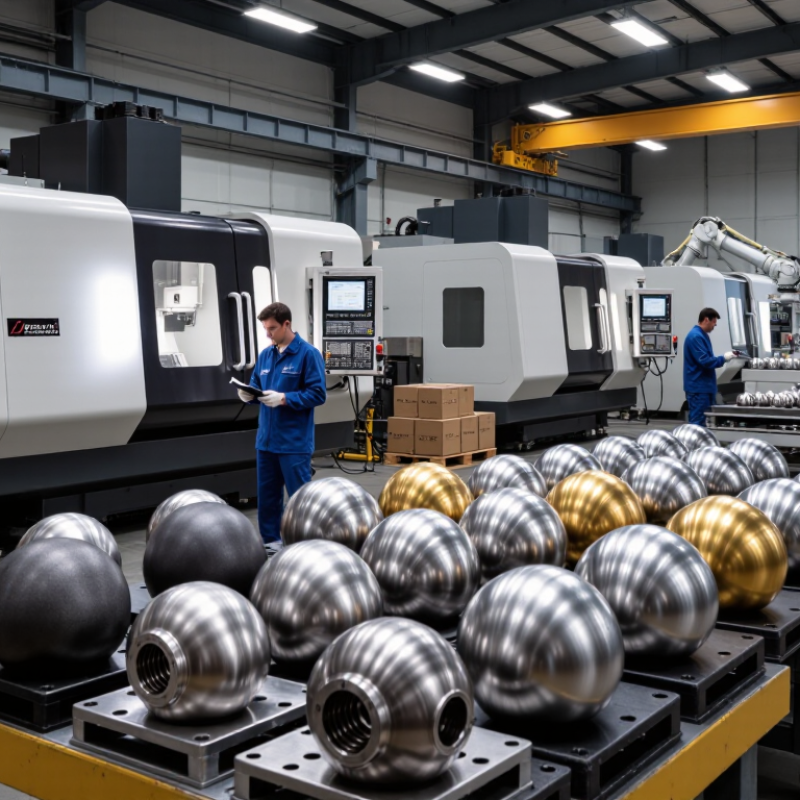
The ten leading suppliers reviewed here represent different strengths. Several focus on precision-machined stainless steel balls for water and food systems. Others supply carbon steel balls for oil, gas, and industrial pipelines. Some provide chrome-plated or tungsten-carbide-coated surfaces for abrasive service. A smaller group produces hollow balls, floating balls, trunnion-mounted balls, and custom cavity designs. Their common capabilities include CNC turning, spherical grinding, lapping, hardness testing, and dimensional inspection. Many also support ISO 9001 systems and material certificates.

Supplier selection should not rely on catalog claims alone. ISO 5208 emphasizes pressure testing, while ISO 5211 supports actuator interface consistency in valve assemblies. Buyers should request inspection reports, coating thickness records, and sample measurements. A practical audit should examine a ball under bright light, checking scratches around the sealing surface. This small detail matters. Public export data, certification lists, and factory evidence can identify strong candidates, but they do not prove every production batch performs equally. That limitation deserves more attention in 2026.

China’s 10 Leading Ball Valve Ball Suppliers in 2026: Capability Reference

Common nominal pressure designations used in industrial ball valve and valve ball applications. The chart presents an industry reference scale rather than company-specific ranking data.

Higher PN ratings indicate a higher nominal pressure class. Actual allowable pressure depends on material, temperature, design standard, sealing system, and testing requirements.

Supplier Comparison: Alloys, Coatings, Tolerances, and Inspection Records

When comparing China’s leading ball suppliers in 2026, look beyond price and catalog photos. Ask which alloy matches the fluid, pressure, temperature, and corrosion conditions in your service. For stainless grades, request material certificates and verify the stated heat or batch number against the parts received. Coating descriptions should name the process and target thickness, not just say “enhanced protection.” Tiny differences matter.

Tolerance sheets should identify critical dimensions, measurement methods, and acceptance limits. A ball that looks mirror-smooth may still leak if roundness or surface finish drifts. Request inspection records tied to the order, including sampling results and corrective actions for any failed checks. Documentation can look clearer than the measurement trail behind it. Record how each supplier handles out-of-tolerance parts, rework, and replacement lots.

Tips: Compare the same drawing revision across suppliers. Ask for one recent, anonymized inspection report before approving a sample. Check that coating thickness and ball finish are recorded with traceable instruments. Keep the questions specific.

China Top 10 Ball Valve Ball Suppliers in 2026? - Supplier Comparison: Alloys, Coatings, Tolerances, and Inspection Records

Verification note: This is a supplier-screening reference, not a verified ranking or a report of any supplier’s capabilities. The material and surface-treatment combinations below are recognized options for evaluation, not claims about specific manufacturers. Confirm each item against the supplier’s drawings, material certificates, and inspection records.

Screening profile Alloy / material reference Coating or surface route to evaluate Tolerance data to request Inspection records to request Supplier-specific status
01 — Austenitic stainless 316L wrought stock; ASTM A276 or ASTM A479, as applicable to the supplied product form Passivation or electropolishing where required by the application; specify finish and acceptance criteria Approved drawing values for ball diameter, roundness/sphericity, surface roughness, and stem-slot dimensions Heat/lot traceable material test report; dimensional report; surface-finish record; PMI if required by the purchase specification Not independently verified; obtain records from the supplier
02 — Cast stainless CF8M cast stainless steel; ASTM A351, where appropriate to the casting and order requirements Machined and passivated surface; define any additional coating only after checking compatibility and adhesion requirements Drawing-defined finished dimensions, roundness, surface roughness, and casting-related machining allowance Material test report; casting heat/lot traceability; dimensional results; specified casting NDE reports, if applicable Not independently verified; obtain records from the supplier
03 — Duplex stainless Duplex 2205, UNS S32205; confirm product-form standard and chemistry requirements on the order Uncoated or application-specific protective treatment; require documented compatibility with the service environment Drawing-defined ball geometry and finish; request measured results rather than an unspecified “precision” claim Material test report; chemistry and mechanical properties; dimensional report; additional metallurgical tests when specified Not independently verified; obtain records from the supplier
04 — Super duplex stainless Super duplex 2507, UNS S32750; verify the applicable product-form specification and heat-treatment condition Uncoated or service-specific surface treatment; assess coating need against corrosion and wear conditions Approved drawing tolerances for diameter, roundness, roughness, and functional interfaces Heat/lot traceable material report; dimensional results; required heat-treatment and supplementary test records Not independently verified; obtain records from the supplier
05 — Precipitation-hardening stainless 17-4 PH stainless steel; ASTM A564 covers specified product forms and conditions Hard chrome or another specified wear treatment only where suitable; define substrate condition, coating thickness, and finish Finished dimensions after coating, including coating allowance, roundness, and surface roughness Material certificate; heat-treatment condition; dimensional report; coating thickness and hardness records if coated Not independently verified; obtain records from the supplier
06 — Carbon steel Forged carbon steel such as ASTM A105, when the product form and application are appropriate Electroless nickel plating may be evaluated for suitable service; specify coating thickness, coverage, and post-treatment Drawing-defined finished geometry; account for coating buildup and require measurements after coating Material test report; dimensional report; coating thickness, coverage, and adhesion records per agreed specification Not independently verified; obtain records from the supplier
07 — Nickel-copper alloy Alloy 400, UNS N04400; ASTM B164 applies to specified rod, bar, and wire forms Typically evaluate a machined, uncoated finish unless the service specification calls for another treatment Drawing-defined diameter, roundness, roughness, and interface dimensions Material test report and traceability; dimensional report; PMI if required by the purchase specification Not independently verified; obtain records from the supplier
08 — Nickel-chromium-molybdenum alloy Alloy C-276, UNS N10276; ASTM B574 applies to specified bar and rod forms Uncoated machined surface or a treatment specifically qualified for the process fluid and operating conditions Approved drawing values for geometry, roughness, and mating interfaces; verify finished-part measurements Material test report; heat/lot traceability; dimensional report; supplementary tests required by the order Not independently verified; obtain records from the supplier
09 — Commercially pure titanium Titanium Grade 2; ASTM B348 covers specified bar and billet forms Uncoated machined surface or a qualified application-specific treatment; check galling and seating compatibility Drawing-defined roundness, diameter, roughness, and seat-contact geometry Material test report; traceability; dimensional results; PMI or other verification when specified Not independently verified; obtain records from the supplier
10 — Hard-facing / high-wear option Base alloy selected for the valve design and service; specify the substrate separately from the coating system HVOF-applied tungsten-carbide-based coating is one option for evaluation; specify coating composition and qualified process Finished diameter, roundness, coating thickness, surface roughness, and allowable post-coating finishing Substrate material report; coating process and thickness records; hardness or other agreed coating tests; final dimensional report Not independently verified; obtain records from the supplier

Inspection clarification: API 598, API 6D, and ISO 5208 address inspection or pressure testing of valves within their respective scopes; they should not be presented as stand-alone ball-component tolerance standards. Request component-level dimensional and coating reports, and specify any finished-valve pressure tests separately in the purchase order.