How to Choose the Best Concrete Batching Plant for Your Project?
Choosing the right Concrete Batching plant is crucial for any construction project. As industry expert John Smith once said, "Selecting the right batching plant can make or break your project timeline." This highlights the importance of understanding your specific needs before making a decision.
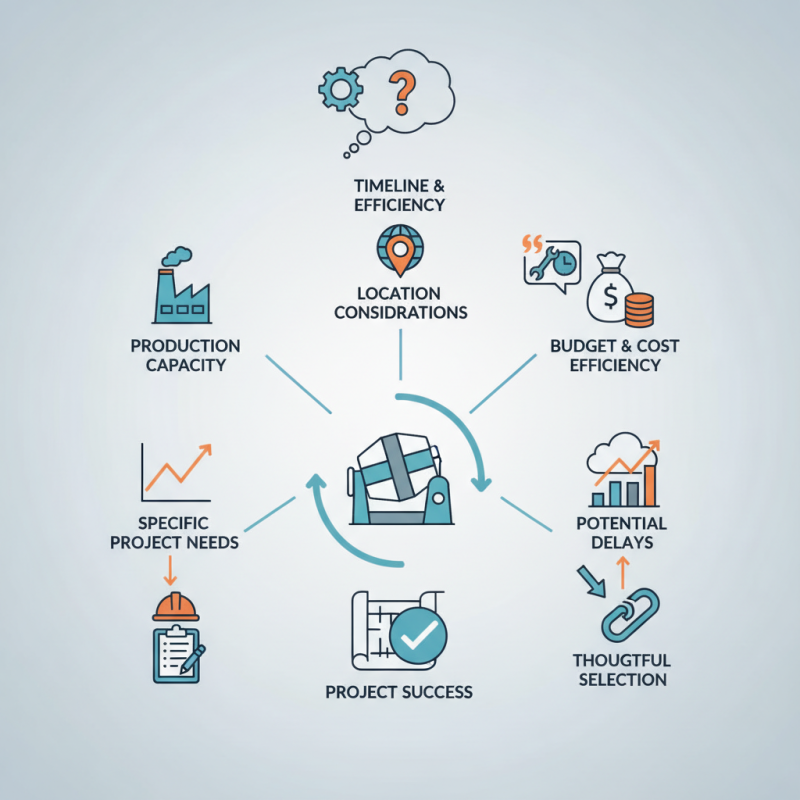
Concrete batching involves a complex process. Different projects will require different types of equipment. Factors such as production capacity, location, and budget must be closely examined. Choosing poorly can lead to costly delays and inefficiencies.
It is essential to reflect on your exact requirements. Sometimes, it's easy to overlook key aspects in pursuit of immediate cost savings. Understandably, every project is unique. Each has its challenges and expectations. A thoughtful selection process can dramatically impact your project's success in the long run.
Understanding Different Types of Concrete Batching Plants Available
When selecting a concrete batching plant, understanding the types available is crucial. There are three main types: stationary, mobile, and portable plants. Each serves different project needs. Stationary plants are ideal for large-scale projects requiring high capacity. They offer durability and efficiency but lack the flexibility of their mobile counterparts.
Mobile plants are perfect for job sites with constant location changes. They provide flexibility and quick assembly, allowing for rapid deployment. However, their capacity may be limited compared to stationary plants. Portable plants, similar to mobile, are easy to transport. They are suitable for smaller projects but may not perform as well in high-demand situations.
**Tips:** Consider your project scale. Assess the location and how often it may change. Reflect on your specific concrete requirements for the best outcome. The right choice will improve efficiency and productivity. Always weigh the cost against performance and reliability when making your selection.
Comparison of Different Types of Concrete Batching Plants
Key Factors to Consider When Selecting a Concrete Batching Plant
When selecting a concrete batching plant, several key factors require careful consideration. The production capacity is vital. Understand your project’s demands. A plant with insufficient capacity may cause delays.
Another important aspect is the plant’s location. A nearby facility can reduce transportation costs. Consider the site conditions as well. Uneven ground can complicate installation. Check for local regulations too. Compliance is crucial for smooth project execution.
Evaluate the technology used in the plant. Modern equipment can enhance efficiency. Yet, training may be needed for operators. Review past performance records if possible. Look for plants with a history of reliability. Balancing cost and quality is essential. While cheaper options exist, they might lack durability. Prioritize long-term performance over short-term savings.
How to Choose the Best Concrete Batching Plant for Your Project? - Key Factors to Consider When Selecting a Concrete Batching Plant
| Factor | Importance | Description | Recommendation |
| Production Capacity | High | The amount of concrete produced in a given time. | Choose a plant that meets your project demands. |
| Type of Plant | Medium | Static vs. Mobile plants according to site requirements. | Consider mobile for flexible sites. |
| Automation Level | High | Degree of automated processes in production. | Opt for semi-automated or fully automated plants for efficiency. |
| Cost | High | Initial investment versus long-term operating costs. | Balance between budget and quality. |
| Site Conditions | Medium | Terrain and access for transportation and installation. | Evaluate site before selection. |
| Regulatory Compliance | High | Adherence to local regulations and environmental standards. | Ensure plant meets all regulatory requirements. |
Assessing Capacity and Output Requirements for Your Project
When selecting a concrete batching plant, understanding your capacity and output needs is vital. Evaluate your project’s scale and its specific demands. Determine how much concrete you’ll need daily. Consider peak production times. If you’re in a fast-paced environment, a higher output capacity may be essential.
Don’t overlook the potential for fluctuations in demand. A batching plant that can adapt to varying output levels might be necessary. Think about future projects as well. Choosing a plant that can expand or upgrade will save you from potential costs down the line. Sometimes, the cheapest option may limit your growth in the long term.
Consult with professionals who have hands-on experience in batching plant operations. They can provide insights into what works best in real-world scenarios. Remember that overestimating your needs can lead to wasted resources. Likewise, underestimating can result in delays. Balancing capacity with actual demand is key to ensuring efficiency and reliability in your concrete production.
Evaluating Plant Location and Accessibility for Efficient Operations
Choosing the right location for your concrete batching plant is crucial. Accessibility affects not just transportation but also efficiency. A site near major roads can significantly reduce delivery times. This leads to better project timelines and lower costs.
Consider the proximity to suppliers. If raw materials are nearby, it can streamline operations and minimize delays. However, evaluating local regulations is vital. Zoning laws may restrict certain activities, impacting your choice.
Additionally, think about the workforce availability. A skilled labor pool nearby can enhance productivity. Alternatively, a remote location might require hiring from afar. This could lead to higher expenses and longer training times. Balancing these factors is essential for an optimal setup. Reflect on these elements carefully before making a decision.
Analyzing Cost, Maintenance, and Durability of Batching Plants
When selecting a concrete batching plant, analyzing cost, maintenance, and durability is critical. The initial investment can vary widely, typically ranging from $50,000 to over $1 million. This variability depends on capacity and technology used. A study by the National Ready Mixed Concrete Association indicates that understanding long-term costs often matters more than upfront expenses.
Maintenance is another key factor. Routine checks, like inspecting mixer components and calibration, can prevent costly downtimes. Reports show that neglecting maintenance can increase operational costs by 20% annually. On average, plants require a budget of about $5,000 to $10,000 per year for basic upkeep. This expense can impact your project's overall profitability.
Durability plays a significant role, too. Lifespan expectations for high-quality batching plants can reach 10-15 years, but this highly depends on usage and environment. In harsher conditions, rust and wear can occur more rapidly. A recent survey found that about 30% of operators experienced premature failures, leading to delayed projects. Investing in quality materials can mitigate these risks, ensuring reliability over time.