How to Choose the Right Centrifugal Fans for Your Needs?
Choosing the right Centrifugal Fans is crucial for various applications. These fans play a vital role in ventilation and air handling systems. The market offers a wide range of options, making selection challenging.
When considering centrifugal fans, understanding your specific needs is essential. Factors such as airflow requirements, static pressure, and efficiency play a role in your decision. It's important to analyze the system you’re working with. Each application may require a different type of fan design and performance.
Expertise in fan selection can greatly impact your project's success. Investing time in research can lead to informed choices. Common mistakes may involve underestimating or overestimating fan specifications. This can cause inefficiencies and operational issues later. Make sure you consult reliable sources or professionals to guide you through the process. Centrifugal fans may seem simple, but the right choice can enhance performance significantly.
Understanding the Basics of Centrifugal Fans and Their Applications
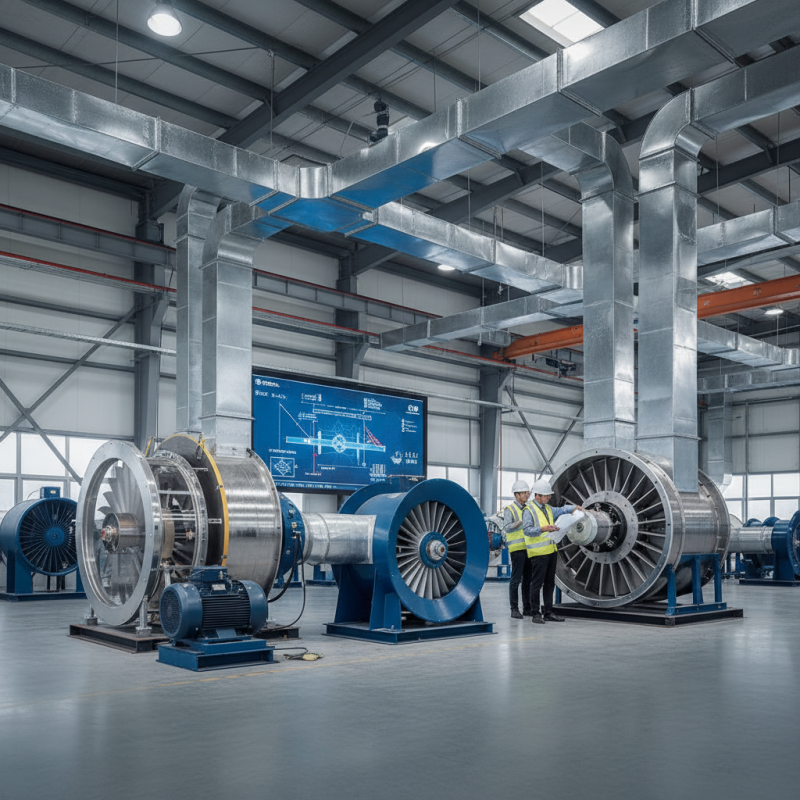
Centrifugal fans play a pivotal role in various industrial applications. Understanding their mechanics is essential. These fans work by impelling air or gas through a rotating impeller. This action moves air from the center to the periphery, harnessing centrifugal force for efficient airflow. According to industry reports, centrifugal fans account for about 70% of the ventilation market. Their efficiency makes them versatile, suitable for heating, cooling, and material transport.
When choosing a centrifugal fan, consider its application. For instance, in HVAC systems, these fans are crucial for maintaining air quality. Their design influences noise levels and energy consumption. A recent study highlighted that improper fan selection could lead to a 15% increase in operational costs. This illustrates the importance of assessing parameters like airflow, pressure, and power consumption.
Moreover, it's essential to be aware of the limitations. Oversizing a fan can result in energy wastage. Undersizing may lead to insufficient airflow, affecting system performance. So, balance is vital. The rise of energy-efficient designs in recent years shows a demand for better performance. Yet, understanding these dynamics requires patience and thorough investigation. Proper knowledge can prevent costly mistakes and enhance system reliability.
How to Choose the Right Centrifugal Fans for Your Needs?
| Application | Fan Type | Airflow (CFM) | Static Pressure (in. wg) | Efficiency (%) |
| Industrial Exhaust | Centrifugal Blower | 1500 | 4.0 | 70 |
| HVAC Systems | Forward Curved Fan | 1200 | 3.5 | 75 |
| Material Handling | Backward Curved Fan | 1800 | 5.0 | 80 |
| Clean Rooms | Material Handling Fan | 900 | 2.5 | 85 |
| Mining Operations | High Pressure Fan | 2000 | 6.0 | 78 |
Identifying Your Specific Airflow and Pressure Requirements
When selecting centrifugal fans, understanding your specific airflow and pressure requirements is crucial. Start by calculating the volume of air needed for your application. This can depend on factors such as room size and intended use. For example, a large warehouse may require more airflow than a small office. Measure the area and consider how the air will circulate in the space.
Next, assess the pressure requirements. Different applications need varying static pressures. If you’re moving air through ductwork, you need to account for friction loss. Higher resistance means you'll need a more powerful fan. If you underestimate, it could lead to inefficiencies. Remember, balancing airflow and pressure is key.
It’s easy to overlook factors like noise and size as well. Fans with high airflow ratings can be loud. Size limitations can also affect installation. Reflect on your environment and how these factors interact with your needs. Understanding these nuances helps in making informed decisions, avoiding missteps in the long run.
Each installation may present new challenges that require careful thought and adaptation.
Evaluating Material and Design Considerations for Durability
When selecting centrifugal fans, material and design play key roles in their durability. The demand for industrial fans is expected to grow by 5.1% annually, aiming for a market value of $5.5 billion by 2025. This shows how vital it is to choose appropriately. Different materials like galvanized steel, aluminum, or polymer can affect lifespan and maintenance needs. Galvanized steel offers corrosion resistance; aluminum is lightweight but may not withstand harsh conditions.
Design considerations are crucial. The fan's impeller, casing, and motor contribute significantly to its performance and durability. An impeller's blade design can influence airflow efficiency and noise levels. Testing conducted by industry experts revealed that fans with optimized blade designs can deliver efficiency improvements of over 15%. Additionally, the correct motor type can enhance the overall operational lifespan. However, failure to account for noise levels may lead to inadequate performance in certain environments.
It's essential to reflect on potential maintenance costs. A cheap fan may save money upfront but could incur higher costs over time due to repairs or replacements. Assessing durability through rigorous data analysis is necessary. Industry reports suggest that up to 40% of centrifugal fans fail within five years due to poor material choices. Users need to focus on long-term solutions rather than immediate savings.
Durability Evaluation of Centrifugal Fans
Assessing Noise Levels and Energy Efficiency of Centrifugal Fans
When selecting centrifugal fans, assessing noise levels and energy efficiency is crucial. Noise pollution from fans can disrupt work environments. Research indicates that noise levels above 85 dB can cause hearing damage. A quiet fan typically operates below 60 dB, making it suitable for sensitive applications. Choosing fans with lower decibel levels can significantly enhance comfort and productivity.
Energy efficiency plays a vital role in operational costs. Fans can account for up to 30% of a facility’s energy consumption. According to the U.S. Department of Energy, using energy-efficient fans can reduce costs by 50% or more. The efficiency ratings for fans are also essential. For example, fans rated with maximum efficiency can deliver the same airflow with less energy input. Proper sizing, along with these ratings, ensures an optimal balance between power consumption and airflow.
Selecting the right fan isn't straightforward. Brand reputation and specifications can sometimes mislead decisions. Many companies overlook the importance of system compatibility and application needs. It’s vital to assess each application's unique requirements and evaluate if potential fans can meet those demands. Each choice should be backed by careful analysis of both noise and energy factors.
Choosing Between Direct Drive and Belt Drive Systems for Performance
When selecting centrifugal fans, the choice between direct drive and belt drive systems is crucial for achieving optimal performance. Direct drive systems feature a motor directly connected to the fan impeller. This configuration has a compact design, resulting in lower space requirements. Additionally, direct drive systems often exhibit higher efficiency rates, with some studies indicating efficiencies of up to 90%. They also require less maintenance due to fewer moving parts.
On the other hand, belt drive systems employ a different mechanism. These systems have a motor that drives the fan via a belt and pulley arrangement. While this can lead to reduced overall efficiency—often around 75%—they offer greater flexibility. Belt drives allow for easier adjustments in fan speed and performance tuning. This adaptability can be vital in industries where varied air flow rates are necessary. However, the maintenance on these systems can be more demanding due to the wear and tear on belts.
While both systems have their advantages, considering operational context is essential. An industry report from the American Society of Mechanical Engineers (ASME) highlighted that misaligned belt drives could result in energy losses exceeding 10%. Therefore, evaluating the specific requirements of your application, such as space and efficiency needs, can lead to a more informed decision. Choosing wisely requires both technical knowledge and industry experience.