
How to Choose the Best Marine Washing Machine?

Choosing the best Marine Washing Machine requires more than comparing prices or drum sizes. Life at sea creates unusual demands. Salt air attacks metal surfaces. Limited freshwater changes every wash cycle. Vessel movement also affects vibration, drainage, and machine stability.

Marine systems author Nigel Calder offers a practical principle: “Choose equipment for the vessel, not the brochure.” This advice matters in real conditions. A compact washer may fit beneath a galley counter, yet struggle during rough passages. A larger model may clean heavy workwear better, but consume too much water or power. The right decision depends on your vessel’s electrical system, crew size, laundry frequency, and available installation space.

Check the details carefully. Confirm voltage, frequency, water pressure, drum capacity, and freshwater consumption. Look for corrosion-resistant panels and secure mounting points. Drainage should work safely when the boat heels. Controls should remain understandable with wet hands. Service access matters too. A broken pump in a remote anchorage can become a serious inconvenience.

Small details matter.

I have seen buyers focus on capacity and overlook vibration control. That mistake can create noise, movement, and premature wear. Manufacturer specifications are useful, but independent reviews and service records deserve equal attention. No machine is perfect. Even an efficient Marine Washing Machine may need careful loading and regular cleaning. This guide compares practical performance, installation demands, maintenance needs, and long-term reliability, helping owners choose with clearer expectations rather than attractive marketing alone.
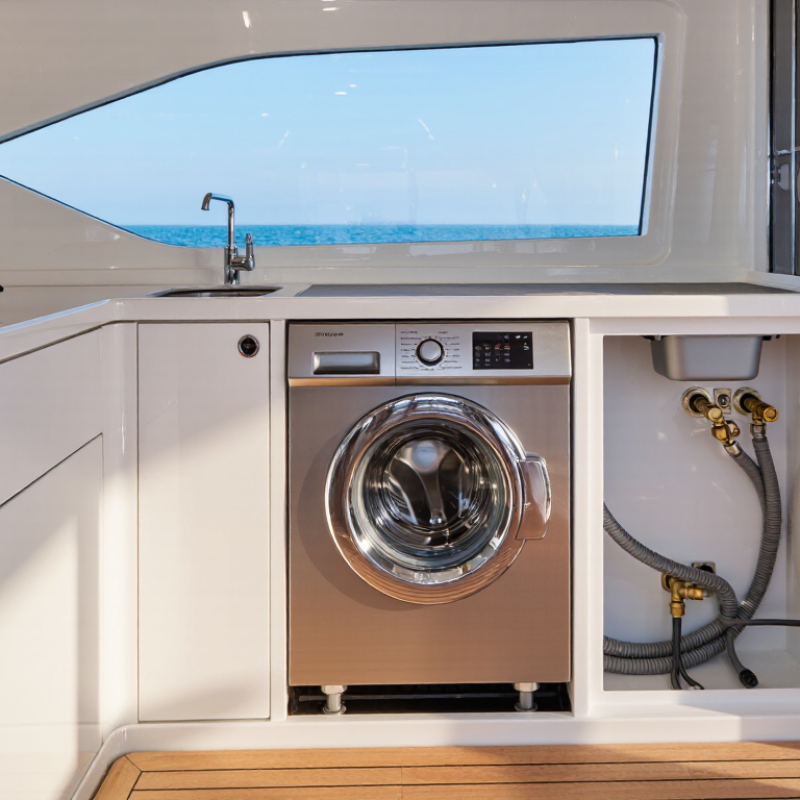
How to Choose the Best Marine Washing Machine?

Understanding Marine Washing Machine Types and Applications

Choosing a marine washing machine starts with understanding the vessel, not the laundry basket. Different designs suit different onboard conditions.

Compact front-loading machines work well on yachts and small cruising vessels. They use less water and fit beneath counters, but installation must allow door clearance. Top-loading models can be easier to load in narrow cabins. However, they may need more vertical space. Washer-dryer combinations save room on long voyages, although drying often takes longer in humid cabins. Semi-automatic units suit vessels with limited plumbing. They require more manual handling, which some crews may find inconvenient.

Applications also change the selection. A family yacht may need a quiet machine for towels, swimwear, and daily clothing. A workboat needs stronger vibration control and simple controls. Larger passenger vessels may require higher-capacity equipment with clear maintenance access. Check the vessel’s power supply carefully. Confirm freshwater pressure, drainage height, and electrical protection before installation. Salt air is another concern. Stainless or corrosion-resistant external parts usually provide better durability, but internal seals still need inspection.

During an onboard trial, run the machine while the vessel is moving gently. Listen for cabinet movement and unusual pump noise. A level base matters more than many buyers expect. I have seen specifications look suitable, yet cramped access made servicing difficult. That detail is easy to miss. Leave space around filters, hoses, and the drain connection. Also consider realistic loads. A machine that handles bedding efficiently may be excessive for two crew members.

Assessing Capacity, Space, and Installation Requirements

How to Choose the Best Marine Washing Machine?

Assessing Capacity, Space, and Installation Requirements

Capacity should match your crew size, voyage length, and available freshwater. A compact unit may suit two people on short trips. Larger crews need fewer, heavier wash cycles. Do not judge capacity by drum size alone. Check the recommended load for towels, bedding, and work clothing. Wet laundry becomes surprisingly heavy.

Measure the installation area carefully. Record width, depth, height, and door clearance. Leave room for hoses and servicing. I once measured the cabinet but forgot the lid clearance. That mistake forced an awkward repositioning. Allow extra space around the machine. Boats move, and tight fittings can create noise or damage.

Installation requirements deserve equal attention. Confirm the vessel’s voltage, frequency, water pressure, and drainage arrangement. The platform must remain level and support the machine during movement. Use secure restraints and marine-suitable fittings where appropriate. Keep the drain hose properly positioned to prevent backflow. Ventilation also matters in enclosed compartments. A qualified marine technician should inspect the connection points before use. Manufacturer instructions remain important, even for experienced owners. My practical preference is to test one small load first. It reveals vibration, drainage, and access problems early. Some assumptions fail onboard.

Comparing Marine-Specific Features and Washing Performance

How to Choose the Best Marine Washing Machine?

Marine washing machines must survive movement, limited water, and unstable electrical supply. Compare marine-specific features before comparing advertised cleaning scores. A compact drum is useful, but capacity alone can mislead. Check the machine’s rated load, installation depth, door clearance, and drainage requirements. A locking drum, vibration control, and corrosion-resistant housing matter during rough passages. The machine should also tolerate your vessel’s voltage, frequency, and inverter limits.

Washing performance still needs objective evidence. ENERGY STAR’s 2024 data states that certified washers use about 20% less energy and 30% less water than standard models. That saving matters when freshwater tanks are small. However, its testing reflects household conditions, not a moving boat. The U.S. Department of Energy’s washer test procedure assumes 295 cycles annually, which may not match marine use. Lab figures can look too perfect.

Look for water consumption per cycle, spin speed, cycle duration, and residual moisture after spinning. A high spin speed can shorten drying time, but it may increase vibration on a lightweight hull. Test a small load with towels, shirts, and damp bedding. Watch the machine during drain and spin cycles. Noise matters at night. So does pump lift. A machine that cleans well but struggles with a long drain hose becomes frustrating quickly. I would also leave some capacity unused. Overloading is easy onboard. Mistakes happen.

How to Choose the Best Marine Washing Machine? - Comparing Marine-Specific Features and Washing Performance

Evaluation Dimension Compact Front-Load Marine Washer Compact Top-Load Marine Washer Portable Compact Washer What to Look For
Typical load capacity 2.0–2.8 cu. ft. (57–79 L) 1.6–2.5 cu. ft. (45–71 L) 1.0–1.7 cu. ft. (28–48 L) Choose capacity according to crew size, available storage, and laundry frequency.
Suitable household size 2–4 people with regular use 1–3 people with moderate use 1–2 people or light-duty use A smaller drum reduces water, energy, and storage demands.
Common power input 120 V AC; approximately 10–15 A circuit 120 V AC; approximately 10–15 A circuit 120 V AC or manual/low-power operation Verify compatibility with the vessel’s inverter, generator, shore power, and circuit protection.
Water connection Pressurized inlet and dedicated drain Pressurized inlet and dedicated drain Manual filling or hose connection; gravity drain is common Use a secure drain route and prevent wash water from entering bilge spaces unless permitted by local regulations.
Water use per normal cycle Approximately 15–30 gal (57–114 L) Approximately 20–35 gal (76–132 L) Approximately 8–20 gal (30–76 L), depending on filling method Lower water use is valuable when freshwater tanks or onboard treatment systems are limited.
Maximum spin speed 800–1,200 rpm 600–1,000 rpm 300–800 rpm, where available Higher spin speed generally removes more water and reduces drying time, but may increase vibration.
Typical wash duration 30–120 minutes, depending on the program 30–100 minutes, depending on the program 15–60 minutes, often with fewer program options Quick cycles are useful for lightly soiled clothing; longer cycles improve cleaning of towels and workwear.
Vibration control Adjustable feet, leveling, and anti-vibration design are commonly available Generally stable, but may require stronger leveling support Usually requires a stable, level surface and careful load balancing A secure mounting surface is essential on a moving vessel; never rely on the appliance feet alone.
Marine installation considerations Requires fixed installation, ventilation, drainage, and access for servicing Requires fixed installation and overhead clearance Can often be stored between uses, but hoses and electrical connections need protection Check space, access width, drainage height, ventilation, and movement restraints before purchase.
Corrosion and moisture protection Look for corrosion-resistant fasteners, protected controls, and sealed electrical components Look for protected controls and corrosion-resistant external hardware Usually needs additional protection during storage and salt-air exposure No household appliance should be exposed directly to spray, standing water, or continuous high humidity.
Cleaning performance Very good for everyday clothing, towels, and bedding when correctly loaded Good for everyday clothing; performance depends strongly on load balance Adequate for light soil and small loads; less effective for bulky items Select adequate wash actions, temperature settings, and detergent compatibility for the fabrics used onboard.
Freshwater efficiency High when using load sensing and low-water cycles Moderate to high, depending on cycle selection Potentially high because the user controls the fill volume Avoid excessive rinsing while ensuring detergent is fully removed from clothing.
Ease of drying clothes Best of the three when equipped with a high-speed spin cycle Good, but usually leaves more moisture than a front-load design Limited to moderate; additional air-drying is commonly required Choose strong spin extraction if drying space, time, or energy is limited.
Best overall use case Frequent laundry on medium and larger vessels with fixed utility connections Users who prefer simple loading and have sufficient vertical clearance Small boats, occasional laundry, limited installation space, or low laundry volume Balance cleaning quality, water consumption, power availability, vibration control, and service access.

Note: Values are typical operating ranges for compact marine or marine-suitable washing machines. Actual specifications vary by model, cycle, load size, water temperature, installation, and vessel power system.

Evaluating Energy, Water, Durability, and Maintenance Needs

Choosing a marine washing machine starts with energy and water limits, not drum capacity. ENERGY STAR reports that certified clothes washers use about 20% less energy and 30% less water than standard models. Those savings matter aboard a vessel, where freshwater tanks and generator capacity are limited. However, household certification does not guarantee marine suitability.

Check the machine’s actual consumption per cycle. A low-water cycle may leave salt-stained workwear poorly rinsed. That creates another load. A practical onboard test should include towels, damp clothing, and a full spin cycle. Measure water use if possible. Small errors become expensive at sea. A compact unit with a longer cycle may outperform a faster, inefficient model.

Durability needs equal attention. The International Electrotechnical Commission’s IEC 60092 series addresses electrical installations in ships, including vibration and environmental conditions. Look for corrosion-resistant fasteners, sealed controls, secure hose connections, and a mounting system that limits movement. Maintenance access is often overlooked. Filters should open without removing cabinetry. Hoses should remain visible. The U.S. Department of Energy notes that heating water is a major part of laundry energy use, so cold-water programs deserve serious consideration. Still, cold washing is not always effective for oily marine fabrics. That assumption needs testing. A service log, spare inlet filter, and easy drainage can prevent a minor blockage from becoming a wet, expensive repair.

How to Choose the Best Marine Washing Machine?

Evaluation of energy efficiency, water consumption, salt-air durability, and maintenance requirements

Energy
Prefer efficient models using approximately 0.50 kWh or less per standard cycle.
Water
A practical target is about 45 liters or less per cycle for regular laundry loads.
Durability
Choose corrosion-resistant materials and sealed controls designed for salt-air exposure.
Maintenance
Accessible filters, pumps, hoses, and an inspection interval of about 12 months reduce downtime.

Scores are benchmark-based selection ratings, where 100 represents the strongest practical fit for marine use. The comparison uses typical appliance performance targets rather than company or brand data.

Selecting the Best Model for Your Vessel and Operating Conditions

Choosing a marine washing machine starts with the vessel, not the advertised drum size. Measure crew numbers, laundry frequency, freshwater supply, and available electrical power. A compact washer may suit a coastal workboat, while an expedition vessel needs larger capacity and faster recovery between loads. Check voltage, frequency, drainage height, and door clearance before ordering.

Operating conditions matter more offshore. Salt air accelerates corrosion, while vibration can loosen fittings and damage bearings. Select marine-grade fasteners, reinforced suspension, and controls that tolerate temperature changes. A heated model can shorten drying time, but it may increase generator demand. The Fourth IMO GHG Study 2020 estimated shipping produced 2.89% of global anthropogenic greenhouse-gas emissions in 2018. Energy use deserves attention. The IMO’s 2023 strategy also pushes shipping toward lower emissions, making efficient cycles increasingly practical.

Water consumption deserves equal scrutiny. The UN World Water Development Report 2024 links water stress with rising operational pressure worldwide. Choose adjustable load sensing, low-water programs, and reliable greywater filtration. In practice, specifications can be misleading. A lower-rated machine may outperform a larger model when loads remain small. I would test one full cycle beside the intended installation space. Listen for vibration. Check hose movement. Review service access with gloves on. Crew feedback often exposes problems that factory trials miss, especially when wet towels shift during rough weather.