What Is a Cylinder Piston Rod and How Does It Work?
A hydraulic cylinder can lift a loader bucket, position a press, or extend a stabilizer with controlled linear force. At the center of that movement is the Cylinder Piston Rod: the hardened steel shaft that connects the piston inside the barrel to the machine outside it. As pressurized oil moves the piston, the rod carries the resulting force through the cylinder head and into the load. Simple in appearance. Demanding in service.
The market reflects how widely these components are used. Grand View Research’s Hydraulic Cylinder Market report estimated the global market at about USD 14.28 billion in 2022 and projected growth through 2030. That figure describes a broad market, not the expected life or performance of any individual rod. In practice, rod material, surface finish, diameter, and corrosion protection all matter. So do side loads, contamination, and installation alignment. A polished rod may look sound while a damaged seal lets grit into the cylinder.
Industry standards help define the design context. ISO 6020-2 covers dimensions for selected 16 MPa hydraulic cylinders, while ISO 6022 addresses selected 25 MPa cylinders. These standards do not replace a manufacturer’s specifications or a load calculation. That distinction is easy to miss.
This guide explains what a cylinder piston rod does, how it works with the piston and seals, and which details influence reliability. It also considers common failure clues, such as scoring, leakage, and uneven wear. The rod is only one part of the system. Understanding that limitation is a useful place to start.
What a Cylinder Piston Rod Is
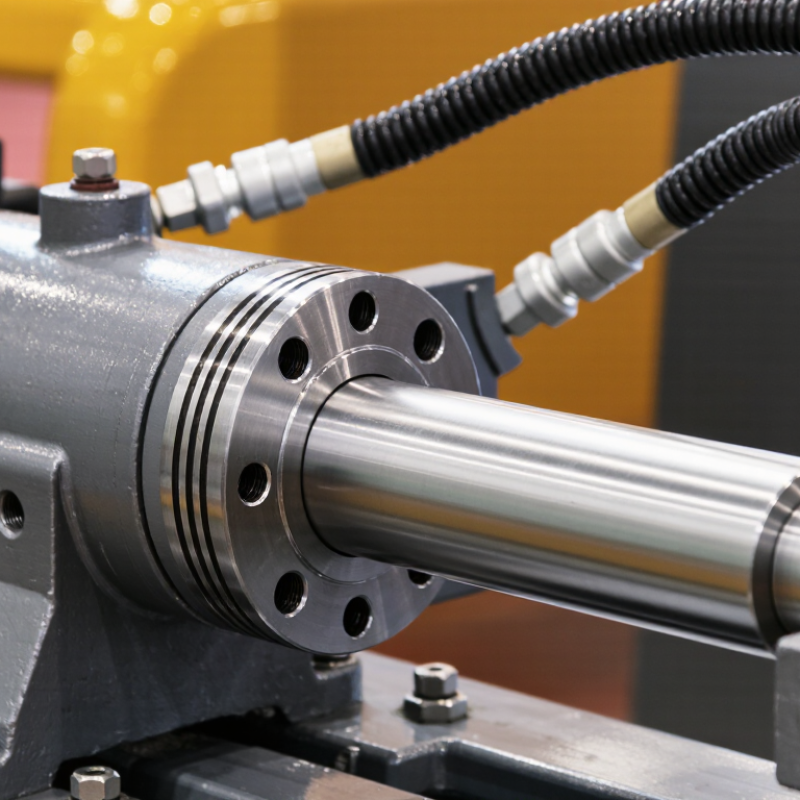
A cylinder piston rod is the steel member that connects a hydraulic cylinder’s piston to the machine or load outside the cylinder. Hydraulic pressure moves the piston, and the rod transfers that motion and force through the cylinder head. It carries load. The exposed section usually passes through a guide and a rod seal, which help control movement and limit fluid leakage.
Rod size and surface condition matter. A rod that is too slender can buckle under compression; side loading can also wear its guide and seal unevenly. Manufacturers commonly use hardened, corrosion-resistant surface finishes, but the right choice depends on the fluid, environment, load, and duty cycle. ISO 6020-1 specifies dimensions for a hydraulic-cylinder series rated at 16 MPa, or 160 bar. That figure describes a cylinder series, not a guaranteed working pressure for every installation. Fit, mounting, and operating conditions still matter.
The market context is substantial: Grand View Research estimated the global hydraulic cylinder market at USD 14.8 billion in 2023. Market estimates vary with scope, so this figure does not describe piston-rod quality or service life. In practice, inspect the rod for scoring, rust, and uneven wear, especially near the seal travel area. A tiny scratch can matter. And inspection alone may miss misalignment; that part deserves a second look.
Main Components and How They Connect
A cylinder piston rod is the moving link between a piston inside the cylinder and a machine outside it. The cylinder barrel guides the piston, while the rod passes through a sealed opening in the rod gland. The piston is usually secured to the rod with a threaded connection, nut, or another specified retaining feature. Exact arrangements vary by cylinder design.
Hydraulic pressure enters through a port and acts on one side of the piston. A seal around the piston limits fluid bypass between the two chambers. The pressure difference moves the piston and rod together, producing useful force at the rod end. The rod gland supports the rod and helps keep fluid inside as the rod extends or retracts. Small details matter. Seal placement, fastening, and rod alignment all affect operation. Real assemblies can be less tidy than diagrams suggest, so confirm the actual design before assuming parts are interchangeable.
Tips: Check the rod for scoring and the gland for leaks during routine inspection. Use the specified assembly method and tightening values. A clean rod surface helps protect seals. If movement feels uneven, do not assume pressure is the only cause; contamination, wear, or misalignment may also be involved.
How the Rod Transfers Piston Force
Inside a cylinder, the piston rod connects the piston to the machine part that must move. When pressurized fluid or air pushes the piston, the rod carries that force through the cylinder head and outward to the load. The rod does not create force; it transmits force produced by pressure acting on the piston’s area. Simple, but important.
On an extending stroke, pressure behind the piston drives it forward, and the rod pushes a gate, fixture, or linkage. On a retracting stroke, pressure on the rod side pulls the piston back, drawing the load with it. In a double-acting cylinder, the rod occupies some piston area, so retracting force is often lower than extending force at equal pressure. Real results also depend on friction, pressure losses, and the load itself.
The rod surface must stay smooth where it passes through the seals. A nick or a film of abrasive dust can damage a seal and cause leakage. Alignment matters, too. A rod designed mainly for straight-line force may bend under side loading, especially when extended far from the cylinder. That detail is easy to miss. Mounting and linkage geometry deserve a close look, though real installations rarely match a perfect diagram.
Common Materials and Applications
A cylinder piston rod connects the piston inside a hydraulic or pneumatic cylinder to an external load. As pressure moves the piston, the rod transfers force and produces straight-line motion. Its surface slides through a seal and often faces dust, water, or impact. Small scratches can damage seals and cause leaks.
Carbon steel is common because it is strong, economical, and suitable for many industrial cylinders. Protective coatings, such as hard chrome plating, help resist wear and corrosion. Stainless steel is often chosen for damp, washdown, or corrosive environments, though it may cost more and is not automatically right for every fluid. Material choice depends on load, exposure, required life, and maintenance access. Loads vary.
These rods appear in excavators, farm equipment, factory presses, lifting platforms, and material-handling systems. A construction machine may need a tough, coated rod that tolerates grit and repeated impacts. A food-processing cylinder may call for stainless steel and a finish that is easier to clean. In practice, the rod material is only part of the decision. Seal compatibility, surface finish, alignment, and corrosion protection matter too. A coating can wear unevenly, and inspection needs differ by working conditions. That trade-off is easy to underestimate.
Inspection and Maintenance Considerations
A cylinder piston rod transfers force from the piston to a machine component. Its exposed surface also passes through a rod seal, so small defects can affect both movement and fluid retention. During inspection, wipe the rod clean and look for scratches, rust spots, dents, or peeling surface finish. Use good lighting. A mark that catches a fingernail deserves closer attention, since it may damage the seal as the rod moves.
Check for hydraulic fluid around the gland, but do not assume every damp patch means a failed seal. Residue can travel from nearby fittings. Clean the area, cycle the equipment only under approved conditions, then check whether fresh fluid returns. Look for uneven wear, too. A rod that appears bent or rubs consistently on one side may point to misalignment or side loading. These clues are easy to overlook when equipment still works.
Maintenance should follow the cylinder maker’s service guidance and the site’s safety procedures. Before touching the assembly, isolate the equipment and relieve stored pressure; a stationary rod can still be hazardous. Keep dirt away from opened connections, and use clean tools when servicing seals. Record leakage, visible damage, and changes in operating behavior. A quick note with the date helps reveal a worsening pattern. It is tempting to polish a rough rod in place, but that can remove protective material and make the problem worse.


