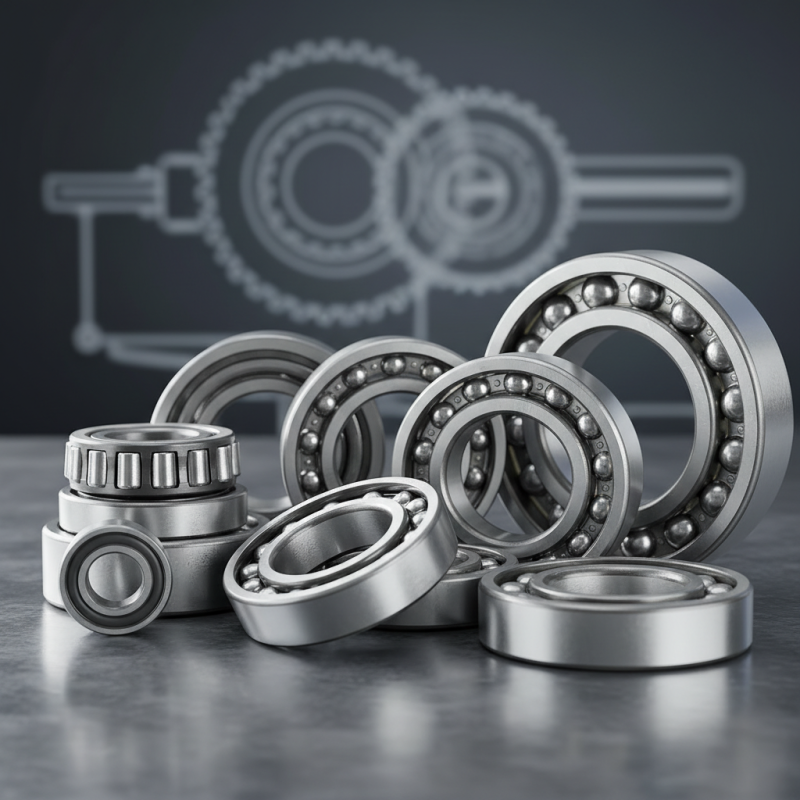
What Are the Different Types of Ball Bearings and Their Uses?
Ball Bearings are essential components in many machines. They reduce friction, enabling smooth movement. Various types of ball bearings serve different purposes.
Understanding these types is crucial for selecting the right bearing. For instance, deep groove ball bearings are versatile. They are commonly used in motors and conveyors. These bearings handle both radial and axial loads with ease.
However, not all ball bearings are suitable for every application. Some are designed for high-speed operations, while others excel in heavy load situations. It’s important to reflect on your specific needs before choosing. A mismatch can lead to equipment failure or reduced efficiency. The right choice can enhance performance and longevity.
Types of Ball Bearings: A Comprehensive Overview
Ball bearings play a crucial role in many machines. There are several types, each designed for specific applications. The most common types include deep groove, angular contact, and thrust ball bearings. Each type has unique characteristics that make it suitable for distinct situations.
Deep groove ball bearings are versatile and widely used. They can accommodate both radial and axial loads. This makes them ideal for electric motors, automotive applications, and household appliances. In contrast, angular contact bearings excel in high-speed operations. They can support heavy axial loads, often found in spindle and gearbox applications. Meanwhile, thrust ball bearings are specifically designed for axial loads. They are found in various machinery to provide stability and minimize wear.
Choosing the right ball bearing requires careful consideration. Using the wrong type can lead to premature failure. Some bearings may seem perfect at first glance, but they often suffer in demanding environments. It's essential to evaluate operating conditions and load requirements. Overall, understanding the different types of ball bearings ensures better performance and longevity in mechanical systems.
Applications of Deep Groove Ball Bearings in Everyday Machinery
Deep groove ball bearings are essential components in various machinery we use daily. Their simple design allows for efficient operation, making them popular in electric motors, household appliances, and automotive applications. These bearings can support both radial and axial loads, contributing to their versatility in different environments.
In electric motors, for example, deep groove ball bearings help reduce friction. This enhances performance and increases the lifespan of the motor. They are crucial in washing machines, enabling smooth drum rotation. You might notice that without them, appliances would run poorly. In automobiles, these bearings support wheels and engine parts, ensuring a smoother ride and better fuel efficiency.
Tip: Regular maintenance of machines with deep groove ball bearings can prevent issues. Keep an ear out for unusual sounds. They might indicate wear or a need for lubrication.
While deep groove ball bearings are effective, they require proper installation. Improper fitting can lead to premature failure. Always ensure that they are well-aligned to avoid added stress.
Tip: When replacing bearings, choose the right size. An incorrect size can cause complications down the line.
The Role of Angular Contact Ball Bearings in Rotating Systems
Angular contact ball bearings play a crucial role in rotating systems. They are designed to handle combined loads, allowing them to support both radial and axial forces. This unique feature makes them ideal for applications such as electric motors and machine tools. According to industry reports, the demand for these bearings has risen by 5% annually over the last five years.
One of the significant advantages of angular contact ball bearings is their ability to operate at high speeds. They can reduce friction and increase efficiency in rotating machinery. However, it is essential to select the correct angle of contact to match the application’s requirements. A miscalculation can lead to premature wear and failures.
Tips: Regular maintenance helps prolong bearing life. Monitoring temperature changes can indicate potential issues. Additionally, using the right lubrication is critical for optimal performance.
Despite their advantages, angular contact ball bearings do present challenges. They require precise installation and alignment, which can be tricky. Misalignment may lead to uneven load distribution and eventual failure. It’s important to evaluate the specific application needs critically before deciding on the type of bearing to use. This reflection can prevent costly mistakes down the line.
Different Types of Ball Bearings and Their Uses
In this chart, we illustrate the various types of ball bearings and the number of applications they are commonly found in. Angular Contact Ball Bearings, for instance, play a crucial role in load handling in rotating systems.
Differences Between Self-Aligning and Thrust Ball Bearings
Self-aligning ball bearings and thrust ball bearings serve distinct purposes in various applications. Self-aligning ball bearings are designed to handle misalignments. They typically feature two rows of balls and a common concave raceway. This unique shape allows for angular misalignment, making them ideal for applications with shaft deflection. According to industry reports, they are commonly used in agricultural machinery and conveyor systems where such alignment issues frequently occur.
In contrast, thrust ball bearings are engineered to accommodate axial loads. They consist of two raceways and a set of balls positioned between them. Their primary function is to support loads parallel to the shaft. Thrust ball bearings are predominantly utilized in applications such as automotive gearboxes and machine tools. Interestingly, their effectiveness diminishes under radial loads, which can lead to operational inefficiencies or even failures in specific scenarios.
The material choice for both types greatly impacts durability. Self-aligning bearings often use a combination of steel and ceramic materials for enhanced longevity. On the other hand, thrust bearings require precise engineering to handle high axial loads effectively. Data from industry analyses indicate that improper selection or maintenance of these bearings can result in significant operational downtime, a point worth reflecting on for manufacturers aiming to optimize performance.
Specialized Ball Bearings: Ceramic and Hybrid Options Explained
When it comes to specialized ball bearings, ceramic and hybrid options stand out. Ceramic ball bearings are made of durable ceramic material. They are lighter than their steel counterparts. This weighs less, increasing performance in many applications. Their resistance to corrosion makes them ideal for extreme environments. They also operate at higher speeds and temperatures.
Hybrid ball bearings combine ceramic and steel. The inner ring is often steel, while the balls are ceramic. This mix aims to leverage the benefits of both materials. This type of bearing reduces friction and improves lifespan. However, hybrid options can be more expensive. Not all applications will benefit from this cost. Users must consider the specific needs of their machinery. Understanding the limitations is key to making informed decisions.
What Are the Different Types of Ball Bearings and Their Uses?
| Type of Ball Bearing | Material | Advantages | Common Uses |
| Deep Groove Ball Bearing | Steel | Versatile, low friction | Electric motors, machinery |
| Angular Contact Ball Bearing | Chrome Steel | Handles axial and radial loads | Spindle bearings, pumps |
| Self-Aligning Ball Bearing | Steel | Allows for misalignment | Conveyor systems, textile machinery |
| Ceramic Ball Bearing | Ceramic | Lightweight, high corrosion resistance | High-speed applications, aerospace |
| Hybrid Ball Bearing | Steel and Ceramic | Combines best of both materials | Bicycle wheels, automotive |