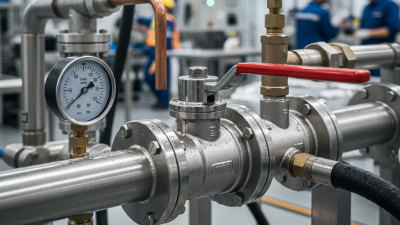
Choosing reliable Ball Valve Manufacturers is not a simple price comparison. It is a practical investigation into materials, production controls, testing, and service support. A dependable manufacturer should explain how its valves perform under pressure, temperature changes, corrosive media, and repeated operation.
Greg Johnson, a respected valve-industry educator, puts the issue plainly: “A valve is only as good as the application it serves.” This principle deserves attention. A stainless steel ball valve may look excellent in a catalog, yet fail when the seal material matches the fluid poorly. Ask for pressure-test records, material certificates, dimensional drawings, and traceable quality procedures. Inspect the factory if possible. Look for organized assembly areas, calibrated testing equipment, and clearly identified components.
Experience matters here. Reliable suppliers usually discuss failure risks before accepting an order. They ask about pipe size, operating pressure, fluid composition, temperature, connection standards, and actuation frequency. Weak suppliers often promise everything. That should create doubt.
No checklist is flawless. A polished website proves little. Even an established factory can make mistakes, especially during custom production. Buyers should verify samples, review independent certifications, and test a small batch before making a large commitment. After-sales support also matters. A useful manufacturer responds quickly when a valve leaks, sticks, or arrives with inconsistent markings.
This guide examines how to compare Ball Valve Manufacturers through evidence rather than impressive claims. It considers technical capability, inspection discipline, communication, delivery consistency, and long-term accountability. The goal is not to find the cheapest valve. It is to find a supplier whose performance remains dependable after installation.
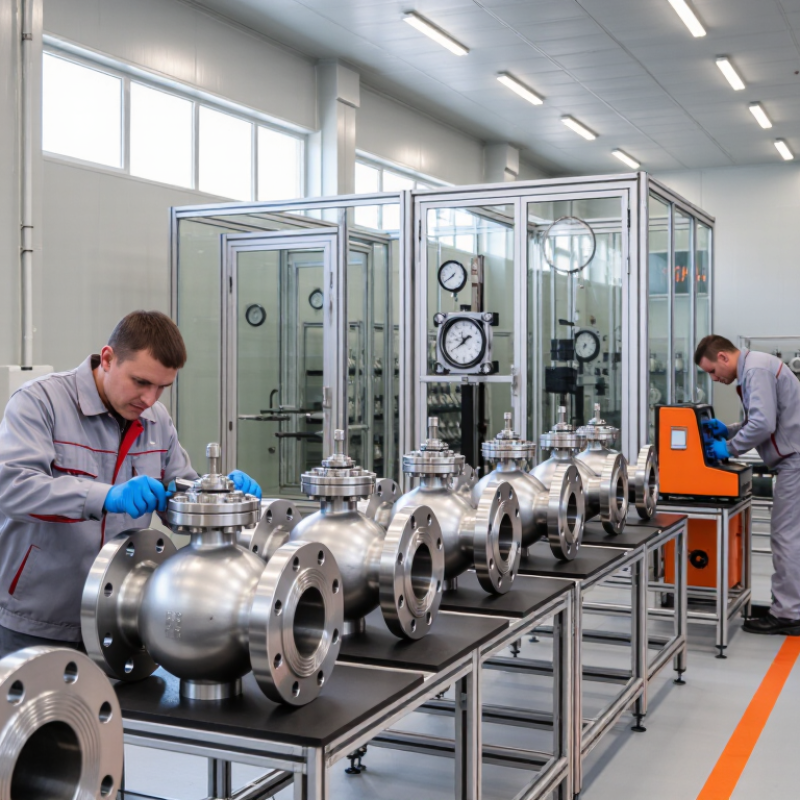
A ball valve controls flow by turning a drilled sphere inside a sealed body. At 90 degrees, the passage opens or closes with little resistance. This design serves water pipelines, compressed air systems, heating equipment, and many industrial fluid lines. When partially open, however, turbulence can damage seats and reduce service life. That detail matters.
Reliable manufacturers should understand the application before recommending a valve. They should define the required body material, seal type, pressure class, temperature range, and connection standard. Stainless steel may suit corrosive fluids, while reinforced polymer seats can support selected low-temperature services. Steam and abrasive media need closer evaluation. A ball valve is not automatically suitable for every process. Request compatibility data, flow conditions, and test results instead of accepting general claims.
Manufacturer reliability also appears in production details. Look for documented pressure testing, leak testing, dimensional inspection, and batch traceability. Ask for clear drawings and maintenance instructions. Field inspections often reveal problems caused by poor machining or incorrect seat compression. Do not rely on polished photographs. Paperwork can be incomplete. A supplier may produce sound valves but provide weak technical support after delivery. Check response times, replacement-part availability, and how carefully engineers answer unusual operating questions. Even a correct selection can fail when installation guidance is vague or overlooked.
Choosing reliable ball valve manufacturers starts with verified qualifications, not polished brochures. Ask for business licenses, quality certificates, and relevant pressure equipment approvals. Check each certificate’s scope, issuing body, and expiry date. ISO 9001 is useful, but it does not prove valve performance alone. Request recent audit findings and evidence of corrective actions. A credible manufacturer can explain failures without hiding them. That honesty matters.
Examine how valves are made. Review forging or casting controls, CNC machining, assembly cleanliness, and pressure-testing procedures. Ask whether every unit receives shell and seat tests, with recorded pressure and duration. Material certificates should trace steel, seals, and bolts to each production batch. Inspectors should use calibrated gauges, not informal visual checks. Production capacity also needs evidence. Compare monthly output, lead times, workforce skills, and maintenance records against your order size. A crowded workshop may promise too much.
Request a sample inspection before signing a large contract. Measure bore size, flange dimensions, stem operation, coating thickness, and leakage results. Review packaging, storage, and after-sales response times. Technical staff should answer torque, temperature, and media-compatibility questions clearly. No factory is perfect. A well-organized facility may still have weak subcontractor control. Ask for supplier lists and incoming-inspection records. Keep the scoring sheet factual, but leave room for follow-up evidence.
Evaluate Manufacturer Qualifications and Production Capabilities
This illustrative procurement model prioritizes quality systems, design compliance, pressure testing, traceability, process capability, and delivery capacity. Verification should include ISO 9001 certification, applicable API or ASME requirements, documented testing to standards such as ISO 5208 or API 598, material certificates, inspection records, and evidence of stable production capacity.
Reliable ball valve manufacturers should prove material quality before discussing price. The 2024 Industrial Valves Market report by MarketsandMarkets estimates the sector will grow from about USD 78 billion in 2023 to nearly USD 95 billion by 2028. Growth increases supplier choice, but not necessarily supplier discipline. Ask for heat numbers, chemical composition, and traceability records for stainless steel, carbon steel, and sealing materials. A certificate alone is not enough.
Design compliance matters under pressure. ASME B16.34 defines requirements for valve pressure-temperature ratings, materials, and testing. API 6D adds design and inspection expectations for pipeline valves. ISO 5208 classifies pressure-boundary and seat leakage performance. Request test records showing shell pressure, seat pressure, test duration, and leakage results. Check whether the stated class matches your operating temperature. Small mismatches become expensive failures.
Quality control should include dimensional inspection, torque testing, and sample-based material verification. The 2023 Quality Progress survey from ASQ reported that 42% of surveyed organizations identified inconsistent processes as a major quality challenge. That finding deserves attention in valve purchasing. Visit the factory when possible. Watch how inspectors handle rejected castings. Ask whether nonconformance reports are closed with evidence. I prefer measurable answers, not polished promises. Still, audits can miss problems. Repeat sampling and independent testing may be necessary for critical service.
Testing procedures reveal more than polished product photographs. Ask how each ball valve is tested before shipment. A dependable manufacturer should document shell, seat, and low-pressure leakage tests. Test pressure, holding time, acceptance criteria, and calibrated equipment should be clearly recorded. Ask for sample reports.
Look for procedures aligned with recognized standards, such as ISO 5208 or applicable pipeline specifications. Certifications matter, but their scope matters more. A quality certificate may cover a factory system, not every valve design. Check certificate validity, issuing body, and audit coverage. Factory acceptance testing can include visual checks, dimensional inspection, torque measurement, and functional cycling. Small details count.
Product traceability should follow the valve from raw material to final inspection. Heat numbers, casting records, inspection results, and operator identification should connect within one file. Markings should remain readable after coating. During supplier reviews, I would compare the nameplate with packing records and material certificates. Discrepancies are warning signs.
Once, a tidy report nearly hid an incomplete traceability chain. That was a useful reminder. Documents can look complete while evidence is missing.
Request a traceability example before placing a large order. Also review how nonconforming valves are isolated, corrected, and re-tested. Reliable manufacturers explain these steps plainly. Vague answers deserve another question.
When choosing reliable ball valve manufacturers, examine their technical support before comparing prices. Ask whether engineers can review pressure ratings, media compatibility, temperature limits, and installation conditions. A dependable manufacturer should provide clear drawings, material certificates, test records, and practical selection advice. Request examples from similar applications, but verify every claim with documented evidence. Sales promises are not engineering support.
Delivery terms deserve equal attention. Confirm production lead time, inspection stages, packaging standards, and shipping responsibilities in writing. Clarify what happens when drawings change or a batch fails inspection. A realistic schedule is more valuable than an attractive promise. We once treated a short lead time as a strength, but later found that missing test documents delayed installation. That mistake was avoidable.
Tips: Ask for one technical contact, a sample inspection report, and a written response-time commitment. Check whether spare parts remain available after the original order. Review the warranty scope, service exclusions, troubleshooting process, and field-support options. Long-term service should include traceability, maintenance guidance, and training when needed. A reliable supplier will discuss limitations openly, not hide behind general assurances. No supplier is perfect. Look for consistent records, responsive communication, and evidence that survives close inspection.
| Evaluation Category | Key Assessment Dimension | Reliable Supplier Benchmark | Recommended Verification Evidence | Warning Signs | Suggested Weight |
|---|---|---|---|---|---|
| Technical Capability | Applicable design and manufacturing standards | Products are designed and tested against relevant standards such as API 6D, ASME B16.34, ISO 17292, or equivalent project specifications. | Review current product datasheets, design calculations, certificates, and a standards compliance matrix for the required valve type. | Standards are listed generically without identifying the applicable valve size, pressure class, material, or test requirement. | 12% |
| Technical Capability | Pressure and leakage testing | Each valve receives documented shell and seat testing. Common acceptance references include API 598, ISO 5208, or the purchaser's approved testing procedure. | Request sample hydrostatic and seat-test reports showing valve identification, test pressure, duration, medium, leakage result, and inspector approval. | Only a general factory statement is provided, with no traceable test record for the supplied valve. | 12% |
| Technical Capability | Material traceability | Pressure-retaining parts can be traced to heat numbers and material certificates, normally including chemical composition and mechanical properties. | Check sample MTCs, heat-number marking, inspection plans, and the link between raw material records and final valve serial numbers. | Material certificates are incomplete, unsigned, or cannot be connected to the finished valve. | 10% |
| Technical Capability | Actuator and accessory compatibility | The supplier can provide verified torque calculations, mounting details, fail-position requirements, switch settings, and applicable control accessories. | Review actuator sizing calculations, interface drawings, pneumatic or electric requirements, and functional test records. | Actuators are selected only by nominal valve size, without accounting for breakaway torque, differential pressure, temperature, or safety factor. | 8% |
| Technical Support | Pre-sales engineering response | Technical questions receive documented answers within 1–2 business days, with a named engineer responsible for the project. | Submit a representative inquiry covering pressure class, temperature, media, end connection, materials, and actuation requirements; evaluate the completeness of the reply. | Responses are limited to price and delivery claims, with no written confirmation of technical suitability. | 8% |
| Technical Support | Submittal and drawing control | General arrangement drawings, datasheets, inspection plans, manuals, and revision-controlled documents are supplied before production approval. | Review a sample document package for revision numbers, approval status, dimensional information, materials, testing requirements, and document index. | Drawings are not revision-controlled or are issued only after manufacturing has started. | 7% |
| Quality Assurance | Inspection and nonconformance management | The supplier maintains documented inspection procedures, calibration records, nonconformance reports, and corrective-action records. | Request an anonymized sample inspection and test plan, gauge calibration certificate, and closed corrective-action report. | Inspection depends entirely on visual checks, and measuring equipment has no valid calibration status. | 10% |
| Delivery Terms | Quoted lead time and production capacity | The quotation separates engineering, procurement, manufacturing, testing, and dispatch milestones; dates are tied to drawing approval or purchase-order release. | Compare the promised schedule with production capacity, current order load, material availability, and the stated delivery point under the selected Incoterm. | A short delivery promise is given without a milestone schedule or confirmation of material availability. | 8% |
| Delivery Terms | Incoterms, packaging, and shipping responsibility | The quotation clearly states the applicable Incoterm, named place, packaging standard, export documents, insurance responsibility, and risk-transfer point. | Check the pro forma invoice, packing specification, shipping plan, certificate-of-origin requirements, and responsibility for freight damage. | Freight, insurance, customs clearance, or damage liability is left undefined. | 6% |
| Delivery Terms | Change control and delay communication | The supplier uses formal change notices and provides advance written notification of material, design, schedule, or manufacturing changes. | Review purchase-order terms covering approved substitutions, schedule updates, force majeure, liquidated damages, and customer approval rights. | The supplier reserves unrestricted rights to substitute materials or revise delivery dates without customer approval. | 5% |
| Long-Term Service | Warranty and claims handling | Warranty duration, coverage, exclusions, claim evidence, response time, repair obligations, and replacement procedures are defined in writing. | Check whether the warranty covers manufacturing defects, leakage, actuator faults, documentation errors, and reasonable field support. | The warranty is described only as “standard” or excludes most operating components without clear definitions. | 7% |
| Long-Term Service | Spare parts availability | Common replacement parts such as seats, seals, stem components, packing, bolts, and actuator accessories have defined part numbers and availability periods. | Request a recommended two-year spare-parts list, storage guidance, interchangeability information, and indicative replenishment lead times. | No spare-parts list is available, or replacement parts require a completely new valve assembly. | 5% |
| Long-Term Service | After-sales response and field support | A service contact is available during the customer's operating hours, with defined response targets for technical questions, urgent failures, and field-service requests. | Ask for the service escalation process, remote troubleshooting procedure, service coverage, and typical response times. | After-sales communication depends on an individual salesperson and has no documented escalation route. | 5% |
| Commercial Reliability | Payment terms and total cost of ownership | The offer identifies the valve price, testing, documentation, packaging, freight, spare parts, commissioning support, and potential maintenance costs separately. | Compare the total delivered cost and lifecycle requirements rather than evaluating purchase price alone. | A low initial price is offset by unclear testing charges, expensive spare parts, or limited warranty coverage. | 5% |
| Overall Decision | Supplier qualification result | Proceed when technical compliance, quality records, delivery commitments, and service terms are all documented and commercially acceptable. | Use a weighted scorecard, require corrective actions for gaps, and approve the supplier only after critical nonconformities are closed. | Selection is based solely on price, a single sample, or an unverified delivery promise. | 100% |