How to Choose the Right Foot Pedal Valve for Your Needs?
Choosing the right Foot Pedal Valve is not simply a matter of matching port size. It is a decision about control, safety, response, and operator comfort. In a busy workshop, the valve may face oily footwear, repeated stepping, vibration, and limited installation space. Small details matter. A misplaced pedal can slow production or encourage unsafe body movement.
Industry reports support the broader demand for reliable pneumatic control. Grand View Research identifies steady growth in the global pneumatic components market, driven by automation, manufacturing upgrades, and demand for dependable process control. MarketsandMarkets also links industrial automation growth with increased adoption of compact, efficient control components. These reports do not isolate Foot Pedal Valve sales, however. That limitation deserves attention.
Fluid-power educator Steve Skinner offers a useful selection principle: “A valve must be selected for the system, not in isolation.” The statement is practical, even if it sounds obvious. Consider the circuit first. Check the working pressure, media, flow requirement, actuation force, return method, and environmental exposure. Then examine the operator’s actual position beside the machine.
A strong choice should provide clear tactile feedback and stable switching. It should also support guarding where accidental activation could create risk. ISO 4414 and ISO 12100 provide important guidance for pneumatic safety and machinery risk assessment. Compliance alone is not enough. A technically correct valve may still feel awkward, fragile, or difficult to maintain. The right Foot Pedal Valve balances performance with real human use. That balance is often where selection decisions become imperfect.
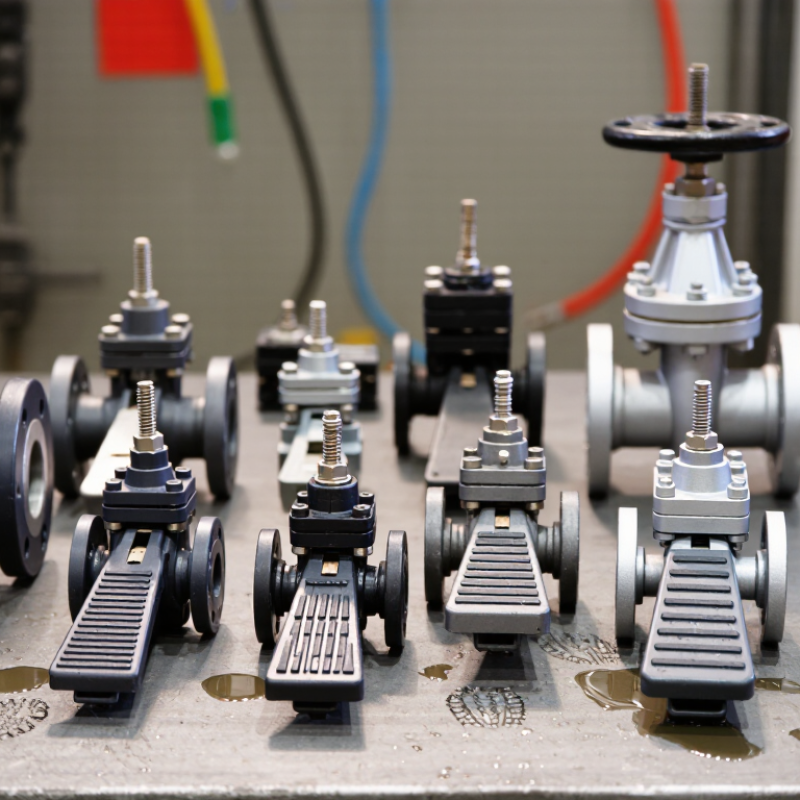
Understanding Foot Pedal Valve Types and Operating Principles
Choosing a foot pedal valve starts with its operating principle, not its appearance. A 3/2 valve controls a single-acting cylinder. It sends air forward, then vents it through a return path. A 5/2 valve directs air alternately to both sides of a double-acting cylinder. Spring-return models act only while pressed. Detent models remain in position after release. This difference affects control, safety, and operator fatigue.
A 2024 Fortune Business Insights report estimated the global pneumatic equipment market at over USD 28 billion in 2023. That growth reflects wider automation use, but market size does not guarantee a suitable valve. ISO 4414 recommends evaluating pressure, exhaust energy, control reliability, and foreseeable misuse. In practical installations, I check port size, flow capacity, pedal travel, and the actuator’s required force. I have seen oversized valves respond harshly. Smaller valves may feel frustratingly slow.
Tips: Match the valve’s pressure range with the system’s working pressure. Check the flow rating under real conditions, not only catalog values. Add a protective guard where accidental stepping is possible. Test the pedal from the operator’s normal stance. A clean release matters. Do not ignore noise or heat around exhaust ports.
For hydraulic systems, confirm fluid compatibility and pressure ratings separately. Pneumatic and hydraulic pedals may look similar, yet their seals and internal passages differ. A 2023 occupational ergonomics review by NIOSH linked awkward lower-limb postures with increased fatigue risk. That finding supports pedals with moderate resistance and short, predictable travel. Perfect selection is rare. Recheck the design after observing actual use.
How to Choose the Right Foot Pedal Valve for Your Needs?
Understanding foot pedal valve types through port count and spool positions
In directional-control valve terminology, the first number indicates the number of ports, while the second number indicates the number of operating positions. A 3/2 valve has three ports and two positions and is commonly used for single-acting pneumatic actuators. A 5/2 valve has five ports and two positions and is commonly used to control double-acting pneumatic cylinders. A 5/3 valve adds a third center position, allowing functions such as blocked-center or exhaust-center control.
Select the valve according to actuator type, required motion control, center-position behavior, operating pressure, flow capacity, and whether spring return or maintained actuation is required.
Identifying Your Application and Control Requirements
Choosing the right foot pedal valve starts with the application, not the valve size. Identify the machine’s movement, operating cycle, and working environment. A packaging station may need quick, repeated actuation. A maintenance bench may require slower, deliberate control. Note the operator’s footwear, standing position, and available floor space. Small details affect daily usability.
Define the control requirement in practical terms. Should the valve control one actuator or several functions? Does the pedal need maintained, momentary, or emergency-return operation? Check the required pressure, flow rate, port connection, and response time. A guarded pedal can reduce accidental activation in crowded work areas. A non-slip surface helps when operators wear protective footwear. Pneumatic systems may also need filtration and pressure regulation for reliable service.
Do not choose by pressure alone. I have seen specifications overlook return force and mounting stability. Those issues become obvious after hours of repeated use. Measure the full actuator demand, then compare it with the valve’s rated performance. Consider dust, moisture, cleaning chemicals, and temperature changes. Stainless or coated construction may suit harsh environments, but it can increase cost. That trade-off deserves review. Confirm compatibility with the machine’s control circuit and applicable workplace requirements. A qualified technician should verify isolation, guarding, and safe failure behavior before installation. It is easy to over-specify. It is also easy to miss the operator’s actual working rhythm.
Comparing Valve Materials, Sizes, and Connection Options
Choosing a foot pedal valve starts with the working environment, not the lowest price. Aluminum suits dry pneumatic systems and keeps the assembly light. Stainless steel is safer around moisture, cleaning chemicals, and corrosive dust. Reinforced polymer can reduce cost, but repeated impact may expose its weakness. In field maintenance, contamination often causes more trouble than pressure rating.
Size affects response speed and air consumption. Common 1/8-inch and 1/4-inch ports fit compact controls, while 3/8-inch ports support higher flow. The U.S. Department of Energy reports that compressed-air leaks can waste 20–30% of compressor output. A larger valve is not automatically better. Oversizing may increase unnecessary air use. Check the manufacturer’s flow coefficient, operating pressure, and cycle rating against the actuator’s demand.
Connection choice is equally practical. NPT threads are common in North American equipment, while BSPP and BSPT appear widely in international installations. Push-to-connect fittings simplify maintenance, but tubing must match the specified diameter and material. ISO 4414 recommends controlling pneumatic energy and preventing unexpected movement, so a guarded pedal or locking cover may be appropriate. I would also verify thread standards twice; this is an easy detail to miss. Reports from the Compressed Air and Gas Institute emphasize leak prevention and proper system maintenance, yet real workshops still find loose fittings after installation. A short trial under actual load can reveal problems that catalog figures cannot.
Selecting and Verifying the Best Foot Pedal Valve for Your System
Choosing the right foot pedal valve starts with verification, not appearance. Confirm the medium, operating pressure, port size, flow capacity, and directional configuration. A valve rated for 8 bar may perform poorly when the actuator needs fast cylinder movement. Check the datasheet’s flow coefficient and response time. Then compare those values with your system’s measured demand.
Safety deserves equal attention. The U.S. Bureau of Labor Statistics recorded 2.6 million nonfatal workplace injuries and illnesses in private industry during 2023. A foot control can reduce hand movement, but it can also cause unintended cycling. ISO 4414:2010 emphasizes safe pneumatic control design, exhaust control, and protection against unexpected motion. Use a guarded pedal where accidental operation is possible. Verify the return spring, mounting stability, and emergency isolation method.
Test the actual assembly. Connect the valve to the intended tubing, actuator, and pressure regulator. Observe leaks, pedal force, noise, and cylinder movement under normal load. Field checks often expose mismatched threads or insufficient exhaust capacity. Small details matter. I have seen selection reviews focus on pressure while ignoring operator fatigue. That was a poor assumption. Recheck performance after repeated cycles, temperature changes, and maintenance access. Record the results against the supplier’s published specifications, and question any missing test data before approval.