What is a Liquefaction Plant and How Does it Work?
A Liquefaction Plant plays a crucial role in transforming natural gas into a liquid form. This technology helps in storing and transporting gas efficiently. The process involves cooling the gas to very low temperatures. In this way, the gas takes up less space, making it easier to handle.
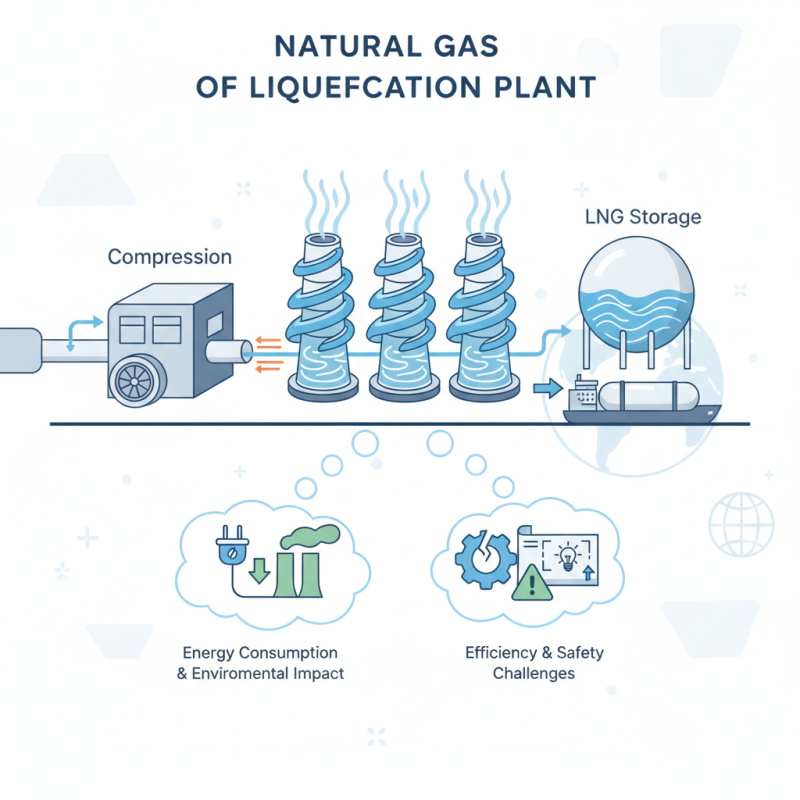
Inside a liquefaction plant, several components work together to achieve this transformation. Compressors and heat exchangers are key elements. They carefully manage temperature and pressure throughout the process. The final product is liquefied natural gas (LNG), which can be shipped around the world.
Understanding the workings of a Liquefaction Plant can be complex. There are many factors to consider, such as energy consumption and environmental impact. Moreover, not all plants operate efficiently. Some may waste resources or fail to meet safety standards. Reflecting on these challenges is essential for improving future designs.
What is a Liquefaction Plant: Definition and Purpose
A liquefaction plant is an industrial facility designed to convert gases into liquids. It primarily serves the energy industry. The goal is to make natural gas easier to store and transport. This process can also be applied to other gases. The end product, known as liquefied natural gas (LNG), is crucial for global energy distribution.
The process begins with cooling the gas to extremely low temperatures. When the temperature drops, the gas turns into a liquid. This transformation reduces the volume significantly, making it easier to ship. However, constructing and operating such plants can be complex. There are significant costs involved, and efficiency varies. Not every location is ideal for such operations, which often leads to logistical challenges.
Safety is another concern. Liquefaction plants must be designed to handle high pressures and temperatures. Any failures could have serious consequences. Thus, ongoing maintenance and monitoring are essential. Despite these challenges, liquefaction plays a key role in today's energy landscape. It helps bridge supply and demand, yet the path forward requires reflection and ongoing improvements.
What is a Liquefaction Plant and How Does it Work?
| Dimension | Description |
| Definition | A liquefaction plant is a facility that converts natural gas into liquid form for easier storage and transport. |
| Purpose | To facilitate the transport of natural gas over long distances, reducing volume and increasing efficiency. |
| Process | The process involves cooling the gas to cryogenic temperatures to condense it into a liquid. |
| Equipment Used | Compressors, heat exchangers, and cryogenic storage tanks are key components. |
| Applications | Used in shipping LNG (liquefied natural gas), power generation, and as an alternative fuel source. |
| Advantages | More cost-effective transport, safety in environmental concerns, and increased energy density. |
| Challenges | High energy consumption, initial investment costs, and the need for specialized transport equipment. |
Key Components of a Liquefaction Plant: A Technical Overview
A liquefaction plant transforms gas into liquid. This process is crucial for energy storage and transport. Key components enable this transformation effectively.
The compressor is vital. It compresses the gas, raising its pressure significantly. This action is necessary for the liquefaction process. After compression, the gas moves to the heat exchanger. Here, it exchanges heat with a cooling medium. This cooling process reduces the temperature of the gas. It eventually turns into a liquid state.
Another essential component is the expansion valve. It allows the high-pressure liquid to expand, dropping pressure. This sudden expansion results in further cooling.
There are also storage tanks. These tanks hold the liquefied gas safely. However, the design of these tanks needs careful consideration. Any flaws could lead to safety issues. Each component must work together seamlessly. Yet, sometimes, inefficiencies in the process arise that require ongoing analysis and improvement.
The Liquefaction Process: Stages and Technologies Involved
The liquefaction process transforms natural gas into a liquid state. This process typically occurs in several stages. Each stage plays an essential role in ensuring the efficiency and safety of the liquefaction plant.
Initially, natural gas undergoes purification. This step removes impurities, such as water and carbon dioxide. These substances can hinder the liquefaction process. Next, the gas is cooled down using refrigerants. Cooling is crucial because natural gas needs to be at extremely low temperatures to liquefy. This stage often includes using advanced technologies and equipment to achieve the desired outcome.
The final stage involves compressing the gas into a liquid form. At this point, the gas achieves its liquid state, allowing for easier storage and transportation. However, the liquefaction process can be energy-intensive. This raises questions about sustainability and efficiency. Improvements in technology are continuously being sought. However, challenges such as high costs and emissions remain a concern. The industry must reflect on its practices and seek innovations.
Liquefaction Plants: Energy Production from Natural Gas
Applications of Liquefaction Plants in Natural Gas Industry
Liquefaction plants play a crucial role in the natural gas industry. They convert natural gas into a liquid form, known as LNG. This process significantly reduces the volume of gas, making it easier to transport. The liquefaction process involves cooling the gas to about minus 162 degrees Celsius. The transformation allows for efficient storage and shipment across vast distances.
The applications of liquefaction plants are numerous. They enable countries with natural gas resources to export LNG to global markets. This opens up trade options for regions that lack pipeline infrastructure. Liquefaction also creates opportunities for bulk transportation, where gas can be delivered in large quantities. However, the dependence on liquefaction raises environmental concerns. Energy consumed during the cooling process affects overall efficiency. The industry still grapples with optimizing these plants to minimize emissions. There’s a need for continuous innovation in technology and processes. Each step must be scrutinized to balance demand and sustainability.
Challenges and Innovations in Liquefaction Technology: Trends and Data
Liquefaction technology has made significant strides over the past decade. This innovation has emerged as a critical player in the energy sector, especially for natural gas. In 2022, the global liquefied natural gas (LNG) market was valued at approximately $174 billion, with projections estimating it may exceed $300 billion by 2030. The surge is driven by a growing demand for cleaner energy sources.
Despite these promising figures, certain challenges persist. The liquefaction process remains energy-intensive and costly. Data from the International Energy Agency (IEA) highlights that LNG production can consume up to 10% of its output in energy. This inefficiency raises questions about sustainability. Technologies to improve energy efficiency are still evolving. New approaches, like using renewable energy sources for cooling, are being explored but remain limited in commercial application.
Innovations are crucial to addressing these obstacles. Advanced cooling technologies, such as mixed refrigerant cycles and cryogenic cooling, show potential. These methods reduce energy use during liquefaction. However, adapting these technologies to existing plants is complex and requires significant investment. Research from industry reports indicates that, while such innovations can offer savings of around 20%, their implementation is uneven across regions, often leaving older plants at a disadvantage.