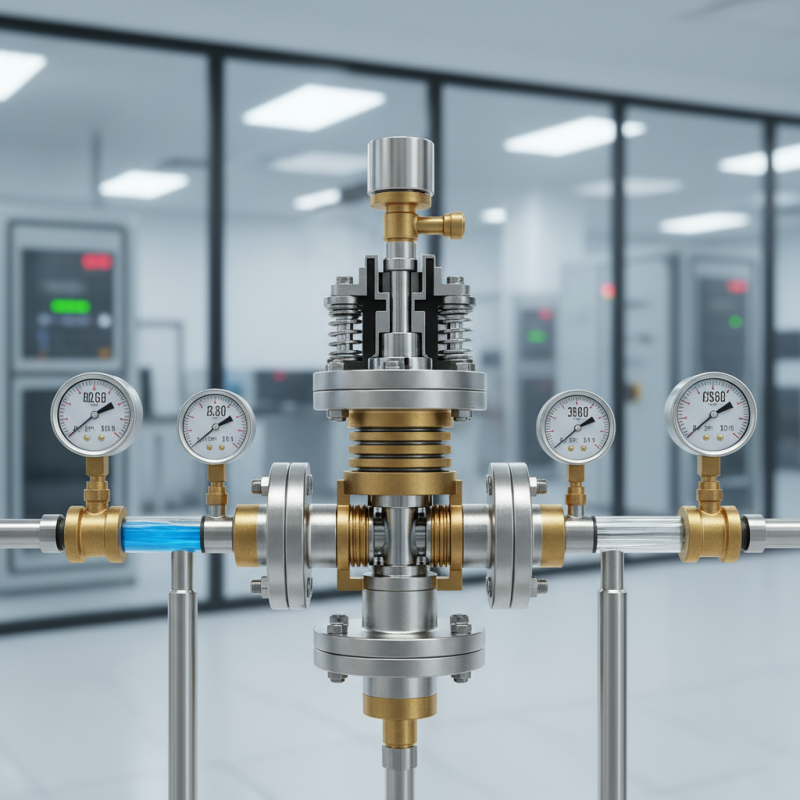
What is a Pressure Reducing Regulator and How Does It Work?
Pressure Reducing Regulators play a crucial role in various applications. They help maintain consistent pressure levels essential for safety and efficiency. These devices ensure that downstream systems receive the appropriate flow of gases or liquids.
In many settings, fluctuating pressure can lead to failures or inefficiencies. Pressure Reducing Regulators address this problem by controlling the gas or liquid entering a system. They adjust the pressure automatically, providing stability. Without these regulators, operational issues may arise, leading to costly downtime.
Understanding how Pressure Reducing Regulators work reveals their significance. They balance complex systems and protect equipment from pressure surges. Not all regulators are created equal. Some may not handle specific conditions effectively, necessitating careful selection. Making mistakes here can result in poor performance, which is worth reflecting upon.
What is a Pressure Reducing Regulator?
A pressure reducing regulator is a crucial device in fluid systems. It controls the pressure of gas or liquid flowing through pipes. This regulator ensures that downstream pressure remains stable and safe. It can be found in various applications, from industrial processes to household appliances.
The working principle is straightforward. When high-pressure fluid enters the regulator, it passes through a valve. This valve adjusts to lower the pressure. The regulator monitors pressure levels continuously. If the downstream pressure rises, the valve closes slightly. This maintains a consistent output pressure. Proper calibration is necessary for accuracy. An incorrectly set regulator can lead to inefficiencies.
Many users overlook the importance of maintenance. Regular checks can prevent malfunctions. If a regulator is neglected, it may fail to adjust pressure properly. This could result in equipment damage. Observing pressure readings regularly is a simple yet effective practice. In time, users often find themselves confronting issues they could have prevented.
Pressure Reducing Regulator Performance Data
Key Components of a Pressure Reducing Regulator
A pressure reducing regulator is a crucial device used in various applications. Its primary function is to lower the incoming pressure of gases or liquids to a manageable level. Many key components work together to achieve this goal. Understanding these components can help users appreciate the regulator’s efficiency.
One essential part is the diaphragm. This flexible membrane responds to pressure changes. When the upstream pressure increases, the diaphragm moves, adjusting the flow. The spring mechanism controls the tension applied to the diaphragm, affecting the output pressure. These two elements must work seamlessly for the regulator to function properly.
Another important component is the valve. This device opens and closes based on diaphragm movement. If the pressure rises too much, the valve closes, preventing overpressure. However, sometimes the valve may fail to seal properly. This could lead to inconsistent pressure levels. Regular checks and maintenance can help avoid such issues, ensuring optimal performance.
What is a Pressure Reducing Regulator and How Does It Work? - Key Components of a Pressure Reducing Regulator
| Component | Function | Material | Typical Pressure Range (psi) |
| Diaphragm | Senses the downstream pressure and moves to adjust the valve | Buna-N, Silicone | 5 to 150 |
| Adjustment Screw | Allows for manual setting of desired pressure | Steel | N/A |
| Spring | Provides force to close the valve and maintain pressure | Stainless Steel | 10 to 200 |
| Valve Seat | Seals the flow path when the valve is closed | Brass, Plastic | N/A |
| Gauge | Displays downstream pressure to the user | Metal, Glass | 0 to 100 |
How Pressure Reducing Regulators Function
Pressure reducing regulators play a crucial role in managing fluid flow in various systems. These devices maintain desired pressure levels by allowing high-pressure fluids to pass through while reducing their pressure for safer usage. According to a recent industry report, over 60% of industrial processes rely on effective pressure management.
How do these regulators function? They utilize a mechanism that adjusts the valve opening based on downstream pressure. When the downstream pressure drops below a set point, the regulator opens its valve to allow more fluid through. Conversely, if the pressure is too high, it narrows the opening. This simple yet effective design keeps operations smooth.
Some operators struggle with calibration and maintenance of these devices. Unmanaged fluctuations can lead to inefficiencies. In some cases, it is reported that up to 15% of energy costs come from improperly functioning regulators. Regular checks and adjustments are necessary to avoid system failures or excessive energy consumption. The importance of routine maintenance cannot be overstated, as neglecting this can lead to significant operational challenges.
Applications of Pressure Reducing Regulators in Various Industries
Pressure reducing regulators play a critical role in many industries. They maintain safe pressure levels in gas and fluid systems. This is essential for preventing equipment failure and ensuring operational safety. In the oil and gas sector, for example, these regulators help manage pipeline pressures. A report from the Global Energy Council indicates that improper pressure regulation can lead to catastrophic failures, accounting for a significant percentage of accidents.
In the medical field, pressure reducing regulators are vital for patient safety. They ensure consistent gas flow for anesthesia and respiratory support. According to the Healthcare Safety Institute, inadequate pressure control can lead to serious patient complications. Regular maintenance and calibration of these devices are necessary to avoid malfunctions.
Tips: Always check for leaks and ensure proper installation. Even small errors can have big consequences. Awareness of the regulatory standards for each industry can guide better usage. It's essential to train staff on the importance of these devices. Understanding their operation can reduce risks significantly and enhance safety practices.
Maintenance and Troubleshooting of Pressure Reducing Regulators
Maintaining a pressure reducing regulator is crucial for efficient system performance. Regular checks can prevent issues that lead to system failures. Data from industry reports indicate that improper maintenance can lead to a 30% decrease in efficiency. This might not seem significant at first, but over time, it can result in higher operational costs and reduced equipment lifespan.
Common issues include leaks, which can be difficult to spot. Signs of a leak are often small and easy to overlook. Regular inspection of seals and connections can help detect these issues early on. According to research, over 20% of regulators in the field are operating under less than optimal conditions due to unnoticed leaks or wear.
When troubleshooting, some adjustments may appear to solve immediate problems but could mask deeper issues. Not all gains lead to long-term reliability. Operators should document every inspection and repair. This practice not only provides insights into the regulator's history but also highlights recurring problems. By addressing these patterns, systems can become more reliable and efficient in the long run.