
China’s top ten Anchor Drilling Machine manufacturers deserve careful evaluation, not casual ranking. China has become a major production center for drilling equipment, serving infrastructure, mining, slope stabilization, and foundation projects worldwide. However, impressive brochures cannot replace field evidence.
Dr. Karl Terzaghi, widely regarded as the father of soil mechanics, said, “The art of doing research is to see what everyone else has seen, but to think what nobody else has thought.” His principle applies directly here. A reliable Anchor Drilling Machine must match soil conditions, anchor length, drilling angle, and jobsite limitations. Torque figures matter. Pullback force matters more when ground resistance rises.
Real performance leaves visible clues. Look for stable hydraulic pressure, smooth mast movement, protected hoses, accessible filters, and disciplined weld quality. Operator feedback also reveals practical weaknesses. A machine that performs well in a factory yard may struggle beside a muddy slope or beneath low clearance.
This introduction examines ten leading Chinese manufacturers through technical capability, manufacturing experience, product range, export reliability, service support, and documented applications. Certification is useful, but it is not the entire story. Spare-parts availability can decide whether a project continues after one damaged valve.
The ranking is not absolute. Market data changes, and published specifications may not reflect every configuration. Some manufacturers communicate better than they manufacture. That uncertainty deserves attention. Buyers should compare test records, inspect machines when possible, and request references from similar projects before making a final decision.
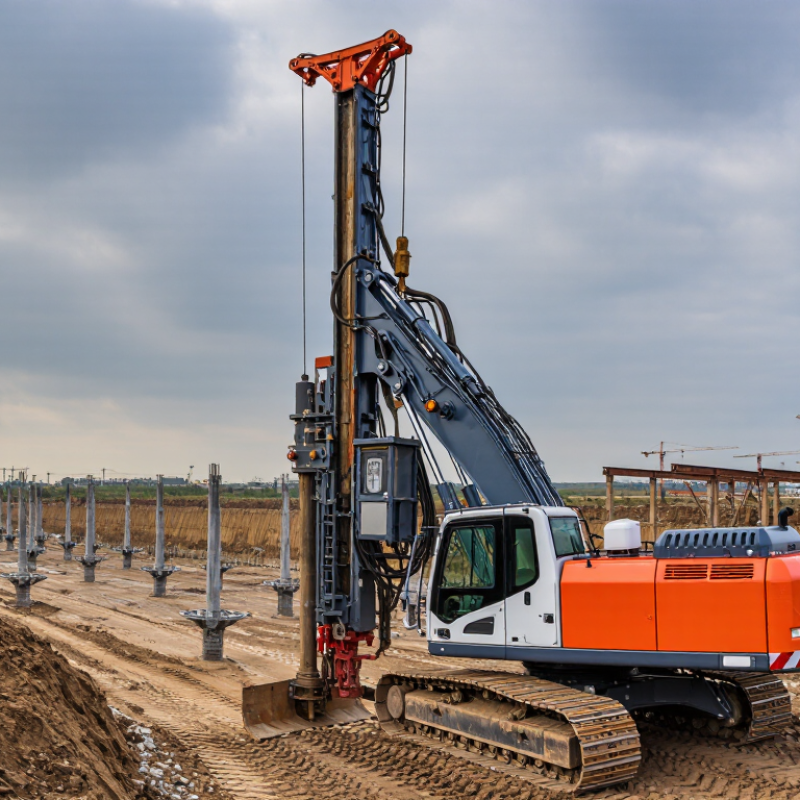
Anchor drilling machines in China serve slope stabilization, foundation support, tunnel reinforcement, and soil-nailing projects. Common types include crawler-mounted rotary rigs, down-the-hole rigs, and top-hammer machines. Rotary models suit softer formations and tight urban sites. DTH rigs perform better in hard rock, where compressed air clears the hole efficiently. Top-hammer equipment offers strong impact energy for medium-depth drilling.
Field selection depends on more than maximum drilling depth. Engineers usually compare torque, feed force, drilling diameter, mast angle, air consumption, and machine weight. A rig rated for 150 meters may achieve less on fractured rock or steep terrain. Ground conditions decide the real result. They always do.
Core industry metrics include daily hole output, average drilling time, fuel or power use, downtime, and maintenance intervals. For example, a compact crawler rig may improve access on a narrow hillside, while a heavier unit can deliver steadier thrust in dense rock. Operators should also examine transport width, noise control, dust management, and emergency stopping systems. These details affect both productivity and site reliability.
From practical project reviews, hourly output often looks impressive before setup time is included. That is a common weakness in equipment comparisons. Manufacturers and buyers should report complete cycle data, including relocation, rod changes, flushing, and routine checks. Transparent testing under stated soil conditions gives contractors a more dependable basis for choosing anchor drilling equipment.
Ranking China’s top anchor drilling machine manufacturers requires measurable evidence, not brochure language. Power and torque reveal whether a rig can handle hard rock and large anchors. Drilling depth shows its reach on bridges, tunnels, and slope projects. Diameter indicates compatibility with different anchor designs. These figures should come from tested specifications, field records, and ISO-based documentation.
A practical scoring model assigns 20% to power, 20% to torque, 20% to maximum depth, 15% to drilling diameter, and 25% to export performance.
The export score uses five-year data from UN Comtrade, covering relevant HS codes, shipment value, destination markets, and repeat orders. MarketsandMarkets estimates the global drilling equipment market at roughly US$7 billion in recent assessments, reflecting strong construction and mining demand. However, market size does not prove machine quality.
Real performance matters more. A 150 kW unit with stable torque may outperform a stronger machine that overheats during continuous drilling. Depth claims also need context, including soil type, rod length, and casing requirements. This method is not perfect. Export classifications can combine unrelated drilling equipment, weakening direct comparisons. Independent testing and verified project records should therefore receive additional attention. Small details often expose large differences.
China Top 10 Anchor Drilling Machine Manufacturers
China’s leading ten anchor drilling machine manufacturers cover crawler, truck-mounted, hydraulic, and pneumatic models. Their equipment serves slope stabilization, foundation support, tunneling, mining, and water-control projects. Common specifications include drilling diameter, maximum depth, rotary torque, feed force, and power output. A machine with strong torque may still perform poorly in fractured rock. Site conditions matter more than a catalog headline.
Product quality becomes clearer through factory records and field testing. Reliable suppliers usually provide ISO 9001 quality management certification and product documents for applicable markets. CE marking may support sales in Europe, but it does not replace technical assessment. Buyers should request test reports, welding procedures, hydraulic diagrams, and spare-parts lists. Ask for recent production photos. Check serial numbers and calibration records.
Market reach is another useful comparison point. Established manufacturers often serve domestic construction contractors and export through regional distributors. Their machines may appear on projects in Southeast Asia, the Middle East, Africa, and Latin America. Local service capacity remains critical. Response time, operator training, and parts availability can decide project costs. I would not rank a factory by export claims alone. A glossy brochure is not proof. Site references need independent checking, and some published performance figures may require cautious interpretation.
Comparing the top ten anchor drilling machine manufacturers starts with usable performance, not brochure figures. Models around 30–80 kW suit lighter soil nails and compact access. Units near 150–300 kW provide stronger torque for fractured rock, long anchors, and continuous production. However, power alone can mislead. Hydraulic efficiency, cooling capacity, and control response decide how much power reaches the bit.
Hole diameter changes the working load. A 100 mm hole generally needs less flushing volume and stabilizes faster in restricted locations. At 250–300 mm, compressors, pumps, and rod handling become critical.
Rod lengths from 2 to 6 m support tight sites and easier repositioning. Ten- to 20-m rods reduce connections, yet demand a taller mast and better alignment. A field trial should measure penetration rate, fuel use, vibration, and downtime, not only maximum diameter.
Experienced buyers also inspect service access, documented test data, and operator visibility. Ask whether rated output remains stable during simultaneous rotation and feed. That answer often separates practical equipment from impressive specifications. Still, comparisons are imperfect. Groundwater, abrasiveness, and operator skill can reverse the ranking. One machine may excel on limestone but struggle in loose fill. A reliable selection records soil conditions, actual rod changes, and maintenance hours across several sites.
China Top 10 Anchor Drilling Machine Manufacturers
Applications and Selection: Matching Torque, Depth, and Ground Conditions
Selecting an anchor drilling machine requires more than comparing catalog torque. Start with the ground. Field engineers should inspect borehole logs, groundwater levels, rock strength, and access limits before choosing equipment. Soft clay may need controlled rotary torque, while fractured rock often demands impact assistance and reliable flushing.
Torque must match the anchor diameter, drilling method, and formation resistance. Excessive torque can damage rods, enlarge the hole, or overload the rig. Insufficient torque causes stalling and uneven drilling. A 60-meter project also needs enough feed force and rod handling capacity, not merely a high headline depth. Measure twice.
For steep slopes or restricted construction areas, compact dimensions and stable tracks can matter more than maximum output. In loose ground, casing compatibility and dust or slurry control deserve close attention. Experienced operators should test a short section before full production. No selection chart is perfect. Ground conditions change within a few meters, and laboratory data may not reflect wet, fractured strata. A practical choice leaves operating margin for unexpected resistance, tool wear, and alignment errors. Too much capacity, however, increases transport cost and energy use without improving the anchor result.