

Top 10 Ceramic Rod Manufacturers Worldwide

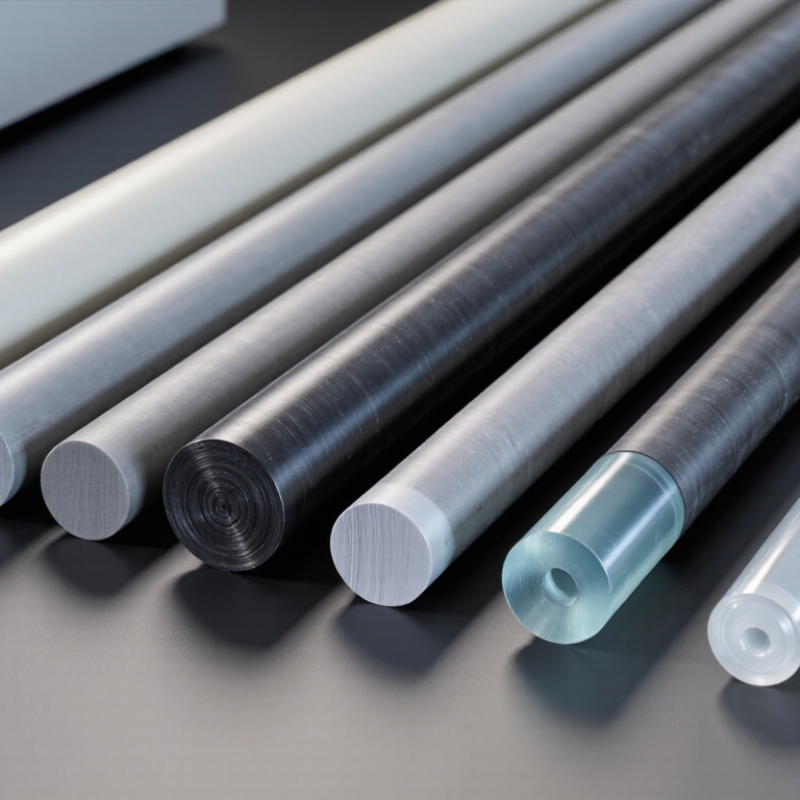
Ceramic Rod components support demanding applications in electrical insulation, furnace hardware, laboratory equipment, wear systems, and precision engineering. Their performance depends on more than material type. Purity, density, diameter tolerance, surface finish, thermal shock resistance, and machining quality can determine whether a rod performs reliably in service.

W. David Kingery, a respected ceramic science scholar, defined ceramics as “inorganic, nonmetallic materials.” That simple description hides considerable complexity. Alumina, zirconia, silicon carbide, and machinable glass-ceramics behave differently under heat, pressure, moisture, and electrical load. A serious manufacturer must understand those differences and document them through testing, traceability, and consistent production controls.

This introduction to the Top 10 Ceramic Rod Manufacturers Worldwide examines companies through practical and technical criteria. These include manufacturing capacity, custom sizing, inspection methods, industry experience, certification practices, delivery reliability, and application support. A polished website is not enough. Buyers should request dimensional reports, material data sheets, sample evaluations, and clear tolerance information.

The ranking is useful, but not absolute. Regional access, order volume, and application requirements can change the best choice. Small suppliers may offer stronger customization than larger producers. That detail is easy to overlook. Some public information may also be incomplete, outdated, or difficult to compare fairly. Readers should verify current capabilities directly before placing an order. This guide aims to narrow the field, not replace engineering judgment.

Top 10 Ceramic Rod Manufacturers Worldwide

Global Scope: Ceramic Rod Materials, Demand, and 2024 Industry Data

Ceramic rods support demanding applications in insulation, wear control, fluid handling, and high-temperature assemblies. In 2024, global demand was strongest for alumina, zirconia, silicon nitride, and quartz-based materials. Each material serves a different engineering need. Alumina offers stable insulation and cost efficiency. Zirconia provides toughness under repeated mechanical stress. Silicon nitride performs well near heat and friction.

The leading ten manufacturers are usually evaluated through more than production volume. Buyers examine dimensional tolerance, surface finish, batch consistency, testing systems, and customization capability. A rod measuring only a few millimeters may still require strict concentricity. Small deviations can create vibration inside a precision assembly. Many suppliers now provide grinding, polishing, metallization, and technical consultation in one production chain.

2024 market estimates indicate continued demand from semiconductor equipment, laboratory instruments, medical devices, and industrial automation. Asia remained a major manufacturing and consumption center, while European and North American buyers emphasized traceability and dependable qualification records. Exact market figures vary because ceramic rods are often grouped within broader technical ceramics reports. That weakness should not be ignored. Public data rarely separates rods from tubes, plates, or custom components. From practical sourcing experience, the best comparison combines published specifications with sample testing, inspection reports, and clear evidence of long-term process control. A polished catalogue is not enough.

Ranking Criteria: ISO 9001, 99.5% Purity, Tolerance, and Production Scale

Top 10 Ceramic Rod Manufacturers Worldwide

Our ranking focuses on measurable evidence, not polished brochures. ISO 9001 certification matters because it indicates a controlled quality system. However, certification alone does not prove consistent ceramic rod performance. The ISO Survey 2022 recorded 1,265,216 valid ISO 9001 certificates worldwide. That scale shows its relevance, but also its limits.

Purity receives the highest technical attention. Eligible manufacturers should consistently declare at least 99.5% ceramic purity, supported by batch certificates and independent laboratory testing. Buyers should inspect alumina content, impurity limits, and test methods. A single attractive sample proves little. Tolerance is equally practical. We compare diameter variation, straightness, surface finish, and dimensional stability after firing. A 0.02-millimeter deviation can affect assembly alignment. Small errors become expensive quickly.

Production scale completes the assessment. We examine furnace capacity, monthly output, tooling options, inspection equipment, and traceability. Industry analyses, including reports from MarketsandMarkets, identify electronics, medical equipment, and industrial processing as major advanced-ceramics demand sectors. Those applications require repeatable supply, not only laboratory quality. Our ranking is not flawless. Public data often hides rejection rates and real delivery performance. Therefore, verified samples, audit records, and customer references carry greater weight than marketing claims. The strongest manufacturers combine certified systems, 99.5% purity or higher, tight tolerances, and scalable production without sacrificing inspection discipline.

Top 10 Manufacturers by Alumina, Zirconia, and Silicon Nitride Expertise

Top 10 Ceramic Rod Manufacturers Worldwide

Top 10 Manufacturers by Alumina, Zirconia, and Silicon Nitride Expertise

Choosing among the top 10 ceramic rod manufacturers requires more than comparing catalog prices. Material expertise often reveals production maturity. Alumina rods suit electrical insulation, wear resistance, and high-temperature fixtures. Manufacturers should control purity, grain size, and surface finish consistently. Small differences can affect dielectric strength and dimensional stability.

Zirconia rods offer higher fracture toughness than many traditional technical ceramics. They support demanding applications involving impact, abrasion, and repeated thermal changes. Look for manufacturers with proven control of stabilizer content and sintering profiles. Machining experience also matters because zirconia can chip near sharp edges. It is less forgiving than it appears.

Silicon nitride rods perform well under thermal shock and mechanical stress. Their value depends on density, phase composition, and internal defect control. Experienced producers combine powder preparation, precision forming, and careful grinding. I have found that clear inspection records build more confidence than impressive claims. Yet, no ranking remains permanent. Production consistency can change after new equipment, staff turnover, or material substitutions. That detail is easy to overlook. Buyers should request sample data, dimensional reports, and application-specific testing before committing. A manufacturer may excel with alumina but lack equal strength in zirconia or silicon nitride. The best comparison is practical, documented, and slightly skeptical.

Top 10 Ceramic Rod Manufacturers Worldwide - Top 10 Manufacturers by Alumina, Zirconia, and Silicon Nitride Expertise
Rank Anonymous Manufacturer Profile Primary Material Expertise Typical Material Grade Typical Rod Diameter Typical Maximum Service Temperature Core Manufacturing Processes Common End-Use Applications
1 Profile A Alumina, Zirconia, Silicon Nitride Alumina: 99.5%–99.9%; 3Y-TZP; reaction-bonded Si3N4 0.5–25 mm Alumina: up to 1,800°C; Si3N4: up to 1,400°C in air Cold isostatic pressing, extrusion, diamond grinding, centerless finishing Insulating supports, thermocouple protection, wear components
2 Profile B High-Purity Alumina 95%, 96%, 99.5%, and 99.9% Al2O3 1–50 mm Up to approximately 1,700°C, depending on grade and atmosphere Dry pressing, extrusion, sintering, precision lapping Electrical insulation, furnace fixtures, laboratory tubes
3 Profile C Partially Stabilized Zirconia 3Y-TZP, 4Y-TZP, and Mg-PSZ 0.8–20 mm Approximately 1,000–1,500°C, grade dependent Cold isostatic pressing, precision sintering, cylindrical grinding Cutting guides, wear pins, valve components, medical tooling
4 Profile D Silicon Nitride Gas-pressure-sintered and reaction-bonded Si3N4 1–30 mm Up to approximately 1,400°C in air; higher in controlled atmospheres Slip casting, gas-pressure sintering, grinding, edge finishing High-temperature insulators, bearings, welding fixtures
5 Profile E Alumina and Zirconia Alumina: 96%–99.8%; 3Y-TZP and 5Y zirconia 0.3–16 mm Alumina: up to 1,700°C; zirconia: typically up to 1,200°C Micro-extrusion, injection molding, CNC grinding, polishing Sensor parts, laboratory equipment, medical and dental components
6 Profile F Technical Alumina Al2O3 content from 85% to 99.9% 2–60 mm Approximately 1,400–1,800°C, depending on purity Extrusion, ram pressing, kiln sintering, centerless grinding Refractory supports, electrical feedthroughs, chemical-processing parts
7 Profile G Silicon Nitride and Alumina Hot-pressed Si3N4; 99.5% alumina 0.5–12 mm Si3N4: approximately 1,300–1,400°C in air Hot pressing, reaction bonding, diamond machining, surface lapping Thermal-processing fixtures, semiconductor equipment, wear parts
8 Profile H Zirconia Toughened Alumina ZTA with approximately 10%–30% zirconia by volume 1–25 mm Typically up to 1,400–1,600°C, formulation dependent Uniaxial pressing, isostatic pressing, sintering, precision grinding Wear-resistant pins, textile guides, pump components
9 Profile I Precision Zirconia 3Y-TZP with stabilized zirconia content above 94% 0.2–10 mm Typically up to approximately 1,200°C Micro-injection molding, HIP-assisted sintering, optical polishing Fluid-control parts, surgical instruments, precision alignment pins
10 Profile J Mixed Advanced Ceramics 95%–99.9% alumina; 3Y-TZP; Si3N4 grades 0.5–40 mm Approximately 1,200–1,800°C, material dependent Extrusion, pressing, CNC turning, centerless grinding, polishing Industrial heaters, analytical instruments, insulation systems
Technical values are representative industry ranges for ceramic rods and vary according to composition, geometry, surface finish, atmosphere, and manufacturing specification.

Technical Benchmarking: ±0.05 mm Tolerance and Service Temperatures to 1,800°C

Top 10 Ceramic Rod Manufacturers Worldwide

Technical Benchmarking: ±0.05 mm Tolerance and Service Temperatures to 1,800°C

Selecting a top-tier ceramic rod supplier requires more than a catalog temperature. The ±0.05 mm tolerance matters only when diameter, roundness, straightness, and measurement methods are stated. Ask for inspection records linked to calibrated gauges. Check several points along each rod, not only one polished end. Small details matter.

At 1,800°C, material grade and atmosphere control the real service limit. High-purity alumina, silicon carbide, and silicon nitride behave differently under load. A rod may survive a brief furnace peak but fail during continuous cycling. Thermal shock, oxidation, creep, and fixture contact require practical testing. Request data for heating rate, dwell time, span, and applied load. Without these conditions, “1,800°C rated” remains incomplete engineering evidence.

A credible top-10 comparison should examine lot consistency, surface defects, packaging, and replacement lead times. Microscopic chips can become crack starters near hot zones. Photograph incoming samples and record actual dimensions before installation. This exposes variation that marketing tables may hide. One caution remains: ±0.05 mm may describe finished diameter, but not total straightness. That distinction is easy to overlook. Independent verification takes time, yet it can prevent an expensive furnace interruption.

Top 10 Ceramic Rod Manufacturers Worldwide — Technical Benchmarking

Anonymous industry benchmark profiles comparing dimensional tolerance and maximum service temperature. Lower tolerance values indicate tighter precision; higher temperature values indicate greater thermal capability.

Benchmark reference range: precision ceramic rods commonly achieve approximately ±0.02–0.05 mm dimensional tolerance, while advanced alumina, zirconia, and related ceramic grades can support service temperatures from about 1,400°C to 1,800°C depending on material composition, geometry, atmosphere, and load conditions.

Applications and Standards: Insulation, Wear Resistance, ASTM, and IEC Compliance

Top 10 Ceramic Rod Manufacturers Worldwide

Applications and Standards: Insulation, Wear Resistance, ASTM, and IEC Compliance

Ceramic rods support demanding work in electrical insulation, thermal processing, sensors, and mechanical guides. Alumina rods handle high temperatures and provide stable dielectric performance. Zirconia offers excellent toughness and wear resistance in moving assemblies. Steatite remains useful where economical insulation and moderate mechanical strength are required.

Application details matter. A furnace fixture may face repeated thermal shocks, while an insulating spacer may remain dry at room temperature. In both cases, buyers should review diameter tolerance, surface finish, porosity, bending strength, and thermal expansion. Small surface flaws can become failure points under vibration. This is often underestimated.

ASTM standards can define material testing, dimensions, sampling, or laboratory procedures, depending on the product specification. IEC requirements commonly address electrical insulation, creepage, clearance, dielectric strength, and safe operation within a defined system. Compliance should match the intended voltage, temperature, environment, and installation method. A general certificate is not enough.

Reliable manufacturers provide lot traceability, inspection records, and documented test conditions. They should explain whether results come from internal testing or an independent laboratory. Ask for evidence, not broad claims. Ceramic hardness improves wear resistance, but it can also increase brittleness. That trade-off deserves attention.

Some designs still fail after passing basic tests. Humidity, uneven clamping, and sudden heating may expose weaknesses. Practical validation remains essential.