
China’s Coil Transfer Cart market serves steel mills where a single delayed coil can interrupt a production line. The scale is substantial: World Steel Association’s World Steel in Figures 2024 reports that global crude steel production reached 1.892 billion tonnes in 2023. That figure does not measure cart demand, but it shows the industrial setting in which coil-handling equipment must perform.
The MHI Annual Industry Report 2024 examines how manufacturers are adopting automation and digital tools across supply chains. For buyers, the practical question is not simply whether a cart is automated. It is whether its load capacity, steering method, power system, controls, and safety features suit the route and operating cycle. A coil weighing dozens of tonnes behaves differently on a tight indoor turn than on a straight transfer path. Small details matter.
Worldsteel Director General Edwin Basson has spoken about steel’s essential role in modern society; that broader point helps explain why dependable coil movement matters. However, a verifiable public quotation from a named Coil Transfer Cart specialist could not be confirmed for this introduction, so no direct quote is invented. That gap deserves attention. The guide compares ten Chinese manufacturers through observable criteria: product configurations, engineering support, customization, and evidence of real-world applications. Specifications still need checking against each buyer’s site conditions. A catalogue is not a factory trial. This comparison is a starting point, not a substitute for technical verification.
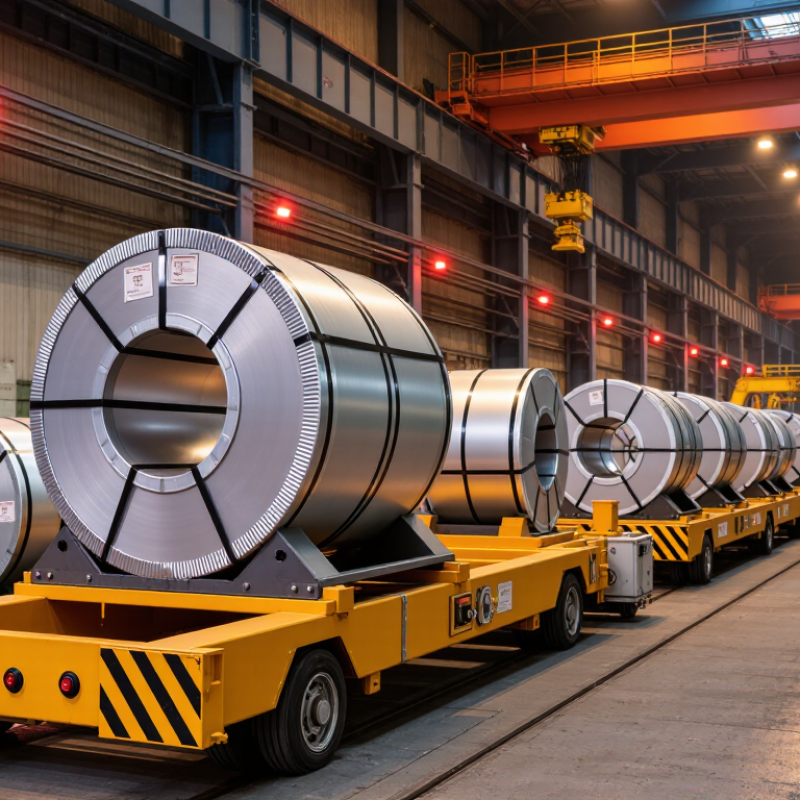
A coil transfer cart is an industrial vehicle designed to move heavy steel or metal coils between work areas. Its deck usually includes a V-shaped cradle or contoured supports that help prevent the coil from rolling. Restraints and a suitable load rating matter. A stable load is essential. The cart may run on rails or use steerable wheels, depending on the route and floor conditions.
These carts are commonly used in steel mills, coil-processing plants, and metal warehouses. They can carry coils from storage to an uncoiler, slitter, or press line, reducing the need for repeated crane handling. Some models travel beneath production equipment, while others cross open factory floors. A short transfer can still be demanding when the coil is wide, heavy, or positioned off-center.
Capacity, coil dimensions, travel distance, and turning space should guide equipment selection. Power systems and controls also affect how the cart fits into a workflow. In practice, a floor plan may not show every joint, slope, or obstacle. That detail is easy to miss. A site assessment helps confirm clearances, loading methods, and operator visibility before installation.
Evaluating coil transfer cart manufacturers in China starts with the actual job, not a catalogue photo. Record each coil’s maximum weight, outside diameter, width, and loading method. Then check aisle width, turning space, floor condition, and travel distance. A cart that fits the rated load may still struggle with a tight turn or uneven concrete. Details matter.
Ask how the manufacturer calculates the frame, wheel loads, drive capacity, and braking distance. Request drawings showing the V-shaped supports, coil restraints, and clearance around the load. Confirm whether the cart uses a wired, battery-powered, or track-guided system, and match that choice to your route and operating cycle. Look for documented load testing, weld inspection records, and a factory acceptance test using conditions close to yours. Test it.
Review more than the purchase price. Ask for component specifications, spare-parts availability, maintenance instructions, and realistic delivery milestones. A clear response to a technical question can reveal more than polished sales language. Still, paperwork alone cannot prove smooth operation; witness a test run if practical. I would also leave room for uncertainty: site measurements are sometimes incomplete, and a small layout change can affect turning clearance or cable routing. Specify what must be rechecked before production begins.
A practical comparison checklist—not a verified ranking of manufacturers. Use the same requirements and evidence requests for every supplier.
| No. | Evaluation Dimension | Suggested Weight | What to Compare | Evidence to Request | Score (1–5) |
|---|---|---|---|---|---|
| 1 | Rated Load and Safety Margin | 15% | Rated payload against the maximum coil mass, coil dimensions, and load distribution in your application. | Technical datasheet, load calculation, and documented proof-load or acceptance-test procedure. | _____ |
| 2 | Coil Cradle and Load Restraint | 12% | Cradle geometry, coil orientation, contact surfaces, and provisions to prevent rolling or shifting during movement. | Dimensioned drawings, material details, and a test or operating procedure for securing the coil. | _____ |
| 3 | Travel Path and Turning | 10% | Compatibility with the route, floor layout, turning points, gradients, clearances, and any rail or track requirements. | Route review, turning or positioning drawings, and confirmation of applicable floor and track conditions. | _____ |
| 4 | Drive, Power, and Duty Cycle | 10% | Drive configuration, power source, travel speed, operating hours, charging or cable arrangements, and expected cycle frequency. | Electrical and drive specifications, duty-cycle assumptions, and power or charging requirements. | _____ |
| 5 | Braking and Emergency Stops | 10% | Stopping performance under the specified load, braking method, emergency-stop locations, and behavior after power loss. | Safety-system description, risk assessment, and witnessed functional-test records. | _____ |
| 6 | Controls and Operator Protection | 10% | Control mode, visibility, warning devices, guarding, emergency access, and suitability for the operating environment. | Control-system description, operating manual, and applicable conformity or safety documentation. | _____ |
| 7 | Fabrication and Quality Control | 10% | Traceability of critical components, inspection processes, welding quality controls, and documented final testing. | Quality-system documents, inspection plans, component records, and sample factory or test reports. | _____ |
| 8 | Customization and Engineering Support | 8% | Ability to adapt dimensions, cradle design, controls, route interface, and operating requirements to the stated application. | Application-specific proposal, engineering drawings, interface list, and change-control process. | _____ |
| 9 | Service, Spares, and Warranty | 8% | Warranty terms, spare-parts availability, troubleshooting support, service coverage, and maintenance requirements. | Written warranty, recommended-spares list, maintenance schedule, and support-response terms. | _____ |
| 10 | Delivery, Testing, and Total Cost | 7% | Quoted scope, manufacturing and delivery schedule, installation or commissioning needs, acceptance criteria, and lifecycle costs. | Itemized quotation, project schedule, factory acceptance-test plan, and clearly stated exclusions. | _____ |
| Total Suggested Weight | 100% | Apply the same scoring rules and document the evidence for each supplier. | |||
Scoring guide: 1 = insufficient evidence or poor fit; 3 = meets stated requirements with adequate evidence; 5 = strong fit supported by complete, application-specific evidence. Confirm all safety, load, and route requirements with qualified engineering personnel before purchase.
China’s Top 10 Coil Transfer Cart Manufacturers should be viewed as a practical shortlist, not a permanent ranking. A suitable supplier understands how coil diameter, weight, and loading frequency affect cart design. Ask for rated capacity, platform dimensions, braking arrangements, and steering details. These figures should match the actual production floor, not just a catalogue example.
Coil carts may use rails or run on wheels across a factory floor. The right choice depends on route length, floor condition, turning space, and how operators load each coil. Check whether the manufacturer can explain the power system, control method, and emergency stopping procedure in plain terms. Request drawings and inspection records for comparable equipment. Details matter. A neat finish is useful, but it does not prove dependable performance.
Comparing ten manufacturers can reveal differences in customization, delivery scope, and after-sales support. Ask who handles installation, operator training, and replacement parts. Confirm what testing is included before shipment, and whether the proposed design fits your site constraints. A low price may leave important work outside the quotation. Rankings can also overlook smaller engineering teams with relevant experience, so independent checks are worth the time. No list replaces a careful review of specifications and service commitments.
Coil transfer cart manufacturers typically offer flat-deck and V-cradle models for moving steel coils between storage, processing, and loading areas. The cradle supports the coil and helps limit rolling during travel. Capacity, platform size, and coil diameter usually shape the design. A cart may run on batteries or fixed rails, depending on route length and factory layout. Battery-powered units can suit changing routes, while rail-guided carts provide a defined path. That choice matters.
Common technologies include variable-speed drives, remote controls, and programmable travel routes. Sensors can detect obstacles, and warning lights or audible alarms help alert nearby workers. Some designs use automatic charging or battery-monitoring systems to reduce interruptions during shifts. Drive wheels, braking, and steering also affect how smoothly a loaded cart moves around tight corners. Floors vary. Uneven surfaces and narrow aisles can challenge even a well-equipped cart, so real site measurements are essential. Buyers should compare rated capacity with actual coil weights, then check turning space, duty cycle, and charging access. A higher capacity is not automatically better; it may add cost or restrict maneuverability. Manufacturer specifications are useful, but a practical site trial can reveal details that a brochure misses.
Comparing coil transfer cart suppliers starts with the job, not the brochure. Record the coil’s maximum weight, width, inner diameter, and loading method. Then check the route: floor joints, slopes, tight turns, and the distance between workstations. A cart that fits the rated load may still be unsuitable if its platform, V-shaped supports, or turning radius do not match the site. Small details matter.
Ask each manufacturer for drawings, load-test records, battery and charging specifications, and the proposed safety features. Confirm how the cart stops, signals, and handles obstacles in your actual operating area. Request examples of similar applications, but verify what was delivered rather than relying only on photos. A factory visit or live acceptance test can reveal practical details, such as weld finish, cable protection, and access to service parts. No checklist catches everything.
Compare response times, warranty terms, spare-parts availability, and the clarity of technical answers. Ask who will support commissioning and operator training. I would not choose on price alone; still, the most expensive offer is not automatically the best. One useful test is to give shortlisted suppliers the same route sketch and coil data, then compare their assumptions. Gaps in those assumptions deserve a follow-up before any order.