China Top Control Valve Manufacturers and Suppliers
China has become a major source of control valves for oil and gas, chemical processing, power generation, water treatment, and manufacturing. Its leading manufacturers combine large production capacity with increasingly precise engineering. A Valve Control Valve may look simple, yet its performance depends on body materials, trim design, actuator response, and sealing quality.
Reliable suppliers usually provide more than catalog products. They review pressure ratings, media conditions, temperature ranges, flow requirements, and installation environments before recommending a model. Experienced teams can supply pneumatic, electric, hydraulic, and self-operated control valves. They may also support custom connections, corrosion-resistant alloys, positioners, and smart monitoring systems. Factory audits, material certificates, pressure tests, leakage tests, and dimensional inspections help verify each shipment. Traceable records matter.
Details reveal capability.
However, supplier claims should not be accepted without careful review. Some companies present broad product ranges but offer limited application evidence. Others provide attractive prices while leaving testing responsibilities unclear. Buyers should compare certifications, reference projects, response times, spare-parts support, and after-sales service. Independent inspection can add confidence for critical installations. Communication also deserves attention, especially when drawings, standards, and site conditions cross language barriers.
This guide examines China’s top control valve manufacturers and suppliers through practical criteria. It considers product quality, engineering experience, manufacturing depth, customization, compliance, and long-term reliability. The market is competitive, but not every impressive website reflects consistent field performance. That distinction deserves closer examination.
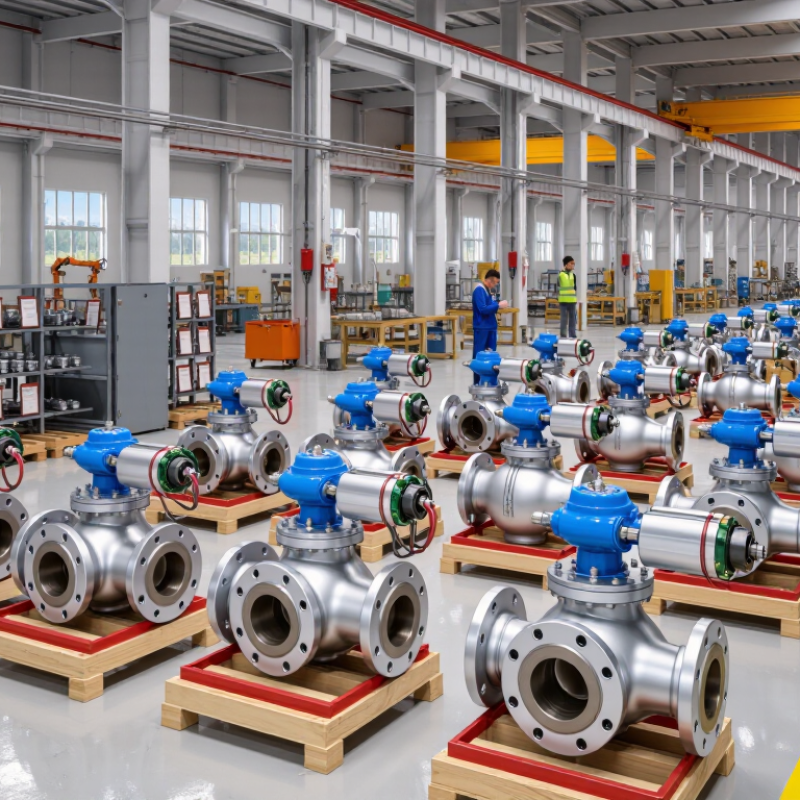
China’s Control Valve Market: Product Types, Standards, and Supplier Roles
China Top Control Valve Manufacturers and Suppliers
China’s control valve market serves power, chemicals, water treatment, oil and gas, and general manufacturing. MarketsandMarkets estimated the global control valve market at about USD 7.8 billion in 2023, with steady growth expected through 2028. Chinese suppliers support this demand through globe, butterfly, ball, and diaphragm valve designs. Pneumatic actuators remain common, while electric actuators suit remote water and energy systems. Product selection depends on pressure, temperature, media, flow rate, and required Cv value. Real plant conditions are often less tidy than catalog specifications suggest.
Standards help buyers compare suppliers more reliably. IEC 60534 covers industrial-process control valve performance, sizing, and testing. GB/T 4213 provides a key Chinese framework for industrial process control valves. ISO 5208 addresses pressure testing, while material certificates support traceability. A capable supplier should provide dimensional drawings, leakage data, actuator calculations, and inspection records. Supplier roles vary. Some manufacture castings and trim internally; others integrate valves, actuators, positioners, and control systems. This difference affects lead time, technical support, and accountability.
Tips: Request a real test report, not only a brochure. Confirm the valve’s fail position and spare-part plan before purchase. Ask how the supplier handles corrosion, flashing, and noisy flow. A low quoted price may hide weaker documentation, limited testing, or difficult maintenance. That deserves careful review.
Control Valve Sizing: Cv, ΔP, Flow Rate, and IEC 60534 Data
Control valve sizing begins with reliable operating data, not a catalogue coefficient.
For liquids, engineers commonly use
Q = Cv√(ΔP/SG),
where Q is flow in US gallons per minute, ΔP is pressure drop in psi, and SG is specific gravity.
IEC 60534-2-1:2011 provides internationally recognized sizing methods for control valves. It also considers valve geometry, recovery factor, and choked-flow conditions.
A valve passing 100 gpm of water at 25 psi needs approximately Cv = 20.
Check the units carefully. Small errors become expensive.
Gas and steam require greater discipline.
IEC 60534-2-1 uses pressure ratio, expansion factor, critical pressure ratio, temperature, and compressibility.
When flow becomes choked, increasing downstream pressure loss will not increase capacity.
Noise and cavitation may still damage trim, even when the calculated Cv looks correct.
The International Energy Agency’s Energy Efficiency 2023 analysis highlights the value of stronger industrial process control, but field performance often depends on unstable loads and poor instruments.
That part is easy to underestimate.
Tips:
Record minimum, normal, and maximum flow separately. Use the actual upstream temperature and pressure.
Select a normal operating position near the valve’s controllable range, not at full travel.
Review IEC 60534 data with an experienced engineer.
The first calculation may be wrong. Recheck it against plant measurements.
Pressure Ratings: ASME Class 150–2500 and EN PN16–PN420
China Top Control Valve Manufacturers and Suppliers
Pressure ratings are a practical starting point when selecting industrial control valves. ASME Class 150–2500 covers a broad pressure range under American standards. EN PN16–PN420 follows European nominal pressure designations. These numbers are not direct equivalents. A Class 600 valve should not be treated as a PN100 valve without checking conditions.
Temperature changes the real pressure capacity. Valve body material, trim design, flange dimensions, and sealing performance also matter. Experienced engineers review pressure-temperature charts for the exact alloy and service medium. Steam, oxygen, corrosive chemicals, and abrasive fluids demand different design decisions. A rating stamped on the body is only one part of the evidence.
Testing must be traceable. Suppliers should provide material certificates, pressure-test records, dimensional reports, and inspection details. Manufacturing experience becomes visible in small areas, such as smooth machining, correct bolt alignment, and stable actuator response. Field feedback often reveals weaknesses that drawings miss. A rating chart alone can mislead. Mistakes still happen.
Purchasers should confirm the required standard, operating temperature, shutoff class, connection type, and test specification before ordering. They should also check whether the supplier can maintain consistent quality across repeated production batches. In my view, selecting a high-pressure valve only by its maximum class is an incomplete decision. Actual operating margins deserve more attention.
Top Manufacturer Evaluation: Materials, Capacity, ISO 9001, and API 6D
China Top Control Valve Manufacturers and Suppliers
A serious manufacturer evaluation starts with materials, not catalog photos.
For carbon steel bodies, ask for heat numbers, chemical composition, and impact-test records. Stainless steel requires traceable grades, hardness control, and corrosion-resistant trim. In practice, small differences in alloy quality can affect sealing after repeated thermal cycles.
Capacity also needs evidence.
Review monthly machining output, pressure-test stations, welding qualifications, and inspection staffing. The 2024 Industrial Valves Market report by Fortune Business Insights valued the global market at over USD 78 billion in 2023, showing strong demand but also intense production pressure. A large factory is not automatically reliable. I would request recent delivery records and sample test reports.
ISO 9001 indicates a quality-management system, not perfect valve performance.
ISO’s Survey of Management System Standard Certifications reports more than one million ISO 9001 certificates worldwide. Verify the certificate scope and audit status. For pipeline applications, API 6D evaluation should include design review, shell testing, seat testing, fugitive-emission controls, and documented functional checks. API 6D compliance must match the ordered valve type and service conditions. A certificate copied into a brochure proves little. That point is often missed. Suppliers should also explain nonconformity handling, calibration intervals, and how they control material substitutions. If these answers remain vague, the evaluation is incomplete.
Quality Testing: ISO 5208 Leakage Rates, Actuator Tests, and Traceability
China’s top control valve manufacturers and suppliers should treat testing as production evidence, not marketing language. ISO 5208:2015 defines leakage acceptance rates from Rate A to Rate F. Rate A requires no visible leakage during the specified test. However, the correct rate depends on valve size, seat design, pressure, and test medium. A supplier should record each result, including test pressure, duration, temperature, and calibrated equipment.
Actuator testing must cover more than simple opening and closing. Quality teams should verify full travel, torque or thrust, response time, fail-safe position, limit switches, and repeated cycling. IEC 60534-4 provides relevant inspection and routine testing guidance for control valves. ISO 5211 supports actuator-to-valve interface checks. In practice, incomplete stroke testing can hide friction, misalignment, or insufficient torque. That weakness deserves attention. A certificate alone cannot prove field reliability.
Tips: Request the original test report, serial number, calibration date, and inspector signature. Check whether material certificates follow EN 10204 requirements. Traceability should connect the valve body, trim, actuator, and final test record. The ISO Survey 2022 reported 1,265,216 ISO 9001 certificates worldwide, showing broad quality-system adoption. Yet certification is not a substitute for technical inspection. Suppliers should retain heat numbers, inspection photos, nonconformance records, and revision-controlled drawings. Small details matter.
ISO 5208 leakage-rate categories for liquid testing are expressed as a coefficient multiplied by the nominal valve size (DN), in mm³/s. Rate A requires no visually detectable leakage; Rates B–F permit progressively higher maximum leakage. Final acceptance depends on the selected leakage rate, test medium, pressure, duration, valve type, actuator test results, and documented traceability.