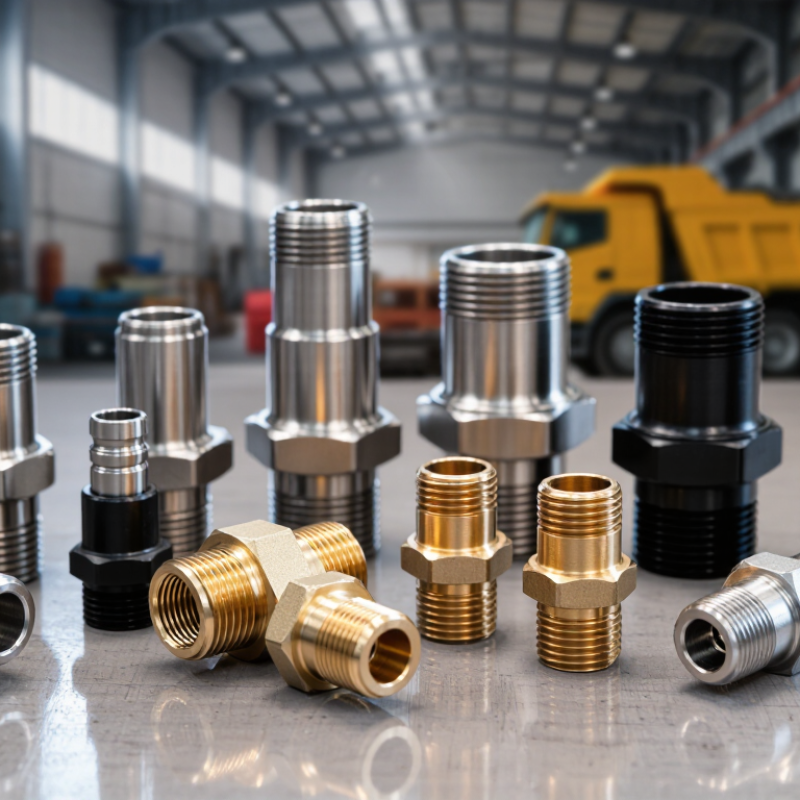
Why Choose Hydraulic Fittings for Global Sourcing?

Choosing Hydraulic Fittings for global sourcing is not simply a price comparison. It is a reliability decision made across pressure, temperature, material, standards, and delivery conditions. A fitting that works perfectly in a clean workshop may fail in a coastal warehouse, a mining truck, or a high-cycle production line. Small details matter. Thread accuracy matters. Seal quality matters. Batch traceability matters.

Hydraulic systems consultant and author Brendan Casey has stated, “A hydraulic system is only as reliable as its weakest component.” That principle deserves attention when selecting international suppliers. Qualified manufacturers should provide pressure ratings, material specifications, dimensional data, inspection records, and consistent packaging. Buyers should also confirm whether fittings follow ISO, SAE, or other required standards. Compatibility cannot be assumed from appearance alone.

The practical advantage of Hydraulic Fittings is their ability to support standardized repairs and flexible equipment design. A properly selected fitting can reduce leakage, shorten maintenance time, and protect expensive pumps and valves. It may also simplify inventory management across multiple regions. Yet global sourcing is not automatically better. A low unit price can hide slow communication, uncertain testing, or replacement delays. That is where many purchasing plans become fragile.

Experience teaches a less comfortable lesson: the cheapest fitting may be the most expensive one bought twice. Supplier audits, sample testing, and clear technical communication remain essential. With disciplined evaluation, global sourcing can deliver dependable performance without sacrificing cost control. Reliability must be verified, not promised.

Why Choose Hydraulic Fittings for Global Sourcing?

What Are Hydraulic Fittings and How Do They Work?

Hydraulic fittings are the connecting parts in a fluid power system. They join hoses, tubes, valves, pumps, and cylinders. Their job is to guide pressurized oil safely between components. A fitting also creates a sealed connection under vibration, heat, and pressure. A fitting can look perfect and still fail. I have seen small sealing errors create slow leaks and costly downtime. That experience makes selection more careful.

Most fittings use threads, sealing rings, cones, or flared surfaces. Threads provide mechanical grip, while the seal prevents fluid from escaping. Some connections require controlled crimping instead of simple tightening. Each fitting needs a suitable pressure rating, temperature range, material, and fluid compatibility. Thread shape matters too. Metric, tapered, and parallel threads are not automatically interchangeable. Forcing the wrong type can damage both parts. That assumption is wrong.

For global sourcing, technical drawings should state dimensions, tolerances, thread standards, materials, and inspection requirements. Suppliers should provide pressure-test records and traceable batch information. Samples deserve practical testing before larger orders begin. Check torque, alignment, seal condition, and leakage after assembly. Clean packaging also matters because dirt can damage valves and seals. Documentation may feel repetitive. It often prevents expensive confusion between factories, engineers, and installers. Supplier capability, communication speed, and consistent quality deserve equal attention.

Which Materials and Standards Define Hydraulic Fitting Quality?

Hydraulic fittings earn trust through material selection, dimensional accuracy, and recognized standards. Carbon steel fittings suit many high-pressure systems when properly plated and protected from moisture. Stainless steel performs better in corrosive environments, including marine and chemical applications. Brass can serve lower-pressure systems, but it is not suitable for every hydraulic duty.

Material certificates should identify the grade, heat number, and mechanical properties. Quality also depends on the fitting’s connection design.

ISO 8434 and DIN 2353 define common metric fitting requirements, while SAE J514 covers several inch-based hydraulic connections. These standards address dimensions, pressure performance, and interchangeability. They do not automatically guarantee quality. A supplier should provide pressure ratings, inspection records, and evidence of leak testing.

Tips: Match the fitting material to the fluid and operating environment. Check thread type carefully. Confirm working pressure, temperature, and corrosion resistance before ordering. Small errors can cause costly failures.

In practical inspections, clean threads and smooth sealing surfaces often reveal manufacturing discipline. However, appearance alone is weak evidence. A polished fitting may still contain incorrect dimensions or poor heat treatment.

Traceability matters when sourcing internationally. Ask for batch records and independent test reports when risk is high. I would also compare the stated standard with the actual drawing, because catalog descriptions can be incomplete. One detail is easy to miss. Supplier audits, sample testing, and consistent packaging provide stronger confidence than low pricing alone. Quality is not defined by material names only; it is verified through controlled production and documented performance.

Why Do Hydraulic Fittings Support Global Sourcing Efficiency?

Hydraulic fittings support global sourcing because they make connection standards easier to specify, inspect, and repeat across borders. ISO 8434 and ISO 6162 define dimensions, pressure requirements, and connection methods for widely used hydraulic assemblies. This matters when a fitting travels from a factory in Asia to a machine site in Europe. The drawing must still be understood clearly.

Global logistics increases the value of predictable components. UNCTAD’s Review of Maritime Transport 2023 states that over 80% of world trade by volume moves by sea. A fitting that tolerates vibration, pressure changes, and long transport cycles can reduce delays caused by leakage or rework. Grand View Research estimated the global hydraulic equipment market at about USD 49.5 billion in 2023, showing the scale of this supply network. Standardized fittings help buyers compare qualified suppliers, consolidate orders, and keep replacement parts available in different regions.

Small details decide efficiency. Thread type matters. So does material compatibility. A lower purchase price may create higher costs through corrosion, failed seals, or repeated inspections. ISO compliance helps, but it does not replace supplier audits, sample testing, and traceable inspection records. That is where sourcing plans can become imperfect. Some teams assume “standard” means “universally interchangeable.” It does not. Clear drawings, pressure tests, batch records, and field feedback remain essential when hydraulic fittings cross markets, languages, and operating conditions.

How Can Buyers Evaluate Suppliers and Ensure Product Reliability?

Choosing hydraulic fittings for global sourcing requires more than comparing unit prices. Buyers should examine how each supplier controls materials, machining, testing, and documentation. A reliable supplier can provide clear specifications for thread type, pressure rating, size tolerance, and sealing performance. Ask for material certificates and batch identification. Every fitting should connect to a production record.

Request samples before approving large orders. Check thread accuracy with calibrated gauges, not visual inspection alone. Test pressure performance under conditions that reflect actual equipment use. Salt spray exposure may also reveal weak plating or poor surface preparation. Test reports should show dates, methods, equipment, and responsible personnel. Vague documents deserve careful questions.

Supplier evaluation should include a remote or onsite audit. Review incoming material storage, heat-treatment records, inspection tools, and rejected parts. Ask how workers separate nonconforming products. Packaging also matters. Fittings can arrive with damaged threads after a long ocean journey. Strong suppliers use protective caps, dry packing, and clear carton labels.

Communication is another reliability signal. Can the supplier explain a tolerance without avoiding the question? Can they report a production delay early? A polished audit report may still hide weak daily controls. I have learned that low prices can distract buyers from replacement costs, downtime, and field complaints. Independent testing adds confidence, especially for new suppliers. Yet no evaluation is perfect. Recheck performance after production changes, even when previous batches passed.

Why Choose Hydraulic Fittings for Global Sourcing? - How Can Buyers Evaluate Suppliers and Ensure Product Reliability?
Evaluation Dimension What Buyers Should Verify Practical Data or Acceptance Benchmark Recommended Evidence Relevant Standard or Reference
Connection Compatibility Confirm that thread type, sealing method, tube size, and mating geometry are compatible with the hydraulic system. 100% dimensional compatibility with the approved drawing and mating component. Controlled product drawings, thread gauges, inspection reports, and first-article samples. ISO 8434 series; SAE J514; ISO 1179 series; ISO 6149 series.
Pressure Capability Evaluate working pressure, proof pressure, and burst pressure for the complete fitting and connection system. The fitting working pressure must meet or exceed the system design pressure after considering temperature, tube size, material, and connection type. Pressure-rating tables, design calculations, proof-test records, and independent laboratory reports. ISO 19879; SAE J514; applicable hydraulic hose and tube assembly specifications.
Proof and Burst Testing Check whether production samples are tested under controlled pressure conditions without leakage, permanent deformation, or rupture. Proof and burst test levels must follow the applicable product standard or the buyer-approved technical specification. Test procedures, calibrated pressure-gauge records, sample identification, and signed test reports. ISO 19879 and the applicable fitting-product standard.
Leak Tightness Review static and, where applicable, dynamic leakage performance at the intended pressure and temperature range. No visible leakage during the specified test period; acceptance limits should be defined in the purchase specification. Leak-test records, test-medium details, test duration, pressure profile, and inspection criteria. ISO 19879; project-specific hydraulic-system requirements.
Material Selection Verify that the fitting material is suitable for fluid compatibility, operating temperature, pressure, and environmental exposure. Material grade and heat treatment must match the approved drawing and declared mechanical-property requirements. Material certificates, heat numbers, chemical-composition reports, and mechanical-test results. Applicable material specification, ISO 683 series, ASTM material standards, or buyer-approved equivalent.
Corrosion Protection Assess the surface treatment and corrosion resistance required for indoor, outdoor, marine, or chemically exposed applications. Coating type, coating thickness, appearance, adhesion, and corrosion-test duration must be specified before quotation. Coating certificates, thickness measurements, adhesion results, and salt-spray or cyclic-corrosion test reports. ISO 9227 for neutral salt-spray testing; ISO 4042 for electroplated fastener coatings where applicable.
Dimensional Accuracy Verify critical dimensions such as thread profile, cone angle, tube-seat geometry, port depth, and sealing surfaces. All critical characteristics must remain within the approved engineering tolerances. Coordinate-measuring-machine reports, thread-plug or thread-ring gauge records, and inspection plans. Approved product drawing and the dimensional requirements of the applicable ISO or SAE standard.
Surface and Sealing Quality Inspect sealing surfaces for scratches, dents, burrs, cracks, contamination, and machining defects. No defect that can impair sealing, pressure resistance, assembly, or service life. Visual inspection criteria, surface-roughness measurements, sample photographs, and nonconformance records. Approved drawing, internal workmanship standard, and applicable sealing-interface specification.
Cleanliness Determine whether residual chips, abrasive particles, oil, and packaging debris could contaminate valves, pumps, or actuators. Cleanliness level must be defined by particle size, particle count or mass, extraction method, and inspection frequency. Cleanliness-test reports, flushing records, filtered-fluid inspection, and sealed-packaging procedures. ISO 16232 principles may be used for particulate cleanliness evaluation; hydraulic-system requirements should control acceptance.
Traceability Confirm that each production lot can be traced to raw material, heat treatment, machining process, inspection results, and shipment. Lot number and manufacturing date should be traceable from the shipped product back to the material certificate. Lot-control procedure, batch labels, material heat numbers, inspection records, and retention policy. ISO 9001 quality-management and documented-information requirements.
Quality Management Evaluate process control, calibration, corrective action, change management, and internal audit practices. A documented quality-management system with current certification or equivalent objective evidence. Quality certificate, process-control plan, calibration list, audit results, and corrective-action records. ISO 9001; IATF 16949 may be relevant for automotive applications.
Production Consistency Determine whether the supplier controls variation between machines, shifts, production lots, and manufacturing locations. Critical dimensions and functional characteristics should be monitored using statistical process control where risk justifies it. Control charts, capability studies, first-piece approval, and periodic requalification records. ISO 22514 series for process capability concepts; buyer-approved control plan.
Sample Validation Use representative samples to verify fit, function, pressure performance, corrosion resistance, and packaging before volume purchasing. Samples must be manufactured using the intended production process, materials, coatings, and inspection methods. First-article inspection report, sample approval record, functional test results, and signed deviation list. ISO 2859-1 may support lot-sampling plans; product-specific validation requirements take priority.
Change Control Check whether the supplier must notify the buyer before changing material, tooling, coating, process route, sub-supplier, or production location. No significant change should be implemented without documented review, risk assessment, and buyer approval where contractually required. Engineering-change procedure, change-notification form, requalification plan, and revision-controlled drawings. ISO 9001 change-control principles and the buyer's quality agreement.
Packaging and Identification Verify protection against impact, moisture, corrosion, contamination, mixed lots, and incorrect identification during international transport. Each package should identify part number, quantity, lot number, material or coating designation, and manufacturing origin as required by the purchase order. Packaging specification, label samples, corrosion-inhibiting method, carton-strength requirements, and shipping inspection records. ISO 780 for handling marks; contractual packaging and labeling requirements.
Supply Continuity Assess capacity, critical-process dependencies, raw-material availability, backup equipment, and recovery planning. The supplier should provide documented capacity, normal lead time, maximum feasible output, and a business-continuity plan. Capacity statement, production schedule, contingency plan, approved-subcontractor list, and on-time-delivery history. ISO 9001 operational-planning principles and buyer-defined supply-continuity requirements.
Commercial Comparison Compare total landed cost rather than unit price alone, including testing, tooling, packaging, freight, duties, inspection, and failure risk. Use a standardized total-cost model and compare suppliers against identical technical and delivery conditions. Itemized quotation, tooling ownership terms, inspection charges, freight assumptions, warranty terms, and payment conditions. Buyer-developed total-cost-of-ownership model.
Supplier Approval Decision Combine technical compliance, production capability, quality evidence, logistics performance, and commercial risk into one approval decision. Approve only suppliers that pass mandatory safety and compatibility criteria; use weighted scoring for non-critical criteria. Supplier audit report, risk matrix, scorecard, corrective-action closure, and signed technical agreement. ISO 9001 supplier-evaluation principles and the buyer's supplier-approval procedure.

What Challenges Should Global Buyers Consider Before Purchasing?

Why Choose Hydraulic Fittings for Global Sourcing?

Global sourcing can reduce purchasing costs and widen access to specialized fitting capacity. Yet price is only one part of the decision. UNCTAD’s Review of Maritime Transport reports that over 80% of global merchandise trade moves by sea. Delays, port congestion, and damaged packaging can therefore affect production schedules quickly.

Standard compatibility is a serious concern.

Buyers should verify thread forms, pressure ratings, sealing methods, and material grades before ordering. ISO 4413 provides safety principles for hydraulic systems, while ISO 8434 covers several fitting designs. A fitting may look correct but still fail during assembly. Small differences matter.

Quality evidence must travel with the shipment.

Ask for dimensional inspection records, pressure-test results, material certificates, and batch traceability. Check ferrules for distortion and threads for burrs during incoming inspection. Poor protective caps can allow grit into clean components. It happens.

The World Bank’s Logistics Performance Index 2023 surveyed 4,090 supply-chain professionals across 652 companies. Its findings emphasize customs, tracking, infrastructure, and delivery timeliness. These factors deserve attention during supplier selection. A low quotation may hide higher freight, inspection, rework, and inventory costs. Buyers should also compare minimum order quantities and replacement lead times. That comparison is often incomplete. A practical sourcing review should test samples under realistic pressure, temperature, vibration, and installation conditions before approving full-volume purchases.