China’s valve industry serves power generation, oil and gas, water treatment, chemicals, and building services. For global buyers, the challenge is not simply finding a low quotation. It is verifying materials, pressure ratings, test records, delivery capacity, and after-sales support. Small details matter. A valve destined for a coastal water-treatment plant may need different corrosion protection from one installed in a high-temperature steam line.
Market research helps explain the sector’s scale. MarketsandMarkets estimated the global valves market at approximately US$79.4 billion in 2023, with a forecast of US$98.2 billion by 2028. These are projections, not guaranteed outcomes. Still, they point to sustained demand across industrial applications. China’s manufacturers range from large, export-oriented groups to specialized producers focused on particular valve types. Their capabilities are not interchangeable.
This guide introduces ten Chinese valve manufacturers for international buyers. It considers product range, manufacturing experience, certifications, customization, and export support—not price alone. Buyers should confirm current certificates and request application-specific documentation directly from each supplier. A catalog is only a starting point. Even a well-known factory may not suit every project, and this comparison cannot replace technical review or sample testing. Valve Valves must perform reliably in real operating conditions, where a minor specification mismatch can create costly maintenance later. Our aim is practical guidance, with room for buyers to verify every claim.
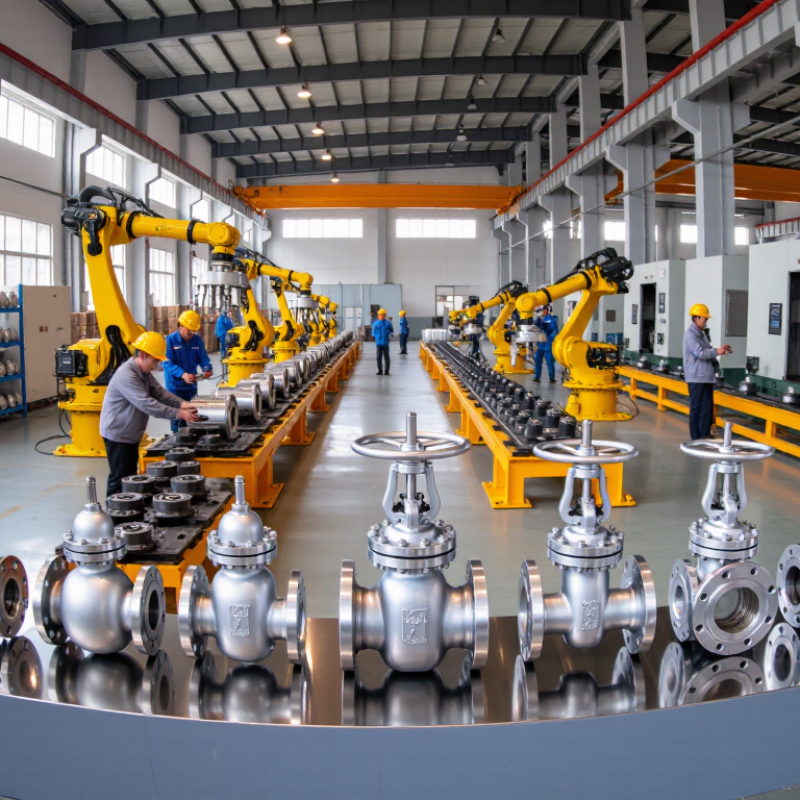
China’s valve industry spans casting, machining, assembly, and testing, with suppliers serving water, energy, chemical, and building projects. Production capability varies widely. A polished catalog is not proof of consistent performance.
Grand View Research estimated the global industrial valves market at about US$78.6 billion in 2023, with projected annual growth of 5.3% from 2024 to 2030. This is a global market estimate, not a measure of China’s output. Still, it reflects demand for flow-control equipment as infrastructure and industrial systems expand. Buyers should compare materials, pressure ratings, leakage-test procedures, and traceability records—not just unit prices. Small details matter.
A factory visit can reveal practical differences: how castings are checked, whether machining dimensions are recorded, and how finished valves are tested. Ask for test reports tied to the actual production batch. Standards and certificates help, but their scope needs careful review. I would not treat one successful sample as a guarantee; long-term consistency is harder to judge and deserves follow-up.
For “China Top 10 Valve Manufacturers for Global Buyers,” a credible ranking should compare verifiable performance, not catalogue size. MarketsandMarkets’ Industrial Valves Market report estimated the market at USD 78.4 billion in 2024 and projected USD 97.4 billion by 2029. This growth makes supplier screening more important, but market size alone says little about factory reliability. Check documented pressure and temperature limits, material traceability, inspection records, and delivery performance. Numbers help.
Quality evidence should be practical. Ask for pressure-test reports tied to the exact valve model, material certificates, and clear records of production inspections. ISO 5208 provides industrial-valve pressure-testing requirements, offering buyers a useful reference when comparing test procedures. Also assess whether the manufacturer can explain suitable materials for the buyer’s fluid and operating conditions. A polished catalogue is not proof. A ranking can still miss problems if it relies only on certificates or self-reported figures.
Tips: Request a sample inspection report and verify that its model, material, and test results match the quoted product. Compare after-sales response times and spare-parts support, too. These details can be harder to score consistently, and that is worth acknowledging.
Suggested evaluation framework for comparing manufacturers. The weights below are a proposed buyer-oriented methodology, not audited rankings or claims about individual companies. Verify all evidence for the specific product, facility, and destination market.
| No. | Evaluation Criterion | Suggested Weight | Evidence to Check | Practical Scoring Basis |
|---|---|---|---|---|
| 1 | Product and application fit | 18% | Catalogs, drawings, pressure-temperature ratings, materials, end connections, and documented application references. | Score how closely the offered valve types and specifications match the buyer’s service conditions and project requirements. |
| 2 | Quality management and product compliance | 16% | Current, independently verifiable certificates and product-specific approvals applicable to the order and destination market. | Check certificate validity, issuing body, scope, covered site, and relevance. ISO 9001 concerns quality management; it is not, by itself, product approval. |
| 3 | Manufacturing and process control | 14% | Factory audit records, process flow, equipment list, production controls, and evidence identifying the actual manufacturing site. | Assess process traceability, control of outsourced operations, consistency, and capacity for the required valve type and quantity. |
| 4 | Testing and inspection capability | 12% | Inspection and test plans, pressure-test records, calibration certificates, material test reports, and sample inspection documentation. | Confirm tests and acceptance criteria match the purchase specification and applicable standards; verify records are traceable to the delivered items. |
| 5 | Engineering and customization support | 10% | Technical data sheets, engineering-change controls, drawing approval workflow, and documented ability to address project-specific requirements. | Evaluate technical response quality, revision control, and the ability to provide suitable materials, actuators, or design options where required. |
| 6 | Delivery reliability and production planning | 9% | Production schedules, capacity evidence, order status procedures, and delivery-performance records relevant to comparable orders. | Compare confirmed lead times with the buyer’s schedule and assess how delays, changes, and expediting requests are managed. |
| 7 | Export documentation and logistics readiness | 8% | Sample commercial and shipping documents, packing details, country-of-origin information, and experience with the required shipping terms. | Check document accuracy, packaging suitability, export coordination, and familiarity with import requirements for the destination. |
| 8 | After-sales service and spare-parts support | 5% | Warranty terms, service contacts, troubleshooting procedures, manuals, and spare-parts availability information. | Assess response arrangements, clarity of warranty coverage, and practical access to parts and technical assistance. |
| 9 | Commercial transparency and total cost | 4% | Itemized quotations, stated scope and exclusions, payment terms, warranty costs, and quotation validity. | Compare equivalent specifications and consider inspection, shipping, spares, and lifecycle costs—not price alone. |
| 10 | Business verification and communication | 4% | Business registration details, consistent contracting and banking information, named contacts, and clear written technical communication. | Verify the contracting entity and assess responsiveness, consistency, and willingness to provide supporting documentation. |
| Total Suggested Weight | 100% | Apply the same evidence requirements and scoring scale to every supplier being compared. | ||
Suggested method: score each criterion from 1 to 5 using documented evidence, multiply each score by its weight, and compare the weighted totals. Confirm the applicable valve design, testing, and market-access requirements for each project before purchase.
Chinese valve manufacturers often specialize by material, pressure range, or production method. A forged-steel supplier may serve compact, high-pressure piping; buyers should check heat-treatment records and material certificates. A cast-steel producer may offer gate and globe valves for larger lines. Ask how casting defects are detected. A ball-valve maker may focus on tight shutoff and varied seat materials. A butterfly-valve specialist can suit space-limited water or process systems. A check-valve producer should explain how its design limits reverse flow and water hammer.
Some manufacturers concentrate on control valves, where stable response matters more than a low purchase price. Others make safety-relief valves; verify test procedures and pressure settings for the intended application. A sanitary-valve supplier may provide polished surfaces and cleanable connections for food or pharmaceutical plants. Details matter. A large-diameter water-valve maker should document coating thickness and corrosion protection. A custom-production supplier may adapt dimensions or materials, but changes can extend lead times.
For any of these ten profiles, compare drawings, inspection plans, and evidence of repeatable testing—not just catalog specifications. Request a sample inspection report and clarify who performs final checks. Certifications can be useful, but their scope should match the actual product and factory. Factory visits help, though a polished workshop does not guarantee consistent batches. That part deserves scrutiny.
Selected PN designations commonly used in industrial piping specifications.
PN values are nominal pressure designations, not guaranteed operating limits. Confirm the applicable standard, materials, temperature rating, and allowable working pressure for each valve.
For global buyers, comparing valve manufacturers means checking more than catalog size. A supplier may offer gate, globe, ball, and butterfly valves, yet lack suitable materials or pressure ratings for your service. Grand View Research estimated the global industrial valves market at USD 79.4 billion in 2023, with projected annual growth of 4.8% through 2030. The report signals broad demand, but market growth alone cannot verify a factory’s quality or delivery record.
Review product data against the actual operating conditions: media, temperature, pressure, end connections, and required leakage class. Ask for test records and traceable material certificates, not just a certificate list. ISO 5208 covers pressure testing of industrial valves; ISO 15848 addresses fugitive emissions, while API 6D applies to pipeline valves. Check that documents match the offered model and manufacturing site. Small inconsistencies matter.
Tips: Compare export readiness using sample packing lists, lead-time commitments, spare-parts support, and responses to technical questions. Confirm which documents can accompany each shipment, including inspection and origin records. A polished brochure is easy to prepare. Consistent records across orders are harder—and more useful. One detail is often overlooked: ask how design changes are communicated after approval.
Selecting a Chinese valve supplier takes more than comparing quotations. The Fortune Business Insights report on the global industrial valves market estimated its 2023 value at USD 78.53 billion and projected USD 130.44 billion by 2032. This growth signals broad demand, not supplier reliability. Buyers should check whether a factory’s products match the required pressure class, materials, media, temperature, and end connections. A small mismatch in seat material can cause leakage or early wear.
Request material certificates, dimensional drawings, and pressure-test records linked to the specific production batch. Confirm the test method against the applicable standard, such as ISO 5208, and arrange independent inspection for critical orders. Ask for production capacity and realistic lead times, then compare them with recent delivery records. A polished catalog is not proof. Remote audits help, but they cannot replace clear evidence from actual orders; even careful checks may miss something.
Tips: Send one detailed specification sheet to every candidate. Compare like with like. Ask how the supplier handles rejected tests, spare parts, and changes to materials. Record every answer.