How to Choose the Right Ball Valve for Your Application?

Choosing the right Ball Valve begins with the process, not the catalog. What fluid will pass through it? What pressure and temperature must it withstand? A valve handling clean water may not suit abrasive slurry or a corrosive chemical. Small details matter: fluid composition, pipe size, operating frequency, and available space can all change the best choice. The wrong seat material may wear quickly. An unsuitable pressure rating can create avoidable operational risk. The selection deserves careful thought.

A useful engineering reminder is: “Match the valve to the duty, not just the pipe.” This is an editorial principle, not a verified quotation from a named expert; no source for an expert quotation was provided. In practice, compare body and trim materials, seat options, end connections, pressure class, and manual or automated operation. Consider whether the valve needs tight shutoff, frequent cycling, or simple isolation. Ask suppliers for product data and confirm that ratings apply to your actual service conditions. A specification sheet can look reassuring. Check the details anyway.

This guide outlines how to weigh those factors and ask better questions before purchase. It also recognizes a limitation: real operating conditions can differ from the original assumptions. That happens. Reviewing performance after installation can reveal whether the choice was right—or what needs reconsidering next time.
How to Choose the Right Ball Valve for Your Application?

Identify the Fluid, Pressure, and Temperature Requirements

Identify the fluid before comparing valve sizes. Water, steam, oil, and chemical mixtures can behave very differently at the same pressure. NIST Chemistry WebBook data show water’s saturation pressure is about 101.3 kPa at 100°C, versus roughly 2.34 kPa at 20°C. This matters: a hot liquid may flash into vapor if pressure falls, affecting valve trim and flow control. Record the fluid’s composition, solids content, viscosity, and normal and upset conditions.

Tips: Write down minimum, normal, and maximum pressure and temperature. Include startup, shutdown, and pressure surges; the steady reading is not the whole story.

Then check the valve’s pressure-temperature rating against the chosen body material. ASME B16.34 provides rating tables by material and class, so compare the rating at your actual maximum temperature—not just at room temperature. Also check corrosion compatibility and seat materials. ISO 5208 defines pressure testing and leakage acceptance criteria, but a passed test does not guarantee suitability for every service. A tidy specification can still miss an unusual cleaning cycle; verify that detail with process and maintenance teams before selecting the final configuration.

Choose Suitable Valve Materials and Ball Design

A ball valve’s material and internal design should match the fluid, operating temperature, and pressure. For clean water, stainless steel or a suitable alloy may provide dependable corrosion resistance. For mildly corrosive service, compare the fluid’s chemistry with the valve body and seat materials; “stainless” alone is not a complete specification. PTFE seats suit many general applications, while other seat materials may better tolerate heat or abrasive particles. Always check the manufacturer’s ratings for your exact conditions.

Ball design affects flow and support. A full-port opening keeps pressure drop low and allows easier passage of thicker fluids. A reduced-port valve is often more compact, but restricts flow somewhat. Floating-ball designs work well in many smaller lines. Trunnion-mounted designs support larger or higher-pressure balls. One detail is easy to overlook: suspended solids can wear seats and cause leakage, even when the body material is suitable.

Tips: Confirm the media, temperature range, pressure, and connection size before ordering. Ask for material compatibility data when the fluid is unusual. Check the seat rating too. A valve that fits the pipe may still be the wrong choice. Selection can involve trade-offs; when conditions are uncertain, verify them rather than guessing.

Match Port Size, Connections, and Flow Capacity

A ball valve must match the pipe, not just the drawing. Check the nominal port size, end connection, and required flow before choosing a body. A reduced-port valve can restrict flow, even when its connection matches the line. For threaded, flanged, or welded ends, verify the mating dimensions and pressure rating against the piping specification. Small details matter. A mismatch can add adapters, leak paths, or installation delays.

Flow capacity needs more than a size comparison. ANSI/ISA-75.01.01 defines liquid valve coefficient, Cv, using the flow of 60°F water that creates a 1 psi pressure drop. Use the standard’s sizing method with actual flow, pressure drop, and fluid properties; do not assume a full-port valve is automatically the right choice. Check the manufacturer’s certified Cv data for the exact valve configuration. Then confirm the expected pressure drop and available pump head. A first sizing pass is rarely perfect. Recheck it when operating conditions vary, especially with viscous liquids or changing flow rates. That extra calculation can prevent an oversized valve from controlling poorly, or an undersized one from wasting pressure.

How to Choose the Right Ball Valve for Your Application?

Match port size, connections, and flow capacity.

The bars compare approximate internal bore area, calculated from Schedule 40 pipe inside diameters: 1.049 in for NPS 1, 2.067 in for NPS 2, and 3.068 in for NPS 3. A larger bore can allow more flow at the same fluid velocity, but this is not a valve flow-capacity rating. Check the valve’s Cv, pressure drop, fluid, and operating conditions. Confirm that the port size and end connections (such as threaded, flanged, or welded) match your piping and installation requirements.

Select the Operating Method and Actuator

A ball valve’s operating method should match its duty cycle, access, and required response time. For a valve opened occasionally beside an operator, a hand lever may be enough. Larger valves or higher operating torque often call for a gearbox. Remote or frequent operation points toward an actuator. Keep it simple where possible.

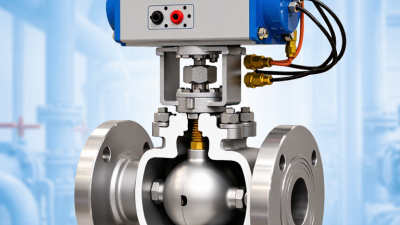
Pneumatic actuators suit fast, repeated switching when a dependable instrument-air supply is available. The U.S. Department of Energy’s Improving Compressed Air System Performance: A Sourcebook for Industry reports that leaks can waste 20–30% of compressor output. That figure is a useful reminder: check air quality, pressure, and leak maintenance before choosing pneumatic control. Electric actuators avoid plant air lines, but confirm their duty rating, enclosure protection, and response time against site conditions.

For critical shutoff, consider spring-return actuation if the valve must move to a defined position after air or power loss. Verify the required torque across the full pressure and temperature range, not just at the catalogue’s nominal point. I have seen selection assumptions look tidy on paper, then fail when deposits or cold starts raise torque. Recheck the process details. Mounting compatibility, available power, manual override, and feedback signals all matter. A short operating test under realistic conditions can reveal what the specification missed.

Check Standards, Safety, and Maintenance Needs

A ball valve should meet the pressure, temperature, and media conditions it will actually face—not just the pipe size. Check the applicable design requirements in ASME B16.34, then confirm the specified pressure-test criteria against API 598 or ISO 5208. These standards address different aspects of valve design and testing, so do not treat them as interchangeable. For a corrosive line, verify body, ball, seat, and seal materials together; a compatible body alone is not enough. Small details matter.

Safety depends on installation and upkeep, too. Leave room to reach the stem, operate the handle, and isolate the line before maintenance. The U.S. Bureau of Labor Statistics reported 2.6 million nonfatal workplace injuries and illnesses in private industry in 2023; this figure is not valve-specific, but it underlines why practical access and safe work procedures deserve attention. Set inspection intervals around service severity, cycling, and leakage history. Check for stem seepage, rising operating torque, and damaged seals, and record what changes over time. A calendar alone may miss trouble. Honestly, inspection records can be uneven; make the gaps visible and improve the routine rather than assuming every valve is healthy.

How to Choose the Right Ball Valve for Your Application? — Check Standards, Safety, and Maintenance Needs

Selection Dimension What to Check Practical Guidance Relevant Standard or Reference
Process fluid and compatibility Fluid composition, concentration, cleanliness, corrosiveness, solids, and any sour-service constituents. Select body, ball, stem, seat, and seal materials for the actual fluid and operating conditions. Check chemical compatibility and corrosion allowance; do not assume one material suits every component. For sour oil and gas environments, assess material requirements under ISO 15156 (NACE MR0175). Confirm suitability for the specific service with the project specification.
Pressure and temperature Normal and maximum operating pressure and temperature, start-up or upset conditions, and pressure-temperature derating. Verify the valve’s pressure-temperature rating for its material and end connection. Account for temperature limits of seats and seals, as well as system design conditions. ASME B16.34 covers pressure-temperature ratings and other requirements for many valve types. Use the applicable edition and the valve’s documented rating.
Valve size and flow capacity Line size, required flow, pressure drop, and whether the flow is liquid, gas, or multiphase. Do not select by pipe size alone. Check the required flow capacity and pressure drop. A reduced-port valve may have lower capacity than a full-port valve of the same nominal size. Use the application’s process calculations and the valve manufacturer’s published flow data; confirm the design basis with the project engineer.
Port and ball design Full-port or reduced-port configuration; floating or trunnion-mounted ball; required shutoff and operating torque. Full-port designs can reduce flow restriction and help with pigging where the pipeline and valve design permit it. Trunnion-mounted designs are commonly considered for larger sizes or higher pressure differentials; verify torque and operating limits. Refer to the applicable valve design specification and documented operating data for the selected size, pressure, and differential pressure.
End connections and installation Flanged, threaded, socket-weld, or butt-weld ends; face-to-face dimensions; piping class and installation space. Match the end connection to the piping specification. Check dimensions, pressure class, materials, and compatibility with adjacent equipment before ordering or installation. ASME B16.5 covers pipe flanges and flanged fittings; ASME B16.10 covers face-to-face and end-to-end dimensions for specified valves. Confirm the applicable scope.
Isolation and shutoff duty Required shutoff direction, leakage acceptance, differential pressure, and frequency of operation. Confirm the valve’s intended service and seat design. A standard isolation ball valve is not automatically suitable for throttling; sustained throttling can cause seat wear or damage unless the design is rated for that duty. Specify the required leakage and inspection criteria in accordance with the project and applicable test standard.
Fire safety Potential external fire exposure, process hazards, and whether fire-tested construction is required. Where required by the hazard assessment or specification, verify fire-test qualification for the exact valve design and size range. Fire-tested does not mean fireproof or a substitute for system-level fire protection. API 607 and API 6FA are fire-test standards used for applicable valve designs. Confirm which standard and edition the project requires.
Fugitive emissions Potential leakage from the stem and body joints, fluid toxicity or volatility, and site emission limits. For regulated or hazardous service, specify the required emissions qualification and operating conditions. Check that test results apply to the valve configuration and packing arrangement being supplied. ISO 15848-1 and API 641 provide fugitive-emission qualification or type-testing requirements for applicable industrial valves.
Actuation and fail position Manual, pneumatic, electric, or hydraulic operation; required operating time; available utilities; and safe position on loss of power. Check actuator torque against valve breakaway and running torque under the specified conditions. Define the required fail action and confirm whether a separate energy source or control accessory is needed. Use the project’s control, instrument, and functional-safety requirements. Verify actuator and accessory ratings for the service environment.
Inspection and pressure testing Required shell, closure, and seat tests; test medium; acceptance criteria; and inspection documentation. State testing and documentation requirements at purchase. Confirm test procedures, acceptance criteria, and any project-specific requirements before shipment. API 598 and ISO 5208 specify inspection and pressure-testing requirements for applicable industrial valves. Check the contract for the required standard and edition.
Maintenance and lifecycle Access to the valve, operating frequency, expected wear, spare-parts availability, and maintenance capability. Allow room to operate or remove the valve and actuator. Establish inspection intervals based on service severity and site procedures; inspect for leakage, corrosion, abnormal torque, and damaged accessories. Follow the valve’s documented maintenance instructions and the facility’s inspection and maintenance program.
Pipeline or general industrial service Whether the valve is part of a pipeline system or a general process installation, and any project-specific design requirements. Choose standards based on the valve’s intended application, design, and contract requirements. A standard’s applicability should be confirmed rather than assumed from the valve type alone. API 6D applies to pipeline and piping valves within its scope. ASME B16.34 covers many industrial valve designs; confirm the specified scope and edition.

Selection note: Finalize the valve against the process datasheet, piping specification, hazard assessment, and applicable codes. Standards and editions vary by project and jurisdiction; verify current requirements before purchase.